Marine Plumbing
tank, water, drainage, yacht and fixtures
MARINE PLUMBING This is a class of work that the average plumber does not meet with very often; and a little information may be of interest to those not acquainted with this class of work. The accompanying illustrations show what is known as the "Ellis" system of marine plumbing as applied to a modern yacht.

By the installation of this new system, it is possible to give the owner in his floating home all the conveniences which he may enjoy ashore, using exactly the same style of fixtures on board the vessel, even though they may be set several feet below the water-line, the same being thoroughly ventilated and complying in every respect with the sanitary laws demanded for buildings. Another great advantage is that the vessel is only pierced at one point for the dis charge of all fixtures. The discharge pipe is fitted with sea and check vales, thus providing a positive safeguard against back-pressure—a matter to be carefully considered by marine underwriters, as well as by the owner.
Figs. 98 and 99 illustrate a steam yacht fitted with this system, in which the roughing-in be low the deck is seen. Owing to the fact that a fresh-water tank has been designed to take up the entire width of the vessel from the engine room to a given point, which will interfere with the regular style of tank for waste, it is necessary to build a special drainage tank fitted to suit the space as shown. The drains and wastes from the owner's bathroom have to pass through the water storage tank by means of a sleeve with reinforced flanges at each end. The suction from the drainage tank also passes through in the same manner, to the automatic ejector placed in the engine room.
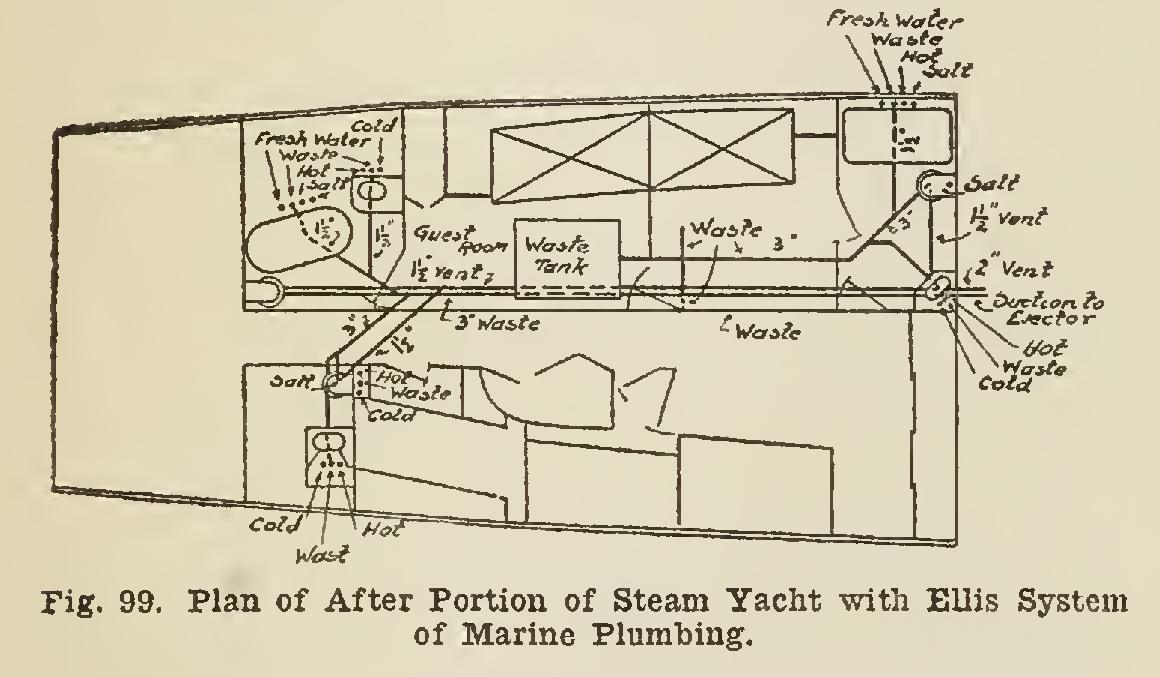
The water-closets used are of the siphon jet type, flushed with salt water from a small gravity tank placed on the upper deck.
The bathrooms have tile floors and wainscot ing, and are provided with bath, basin, and closet. The baths are roll-rim, enameled, sup plied with hot and cold fresh water and salt water, through improved faucets.
The basins are solid porcelain, supplied with hot and cold fresh water, with nicket-plated, exposed or "open-work" non-siphoning trap and waste. The drains and wastes are galvan ized pipes, with recessed fittings and with lead bends to fixtures. The large supply lines are galvanized; and the small lines are brass, except where exposed, in which case they are nickel plated.
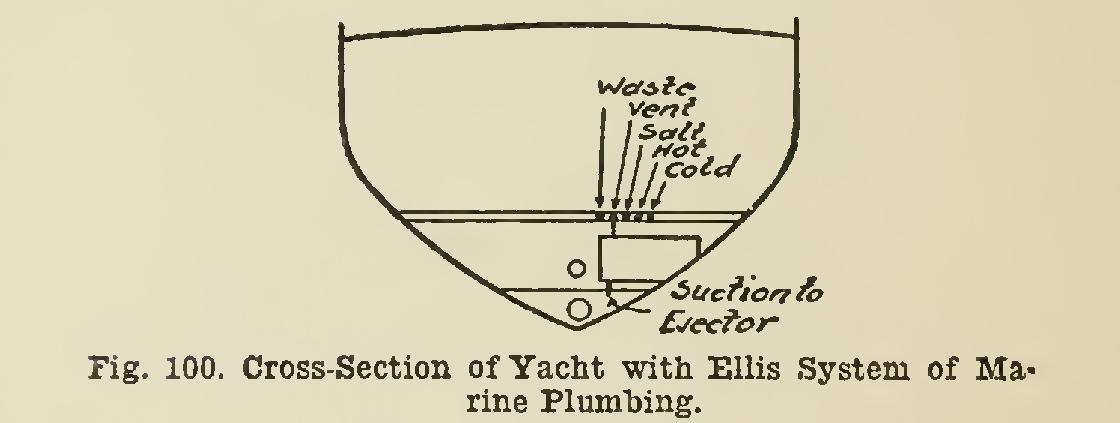
Fig. 100 is a cross-section of the yacht to a point where the drainage tank is located, showing lines running from the engine room to the different fixtures.
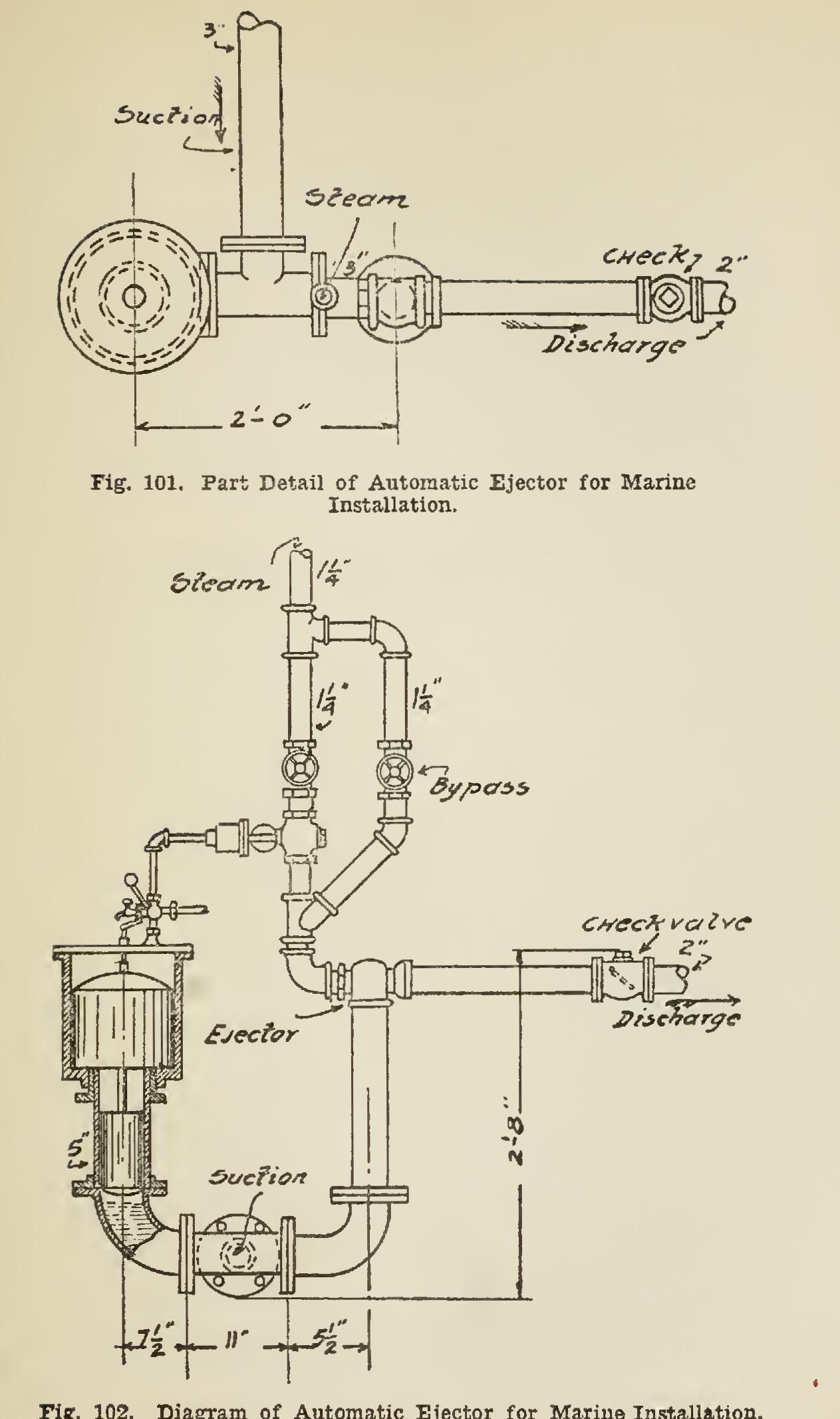
The automatic ejector, Figs. 101 and 102, is placed in the engine-room, arranged to start at any desired point. It is operated by either com pressed air or direct steam, and thoroughly empties the contents of the drainage tank at each discharge. The vents are connected together, and continued to a convenient point in the smokestack.
The dimensions of this yacht are 120 feet in length, 20 feet beam, and 180 tons displacement.
The above describes the average plumbing installation for marine plumbing; and a little study of the sketches will make the matter clear.