Child Training
parents, feelings, children, ellen, obey, mother and time
But the tendency to have right kinds of feelings must also have its chances for growth. Parents so often complain of the selfishness of the children as they grow older. At a time when they should show their gratitude in cheerful helpfulness, they fail.
Nine times out of ten such parents have only them selves to blame. They were the ones who stopped the little puttering child when he first wanted to help his parents work. These first feelings of helpfulness are made weak through lack of use. They can be strengthened by early and frequent exercise.
Little Housekeepers and Their Work Mildred and Andrew woke up one morning remem bering that a great day was before them : their kinder garten teacher was coming to luncheon. "'What can we do to help get ready for her?" they asked at breakfast. The mother was a careful keeper of chil dren as well as a careful housekeeper. She suggested that they make the bed upon which the teacher would lay her wraps. Mother left the bed just as the chil dren had made it though it was not made so perfectly as she could have made it.
Ruth. a girl of 14. is the eldest of four children.
She shares in all the household work cheerfully and efficiently. Ruth can and does hake the waffles every Sunday morning: she can and sometimes does prepare and serve an entire meal for parents and their guests.
She is a successful student at school. The chances are 999 out of a 1,000 that her parents will always be able to count on her because the feelings that lead td helpfulness and comforting were exercised in the righl ways from their very first appearance.
Our
problem as parents is just one of making up ou minds early what feelings we wish our children t express as they grow older. Next, it is one of planal ning how to strengthen those feelings, and the actions and ideas that go with them through frequent usej Is it disobedience or obedience that we wish in our homes? Do we wish to obey the children or have them obey us? Or should we and they obey some thing bigger than either? The first lesson in feelings leading to obedience should be of the right kind.
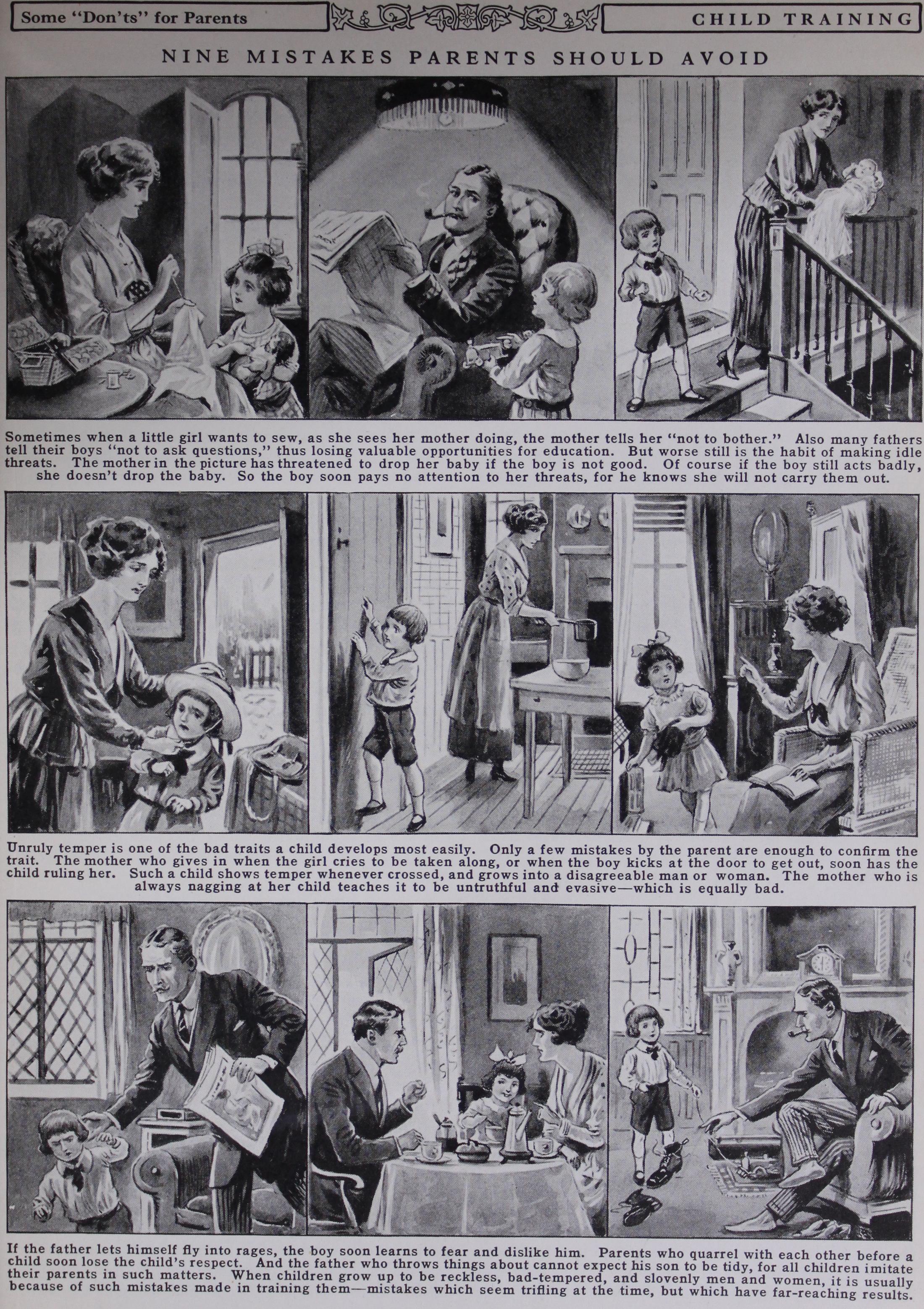
A clergyman's wife was training her boy to obey her. She did it by standing with her arms stretched over the banisters. In her hands she held the little baby sister whom she would threaten to drop to the first floor when the son of five did not do as he was asked. None but a weak or uninformed parent ever
uses such a threat. The child is bound to find out that such a deed cannot be done. Then both old and new threats cease to have any power to scare him into obedience. It is never right, nor ever necessary, to threaten dreadful or foolish things in training children.
Why Ellen Always Got Her Way Neither is it right to let children develop the feelings that lead them to expect their parents to give in to them. These feelings show themselves in in fancy; they go with actions and they start ideas in the baby's mind very early. Parents do not know of their existence until the child shows them in pouts and tantrums. Unfortunately some parents expect that children will outgrow their bad feelings and actions. As a rule they grow in more firmly. That is why children, some very young and some older, can make their parents give into them on almost any issue.
Ellen, who was ten, could do it. She was having a fine time after supper talking to her father's guest and one-time teacher, the dean of a college. To please her, the dean rose early so they could talk before breakfast. It was then she told him of her desire to drive to town with him and her parents.
"But," she said, "when I ask Mother to let me go she will say, Oh no, not to-day.' Then I will tease until she says, No, I can't be bothered with you this time.' Next I'll begin to whine and then she'll scold. Then I'll bellow and she'll say, 'Well, if you must, you must. Get ready so that you don't keep us waiting.' " Now the dean was interested and curious. He put himself where he could hear Ellen and her mother.
In a few minutes Ellen came to him, the tears still on her face, but smiling in triumph, and said, " Did you hear me?" He had; and he has often wondered since into what kind of a woman Ellen grew.
To say "no" to a child when it asks politely and then to say "yes" when it makes a horrid fuss is the quickest way to teach a child that there are ways of controlling one's parents. Beware of teaching such lessons. They always lead to the establishment of infant rule in the home and development of boys and girls who ride over everybody and everything just to have their own ways.