An Informal Thatched Shelter
gardens, landscape, public, style, art, country, land and influence
Germany, where popular garden art is now consciously propa gated, produced little indigenous design, but followed Dutch fash ions in the i6th and 17th centu ries and French grandeur in the i8th—as at Herrenhausen, Salz burg, Nymphenburg and Sans Souci—guided by actual pupils of Le NOtre, until the novelty of landscape or "English" gardens swept all before it. In Prince von Piickler-Milskau, an admirer of Repton, the landscape style was rationalized, and it continued in general favour until challenged by the modern formal vogue which subjects private and public areas alike to the supreme dominance of man. In Austria, of older gardens in the French style, Schonbrunn is most important.
In America gardens of the English colonists naturally followed the simple formal traditions of their earlier cottage and manor homes. About the time of the Revolution, notably through the influence of Thomas Jefferson at Monticello, the Romantic land scape style was consciously introduced, and later in uninspired form continued to prevail until it was revivified by Andrew Jack son Downing in the '4os. The real genesis of the modern American landscape style, however, was in Central park, New York, de signed by Frederick Law Olmsted, Sr., and Calvert Vaux in 1858, the first great public work of landscape architecture in the United States, at once a bold municipal enterprise and a successful work of art. Its influence spread rapidly so that by 187o most large cities of the country had undertaken public parks, and the develop ment of public and private grounds received increasing attention. Largely through the extensive practice of the Olmsteds, Vaux and H. W. S. Cleveland, the profession was built up in the '8os, so that the Chicago World's Fair of 1893 offered to Olmsted an equal opportunity with Burnham and his collaborators for a monumen tal triumph. Simultaneously Charles Eliot through his work in Boston gave to the country the conception of metropolitan land scape reservations.
Gardens in Sweden and Russia followed styles imported largely from France, the influence of Le NOtre manifesting itself in such magnificent palaces as Drottningsholm (near Stockholm) and Tsarskoye Selo (near Petrograd), where the landscape style im ported from England was also employed.
Garden design, through the spread of Persian culture, reached high development in India under the Moguls, as in Spain under the Moors. The gardens of the Taj Mahal at Agra and Nishat Bagh in Kashmir remain as supreme examples of symbolic com bination of water, shade, flowers and fruit. In the Far East land
scape art found consummate expression in China centuries before the Western landscape school—on which Chinese gardens exerted profound influence—and similarly in Japan and Korea, where symbolism crystallized nature into conventions employed by suc cessive generations of artists in landscape gardens of exquisite intrinsic form.
The influence of landscape architecture on culture through the centuries has manifested itself most strikingly in the impetus to outdoor recreation and in the greater appreciation of amenity as a necessary quality of human environment. Material wealth, pri vate and public, has given the opportunity and furnished the means for great works of the past, be it in the era of princely splendour or of modern industrialism; but the art itself, having proved its desirability to potentate and citizen alike, is bound in the future to become more widely applied to all forms of land development for human use and thus to penetrate more completely into the fabric of civilization.
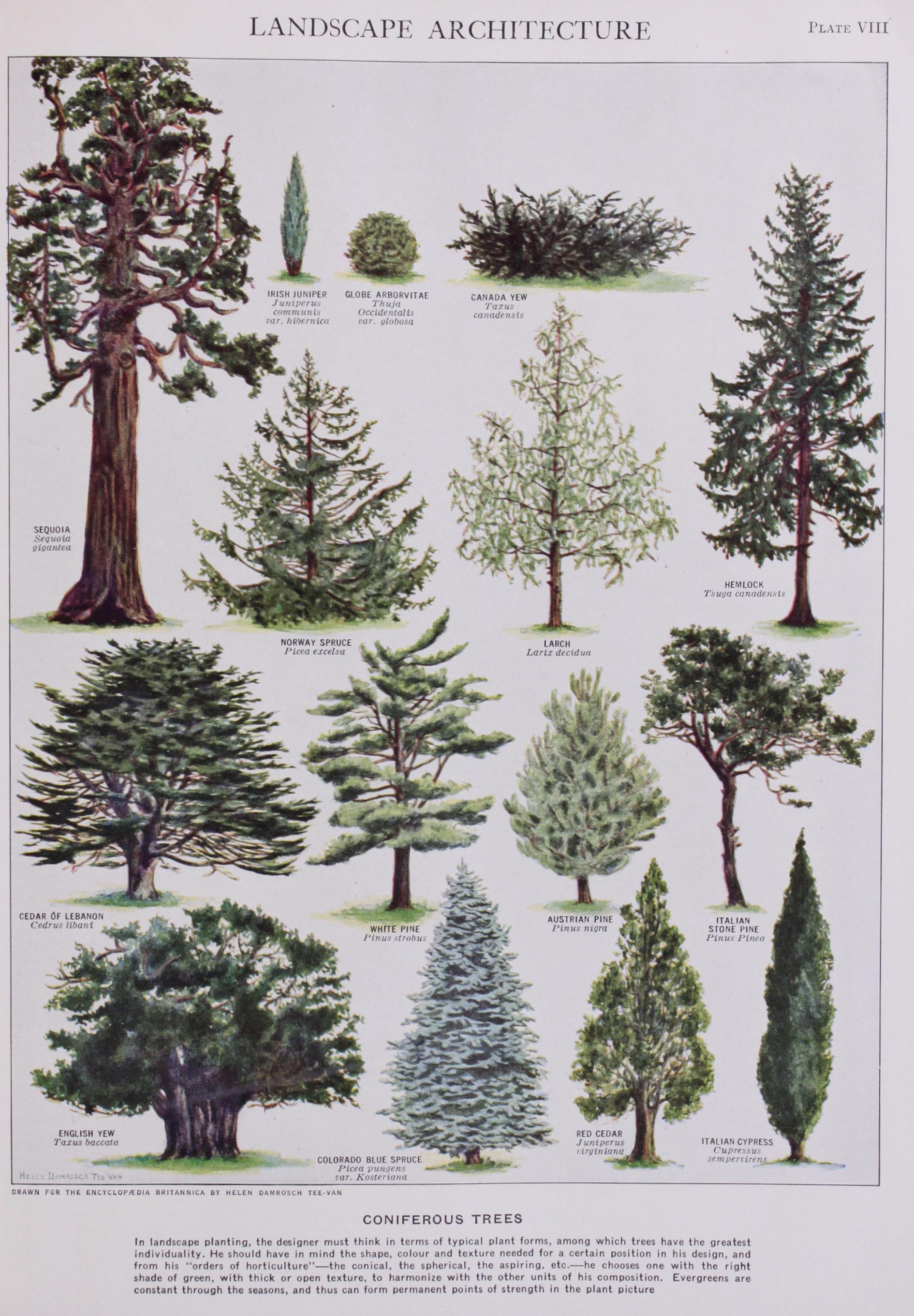
It would be impossible to say when the art of landscape and garden design began in England, but it is not so difficult to trace its successive stages, because it follows the history of the English people. As soon as there was any reasonable assurance of security from invaders, people were free to give their attention to orna mental and fruitful planting, and further to adorn their own se cluded portion of ground sur rounding their residences. The ancient Britons have left no trace that they cultivated the ground, ' nor is there any direct evidence that their conquerors, the Romans, laid out gardens, although it may be inferred that they did so, since remains of their villas and numerous artistic adjuncts of luxurious houses have been unearthed. During the period of inva sion and counter-invasion by the Danes and Norsemen, which fol lowed the withdrawal of the Roman legions, and the factionary wars amongst the Saxon kings themselves, there could not be suf ficient tranquillity for serious husbandry or even for farming, see ing that the country was given up largely to war and to the chase. There is no evidence of gardening to be gleaned up to the Norman Conquest at least, and then we have a suggestive account of the salient features of the country in general, but no gardens.