Windows in Brick Walls
fig, wall, section, window and inside
Fig. 138 is a section through the sill, which is finished on the inside with a moulded stool and panelback. Plastering should always be provided back of panelbacks, but the hard finish coat may be omitted.
A nailing strip for the furring is let into the brick work.
Fig. 139 is an elevation of the trim, which ex tends to floor; finishing on a base block or plinth, against the base butts.
Plate XXVIII shows a similar window frame, but without a pocket or box for the blinds. The ordinary hinges are used in this case.
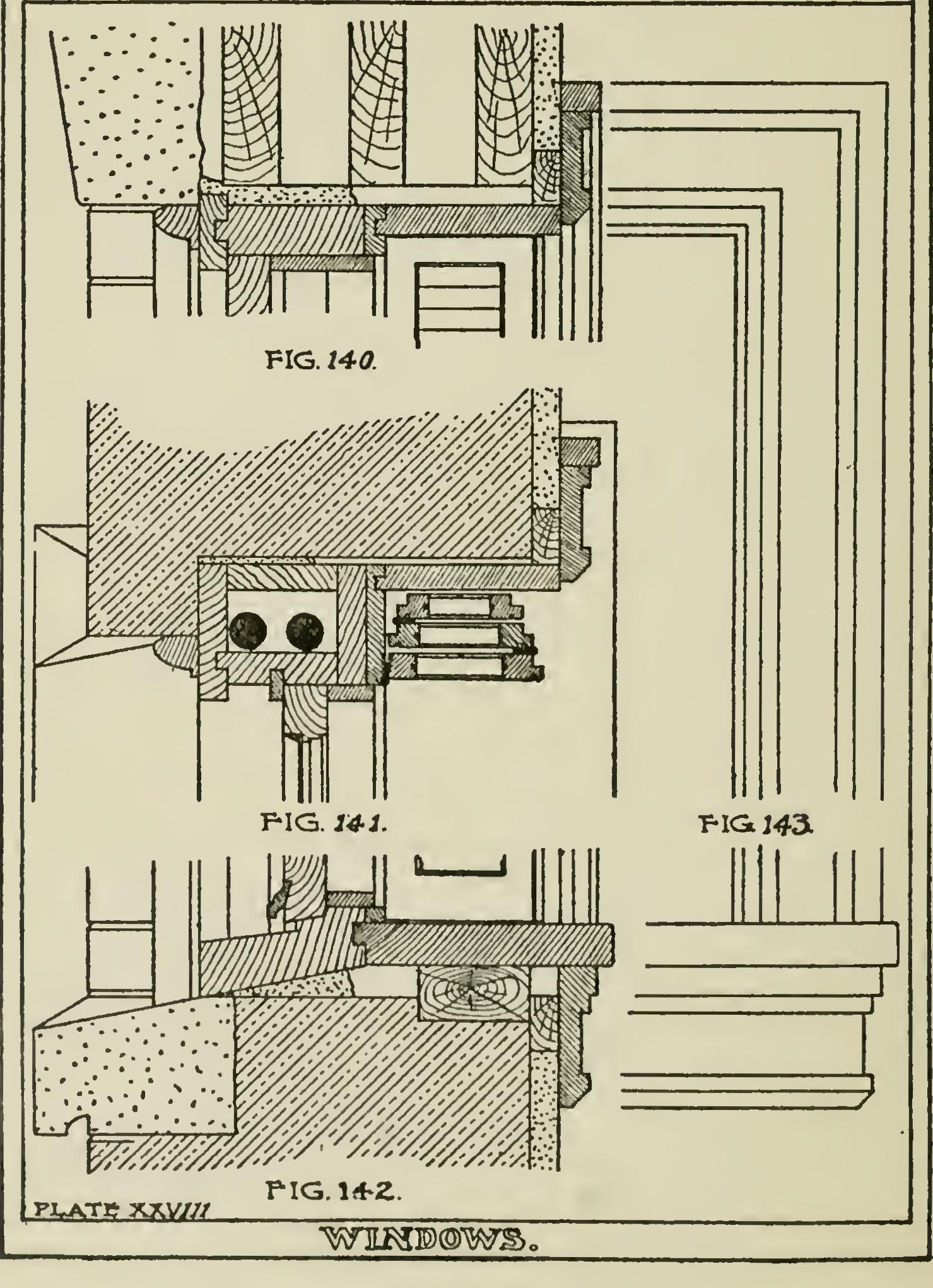
Fig. 140 is a section through the head. The plastering is applied directly to the sixteen-inch brick wall, after it has first been coated on the inside with damp-resisting paint.
Fig. 141 is a section through the jamb. The trim is made with a separate wall mould or back band.
Fig. 142 is a section through the sill. A moulded drip is let into the lower rail of sash, to prevent water from entering under same.
Fig. 143 is an elevation showing the interior trim which finishes on a moulded stool and apron; both having returned ends.
A double=hung sash window in a brick wall, with inside folding blinds set in a projecting box.
The brick wall is thirteen inches thick and the opening is spanned on top by a stone lintel and has a stone sill cut with a wash on top, lugs at each end to receive the brick jambs, and drip or water nose on underside where it projects beyond the face of the wall.
The frame is set so as to give a four-inch reveal. The inner two-thirds of the opening is spanned by a timber lintel over which is turned a relieving arch of brick. Relieving arches usually consist of one rowlock arch for each eighteen inches or fraction thereof in the width of the masonry opening.
The inside blinds fold back in a pocket or box which is allowed to project into the room, rather than be made flush with the plaster wall. To make it flush would necessitate considerable fur ring of those walls of the room in which the win dows occur and a consequent decrease in the size of the room. We are presuming in this case that it is desired to utilize all the space available for the room, and have consequently provided only the ordinary furring of one-inch by two-inch strips laid flatwise, and have allowed the blind box to project beyond the face of the plaster, treating it architecturally and making a feature of what is too frequently, from lack of a little forethought, an eyesore.
The open space under the window stool we have used to place a radiator and in the panel back we have placed a register through which the heat passes.
Fig. 144 is a section taken through the head of the window. The inside of the head has a wide soffit and a moulded entablature.
Fig. 145 is a section taken through the jamb of the window. When the blinds are folded back in the pocket, it has the appearance of a wide paneled jamb, owing to the fact that the first fold of the blinds has a panel instead of rolling slats. The second fold, however, has slats. The exposed faces of the box are covered with paneled pilasters which finish with a small base on the top of stool.
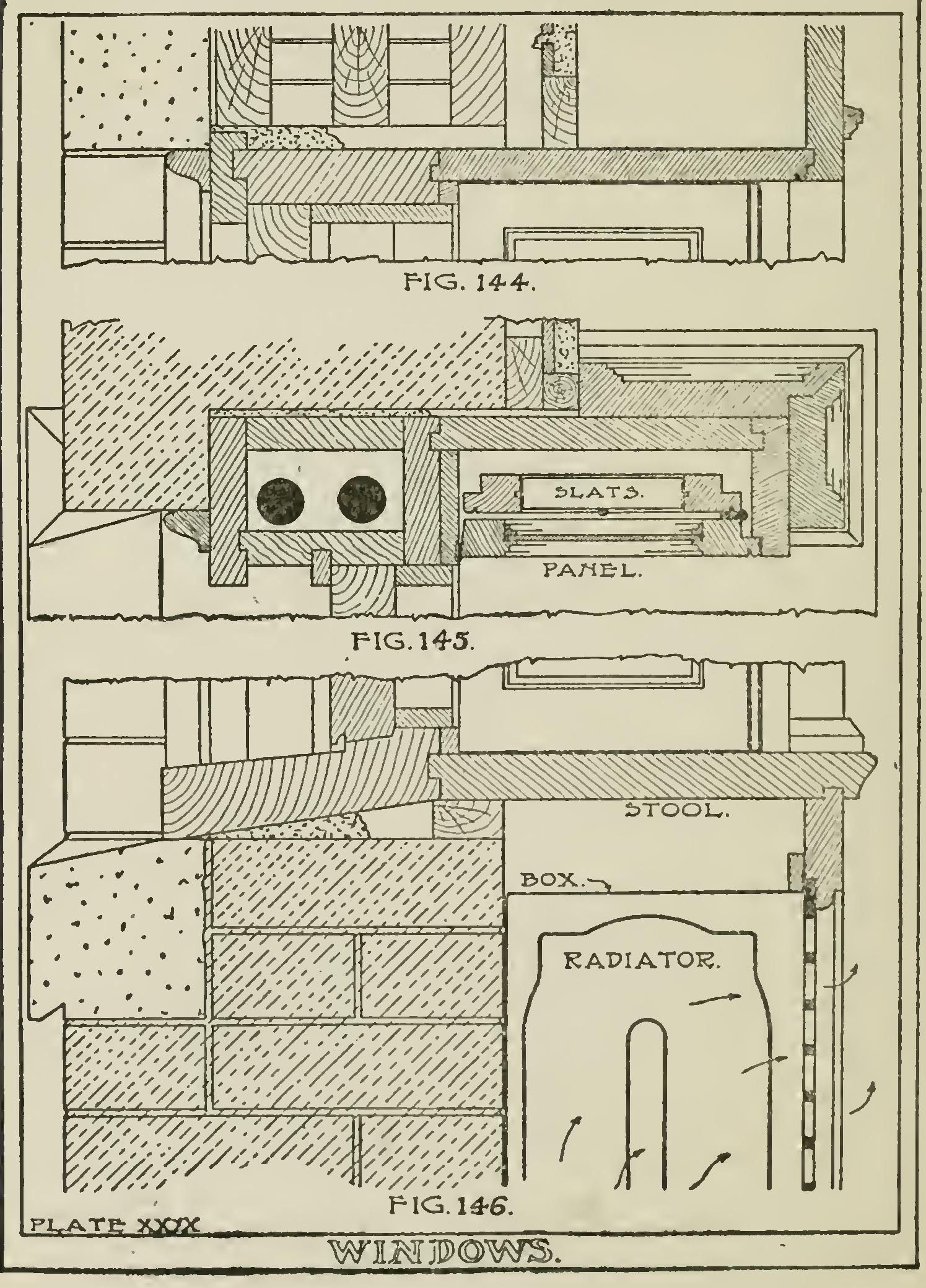
Fig. 146 is a section taken through the sill of the window, which finishes on the inside with a wide stool with a moulded edge. Edge should be returned against the wall at ends.