Reinforcing Materials and Systems
bars, bar, wire, metal, concrete and steel
REINFORCING MATERIALS AND SYSTEMS Steel is the common medium used in rein forcing concrete. Although the ways and forms in which it is used are varied, and allowing that each form may have its special advantage, the general principle of placing the metal where it will take up the tensile stresses is common to all forms.
Some of the more common methods of ap plication are as follows : by steel bars, rolled shapes, sheet metal, expanded metal, woven wire, plain and barbed wire, old structural work of various kinds, wire rope, chain, etc.
Steel bars
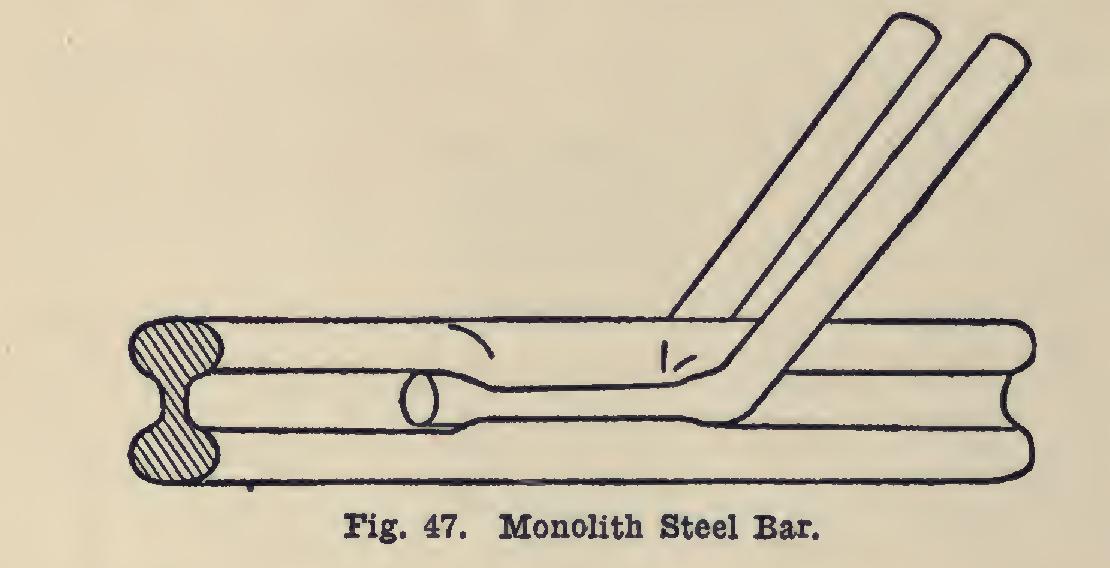
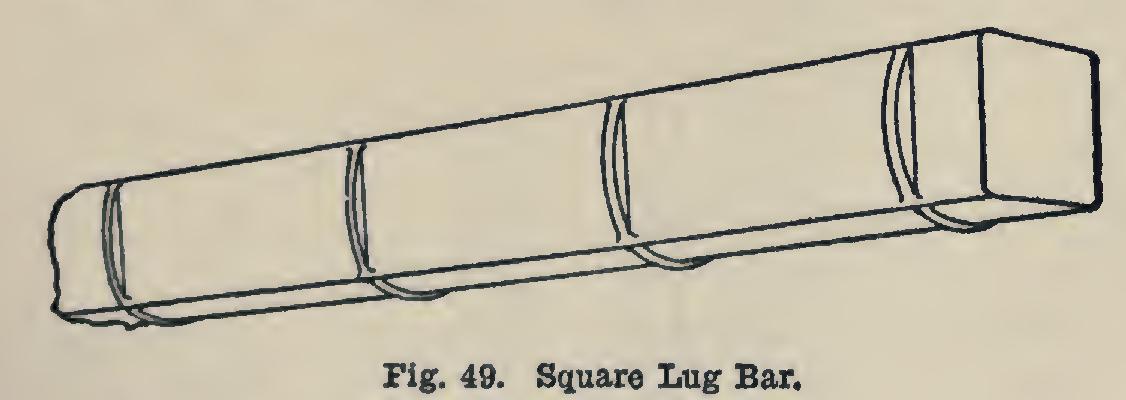
are divided into different classes —plain bars, deformed bars, and trussed bars; Plain bars, comprise the ordinary round, square, and flat bars; while deformed bars are illus trated by the "Johnson" bar, "Diamond" bar and "Ransome" bar.
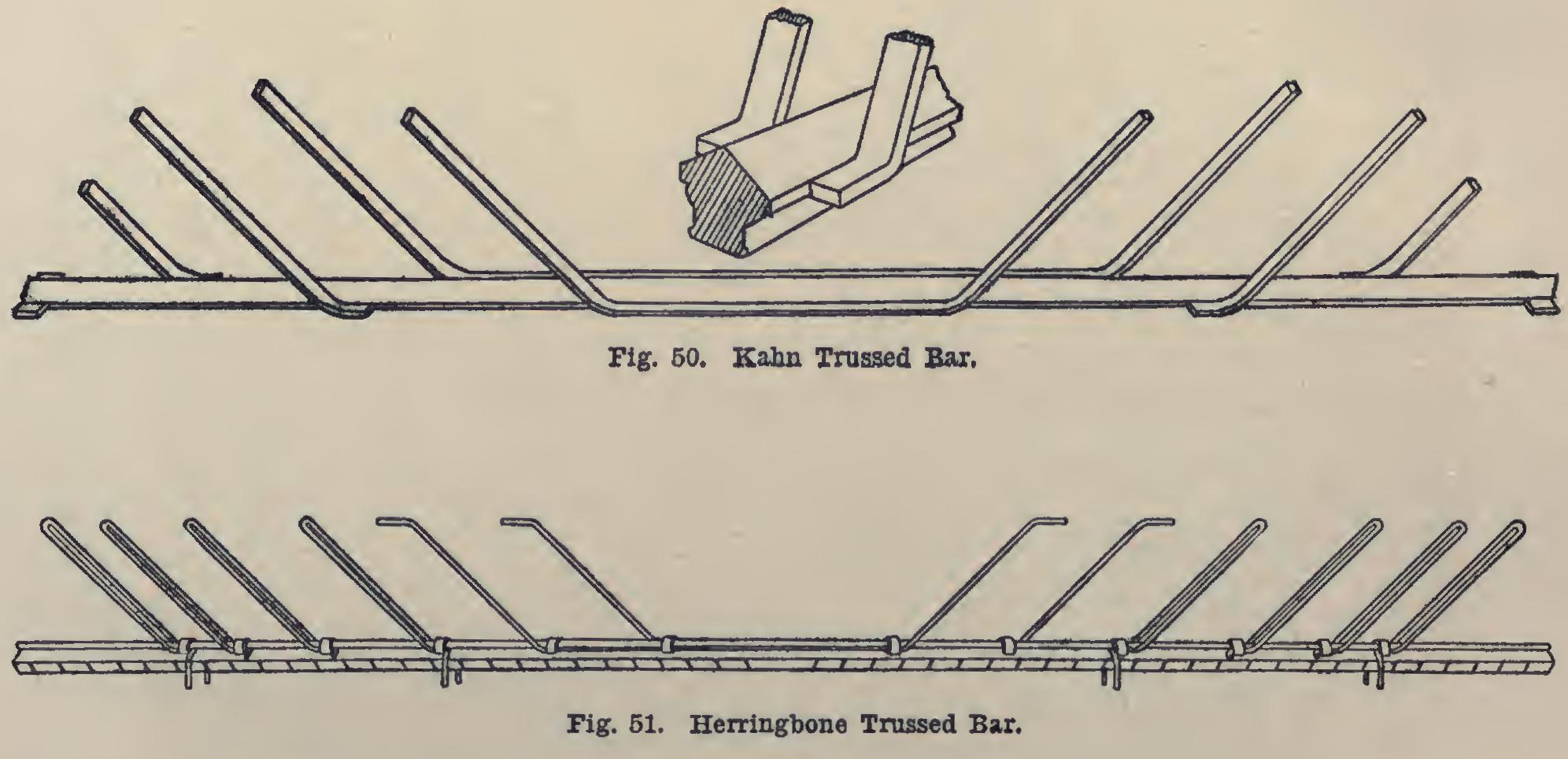
An example of the trussed form is shown in the "Kahn" bar. These forms and many others are shown in Plate 12 and Figs. 47 to 51.
The round bar is generally preferred to either a square or flat bar, on account of the liability of cracks in the concrete developing in setting when the sharp-cornered bars are used.
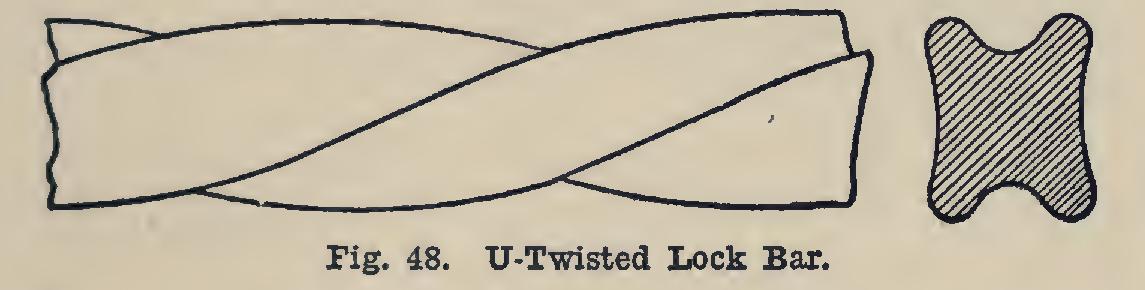
The round bar also has the advantage of being easily threaded and fitted with nuts at the ends, in case plates for prevention of slipping of rod in the concrete are to be used at the ends of the bar.
In bars like the Kahn trussed bar and others of a similar type, the diagonal arms prevent the lower main part of the bar from slipping, and strengthen the beam or girder against the effects of internal stresses throughout its depth. In ordinary forms of deformed bars, the primary object in each is to provide a better bond against slipping between the bar and the concrete. The relative merits of the various bars will not be discussed; but according to tests conducted by Professor Talbot, it is questionable whether there is really any great gain in strength ef fected by the use of the ordinary deformed bar.
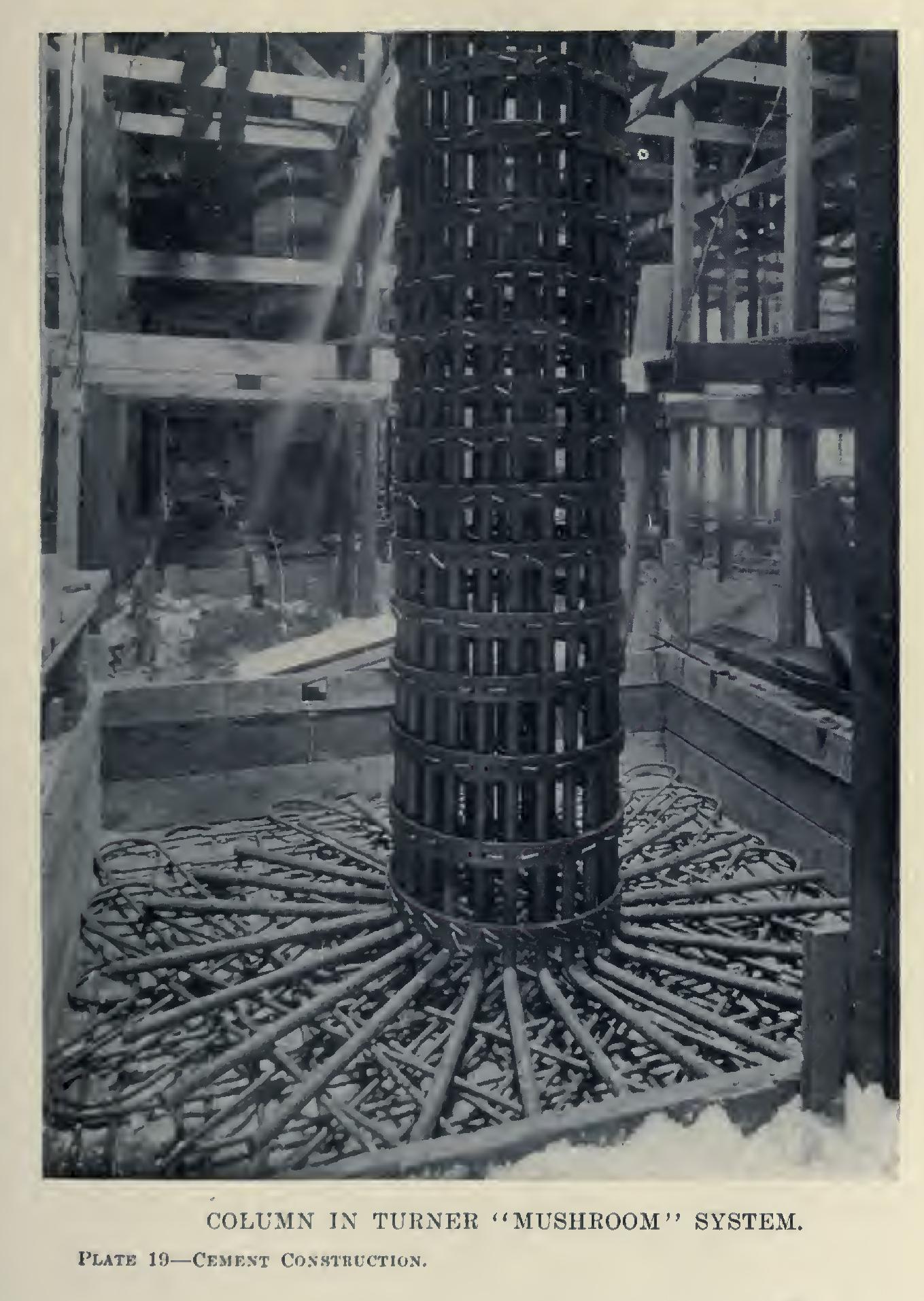

Column hoops are formed by bending either flat, square, or round bars into a spiral which is held in shape by longitudinal stays having various means of holding the metal to the stay.
An eccentric load placed upon a column tends to throw one side into compression, and the other into tension. Therefore columns need near surface reinforcement, just as beams when sub jected to similar stresses.
Steel shapes, possibly more commonly of the I, T, channel, and angle forms, are used exten sively in floors, girders, columns, and even in heavier foundation work.
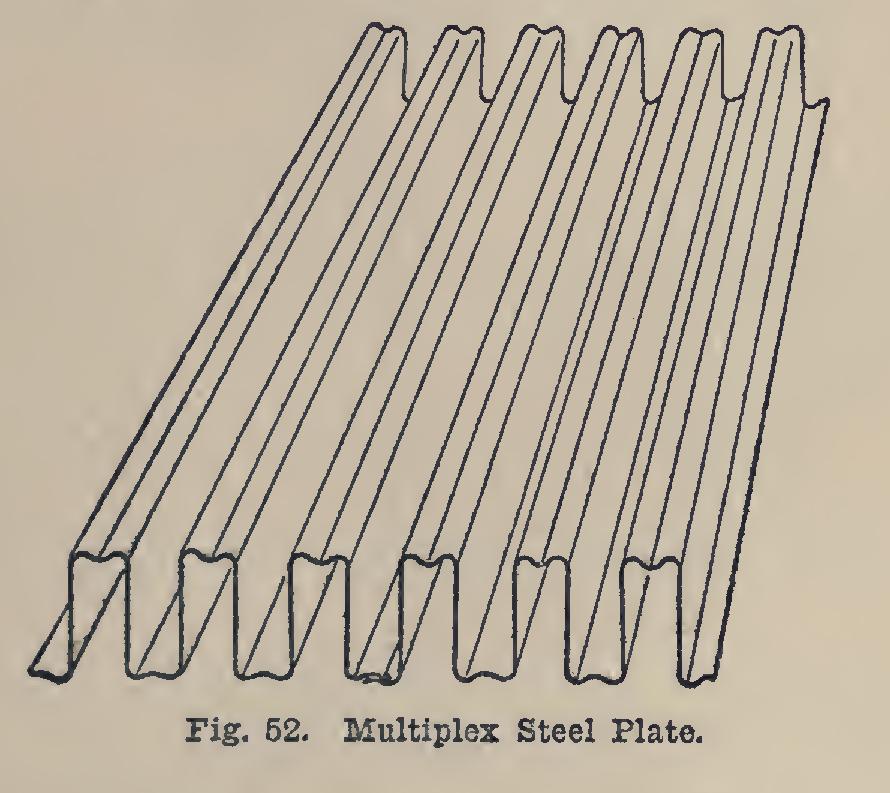
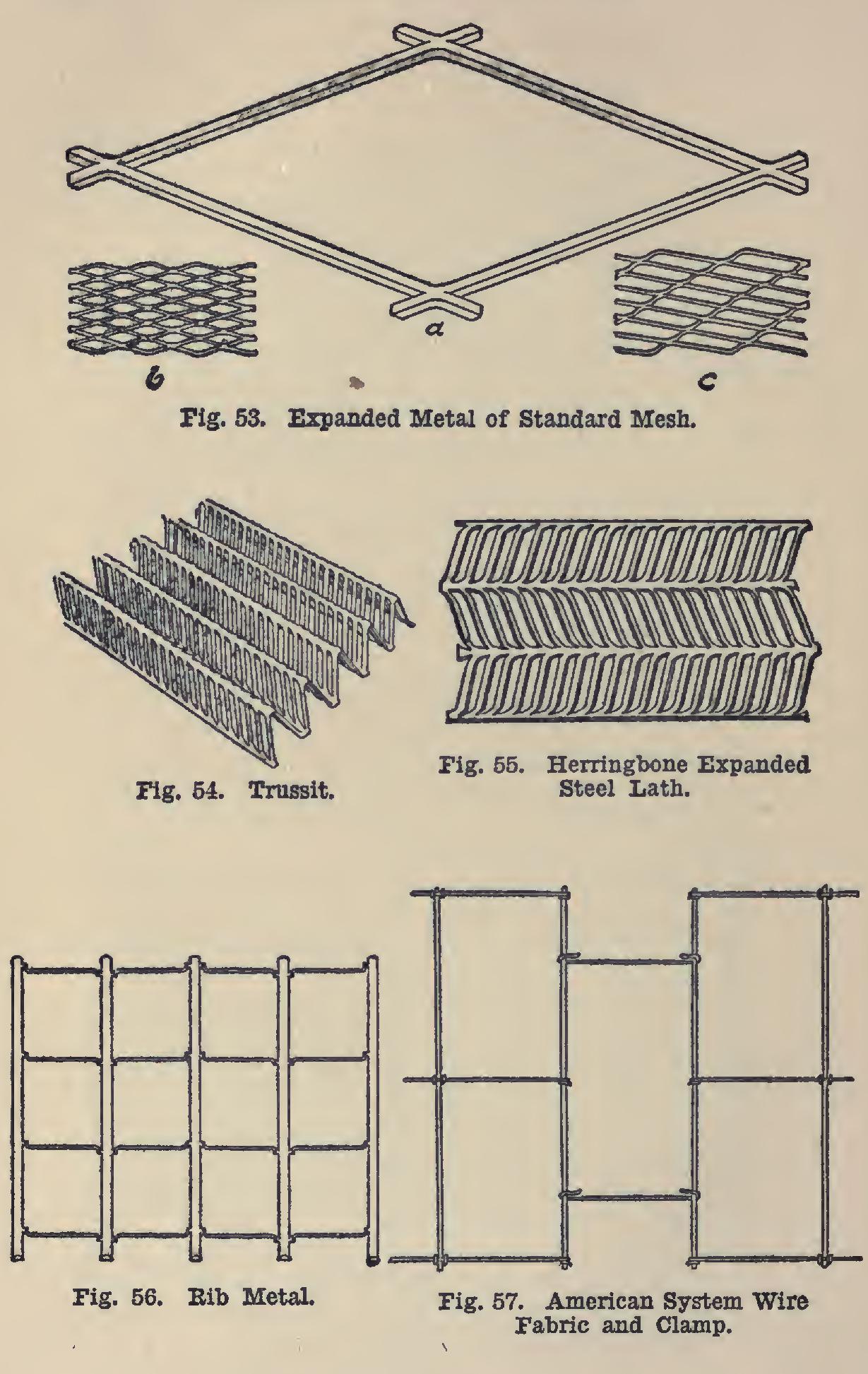
Sheet metal, expanded metal, metal lath, woven wire, etc., are used in roofs, ceilings, sidewalks, concrete piles, partitions, short-span floors, columns, ornamental work, or, in fact, in almost any construction where there are not too great stresses, or where flexibility within the forms is needed. Plate 13 and Figs. 52 to 58 show some of the various forms of these ma terials.
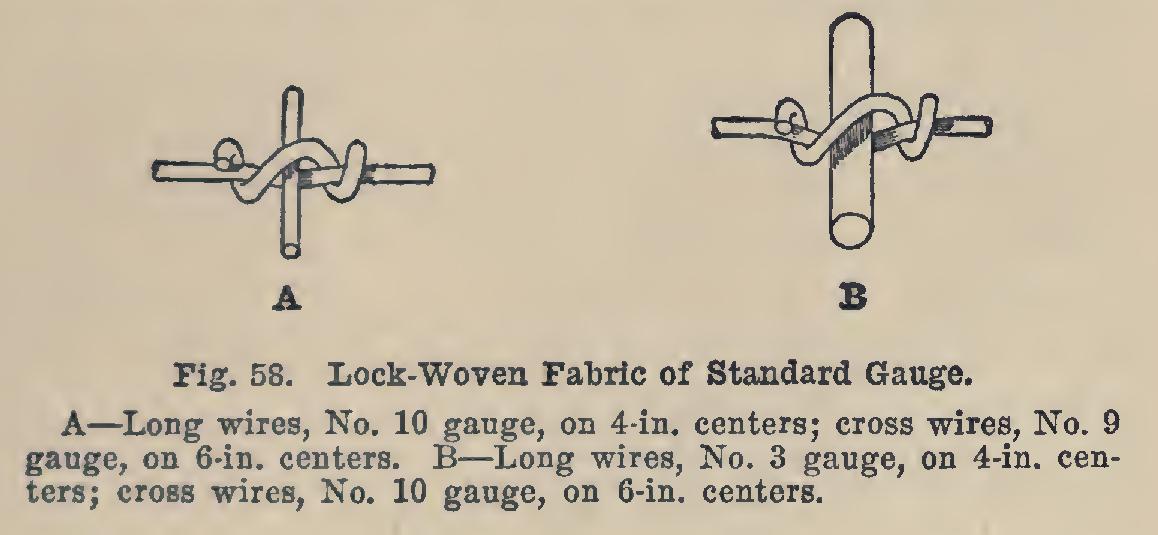
It is not uncommon in light work to find ordinary strong wire, and often barbed wire, a very valuable reinforcing agent. In rough foundation work, scrap iron is often used as a bonding material; but the use of cast iron, whose tensile strength is exceedingly low, would hardly be recommended in any place where bending might occur. Broken machine parts and old iron hoops from barrels, are often used on the farm in rough construction work. Old steel rails are very conveniently used in foot ings, but they should be clean and free from oil or heavy rust. In fact this requirement should apply to all material which is to be embedded in concrete. A little rust is sometimes beneficial in helping to remove the mill scale from the new bars, thus allowing the concrete to obtain a better hold.
Wire rope or cable is an unsatisfactory form of reinforcement, not only on account of its flex ibility, but also on account of the stretch re sulting when under stress. Tests have shown a wire cable to stretch four times as much as a plain steel rod under the same unit-stress. Therefore a beam reinforced in this manner would probably crack under low stresses.