China
chinese, beautiful, characters, written, country, art and painting
In the "treaty ports," especially, it is not un usual to see girls with feet like ours, but in the interior, by far the great er part of the country, feet are still bound as a mat ter of course.
Since the overthrow of the Manchu dynasty, many men have cut off their queues or pigtails, which were originally worn as a sign of submission to those rulers. But the great majority throughout the country, especially the coolies or laborers, still wear them, so great is the power of custom in China.
Most Americans think that because there is a law in China against both foot-binding and the wearing of queues, these things have disappeared. But a law in China means as a rule only that the rulers hope the people will do as they are asked. It does not mean, as it does here, that the thing forbidden is stopped.
China is a ter ribly dirty coun try, especially southern and middle China.
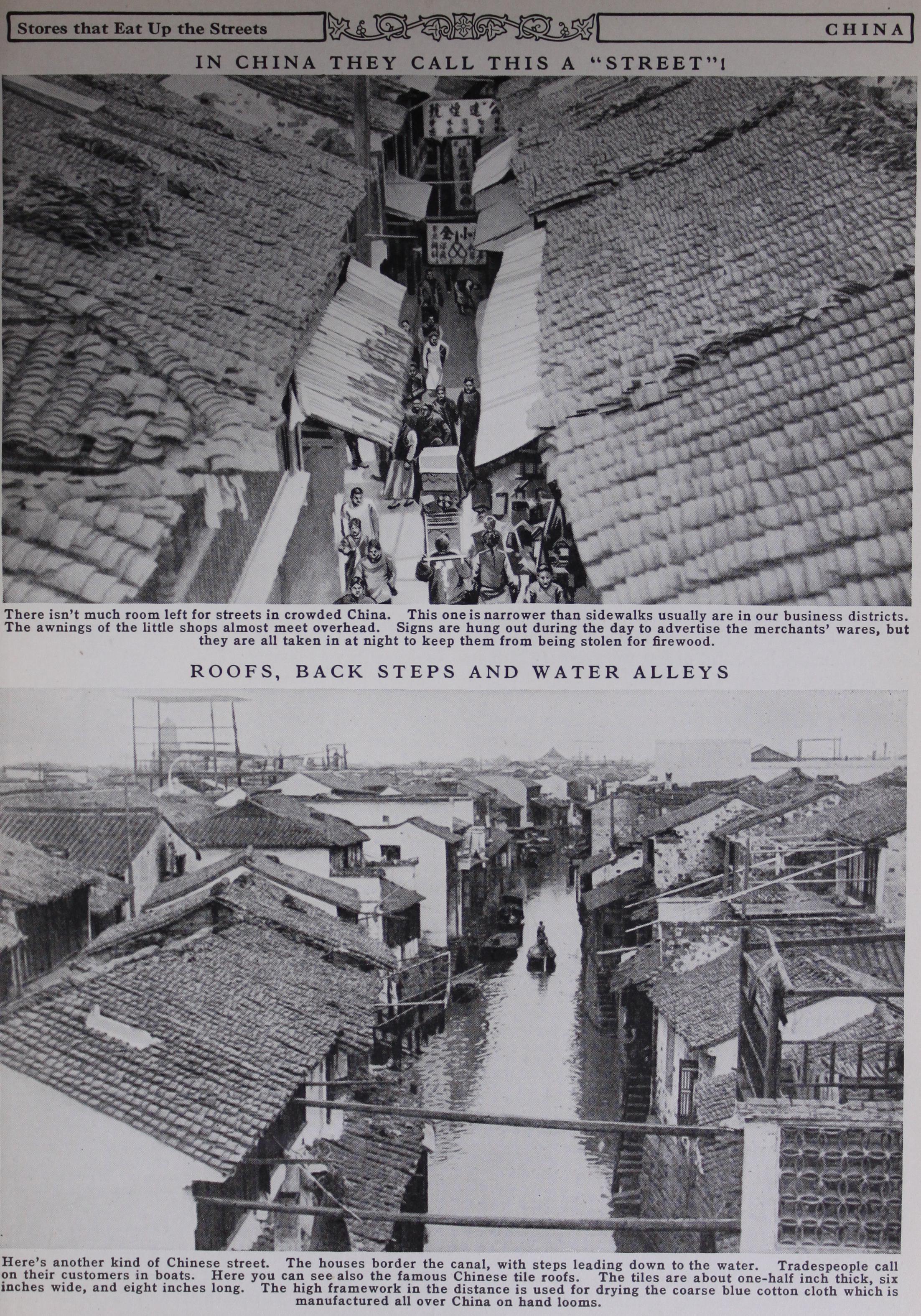
You have never in your life seen anything so dirty as the Chinese streets. They are dirtier and narrower than the dirtiest alley in America. This dirt breeds disease, so that China has hideous plagues. The insides of the houses are not so dirty, of course. But even these are far from clean as a rule, except among the wealthy peo ple, who are very, very few.
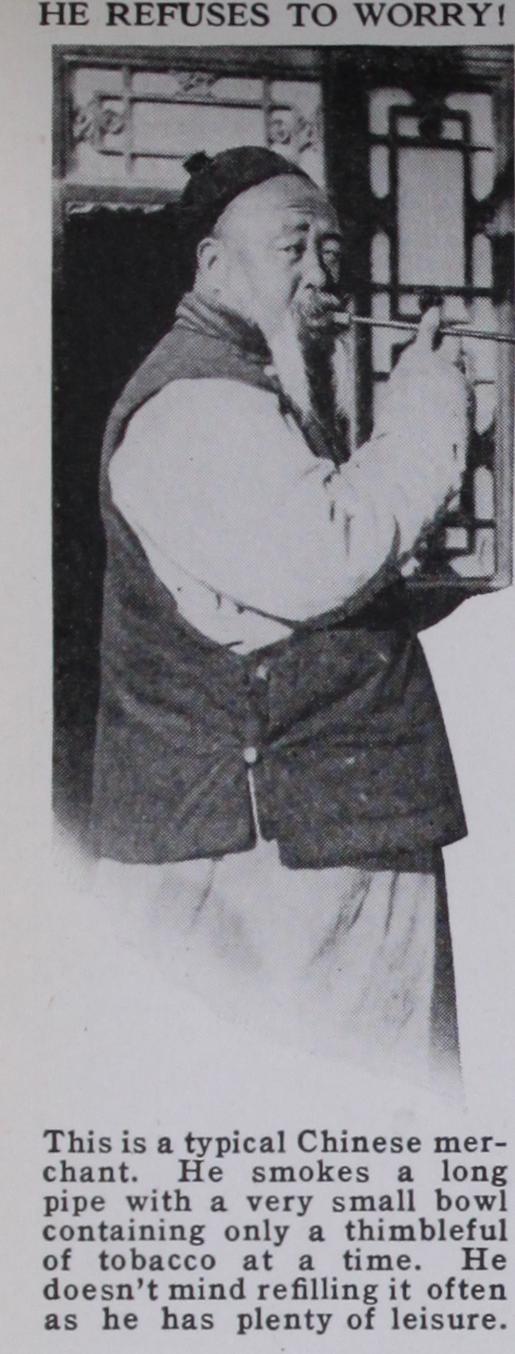
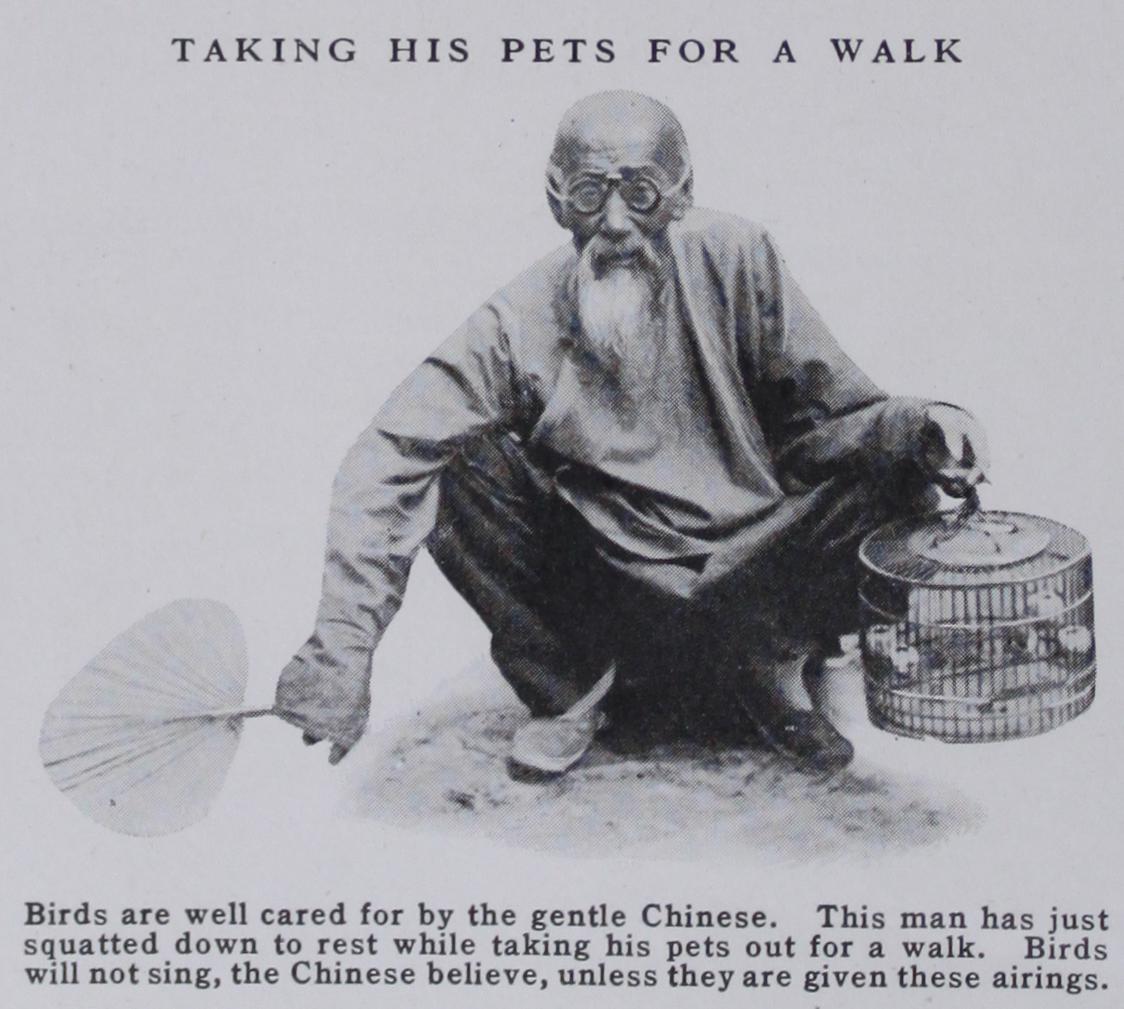
With these bad traits there are many excellent ones. The Chinese toil hard for the support of their families, and hold the aged in great respect. Polite ness is carried to an ex treme. The upper class es never contradict, and are careful to avoid of fensive statements. In giving an invitation they speak with contempt of their "unworthy" selves, families, and houses, and humbly ask the honor of the visitor's presence.
Whether or not he can read and write, the poor est laborer knows the laws of etiquette, and is as much at ease among his intellectual superiors as with his equals.
The Chinese have many beautiful festivals, such as the "Festival of the Dragon Boats," the "Feast of Lanterns," and other gaieties. They are fond of flying kites and even the grown people fly kites shaped like great dragons and lions and other fantastic things. The whole country is very picturesque, with many beauti ful temples, tall pagodas, gorgeous red and gold signs, and other beautiful things.
The principal food of the Chinese is rice. They also eat pork, poultry, and vegetables. China is the
one country in the world where milk is not used for food. Bird's-nest soup, shark's fins, lotus pods, and other curious things are considered great delicacies.
Many of the dishes are wonderfully cooked. The universal drink at all times is tea, partly because in this over-crowded land the water is badly polluted.
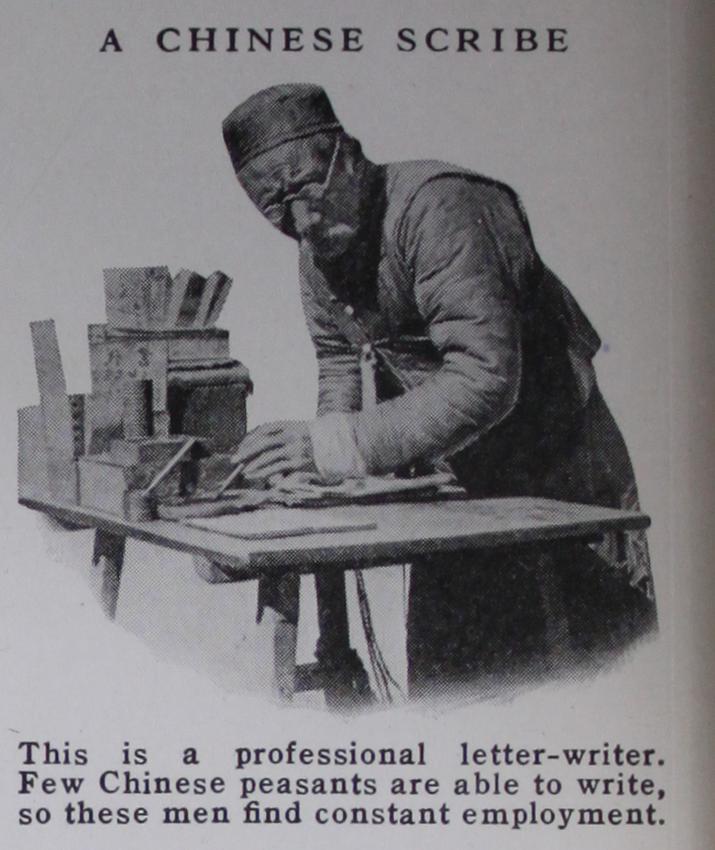
There are 18 or more spoken languages or dialects in China. But—and this seems strange to us—there is only one written language. Although a man from Canton cannot talk with a man from Peking, yet if they are both educated they can write to each other.
The reason for this is that the Chinese written characters do not represent sounds, as our words do. They are more like pictures, each picture mean ing the same thing to any Chinese, just as an American and a Frenchman can both understand a picture of a cow. These characters are called ideographs, because they represent ideas and not names. There are over 44,000 of these characters, but in ordinary reading one needs to know only about 3,000. Think how much better off you are, with an alphabet of only 26 characters! The Chinese written language is very old and very rich, and much beautiful litera ture and many beautiful poems were written in it in the old days of China's greatness.
The Chinese as Artists It is a curious fact that early Chinese painting grew out of the fine art of writing. The elaborate forms of the Chinese characters, applied with a fine brush, and placed on the page with a fine sense of rhythm and balance, early developed skill in the use of the brush. Thus Chinese painting, in spite of its beautiful use of color, is essentially an art of the line. The figures are outlined with delicate sure strokes, and filled in with water-colors, which explains that curious lack of perspective in Chinese painting.
In other forms of art too—architecture, sculpture, pottery, embroidery—the Chinese have • produced many exquisite things. The architecture of China's Golden Age, with its graceful pagodas, its temples with curving roofs, and its carved stonework, is as beautiful as any in the world. Nothing more beautiful has ever been made than Chinese porce lains, bronzes, and delicate jade and ivory carvings of that period, and their influence on Western art is very strong today.