China
chinese, japan, european, cities, people, peking, nations and little
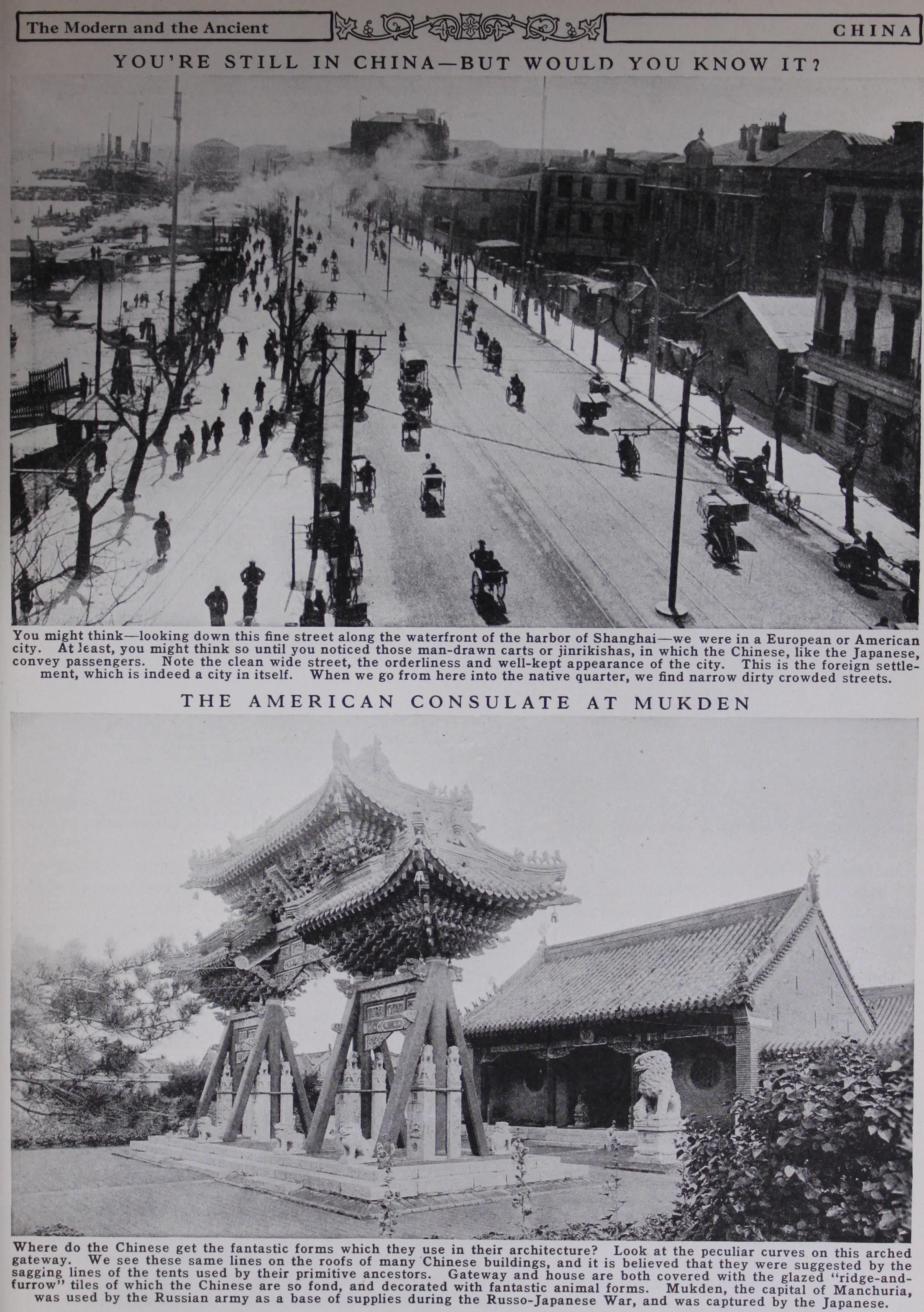
In 1841 England forced China to open the "treaty ports" and the westernizing of China began. The treaty ports are not, properly speaking, Chinese cities at all, but are international European cities, with European laws and customs, imbedded in Chinese territory. The city of Shanghai, for instance, is much more important as a Euro pean than as a Chinese city. The island city of Hongkong, near the coast in the south, is a British possession, but it rivals Shanghai in Chinese trade. The greatest truly Chinese cities are Peking in the north, and Canton in the south.
Aside from the international treaty ports, several outside nations, including England and Japan, hold bits of Chinese territory under treaties.
The government of China is now a republic, for in 1912, as a result of one of the most amazing revolutions in history, the Empire of the Manchus was over thrown. Enlightened Chinese, educated in Europe and the United States, with Dr. Sun Yat Sen at their head, were determined to have far-reaching re forms. Even an hum ble apology for the misgovernment of the realm, issued in the name of the pathetic little six-year-old em peror, could not save the throne. For a number of years, how ever, the path of the new Republic of China has been made difficult by civil wars between rival leaders and sec tions of the country, and the intrigues of foreign powers. In theory the land is gov erned from Peking, the capital. But in practice what little governing is done comes from local officials, still usually called mandarins. The 18 provinces are at best but loosely held together. It is said of the ordi nary Chinese citizen that he lavishes so much loyalty on family, community, and province that he has none left for the nation as a whole.
The relations between China and Japan especially are difficult. In 1894-95 Japan won the Chino Japanese War, and since then China has been very much afraid of her warlike little neighbor. The victory of Japan over Russia ten years later gave the education and politics, though the minds of the people at large move too slowly to have adopted them completely as yet.
On the whole, Europe has not treated China very well. England forced the opium trade on China, encouraging the Chinese to smoke opium and so injure the health and character of the people. This bad practice the Chinese succeeded in suppressing in island empire the controlling position in Chinese Manchuria which Russia had formerly enjoyed.
And when Japan took from Germany, in the World War of 1914-18, the port of Kiaochow and the German rights in the whole province of Shantung, a most formidable problem was created. To secure
the aid of the great powers against Japan was one of the motives which led China to take the side of the United States and the Allies in their great fight with the Central European powers. In that war her chief part was to send many "coolies" to build roads in France and to do other unskilled labor in the cause of the Allies.
In 1900 the Boxers, a band of ignorant religious fanatics, rose against the foreigners. The revolt was encouraged by the Empress Dowager, and the Europeans and Americans in Peking took refuge in the British legation. They were rescued after the long and famous "siege of Peking" by an international army in which American soldiers took part. The Boxers were finally put down, and from this time forward China officially accepted western ideas of 1906. All the European nations have taken land from China and used her people and her resources for their own gain.
China has needed money to build railroads, develop her resources, administer her vast empire, and bring it into the modern state of efficiency desired by all patriotic Chinese. The loans made by the various Powers—Russia, Germany, France, Great Britain, and Japan—have been accompanied by "concessions" which placed large sections of the country under the economic control of these countries. It is small wonder that the Chinese, already painfully adjusting themselves to modern conditions, have been exas perated into periodic revolts against foreign nations, when they realized the extent to which the hated foreigner exploits them. The United States is an exception, for it has always tried to protect China, and after the Boxer uprising it gave back to China several million dollars of the indemnity collected.
China put this money into a fund for preparing and sending students to American universities.
What of China's future? Today she is like a great jelly-fish, lying sprawled over eastern Asia. She is all body and no head and is at the mercy of anyone who comes along. But if she ever gathers herself together and finds a head, she may again become a great country and take her place among the nations of the world. (For additional information, see articles on chief cities, regions, and rivers.) A Few Odds and Ends about China If all the people of North America were crowded into the state of Texas, the population would be only a little more dense than it is in the Province of Shantung, at the mouth of the Yellow River.