China
christ, europe, chinese, centuries, world, country and famous
China, has many religions, though no one of them is very active. Originally the Chinese had a simple religion, a "worship of heaven," with only one god.
Later Taoism was founded by Laotse and it is still practiced. About 500 years before Christ, Confucius laid down a system of morals called Confucianism.
About the time of Christ, Buddhism was brought over from India. Mohammedanism has some fol lowers, and very recently Christianity has made much progress. All these religions, except Christian ity, are now practically mixed together, so that the general populace can hardly tell one from the other.
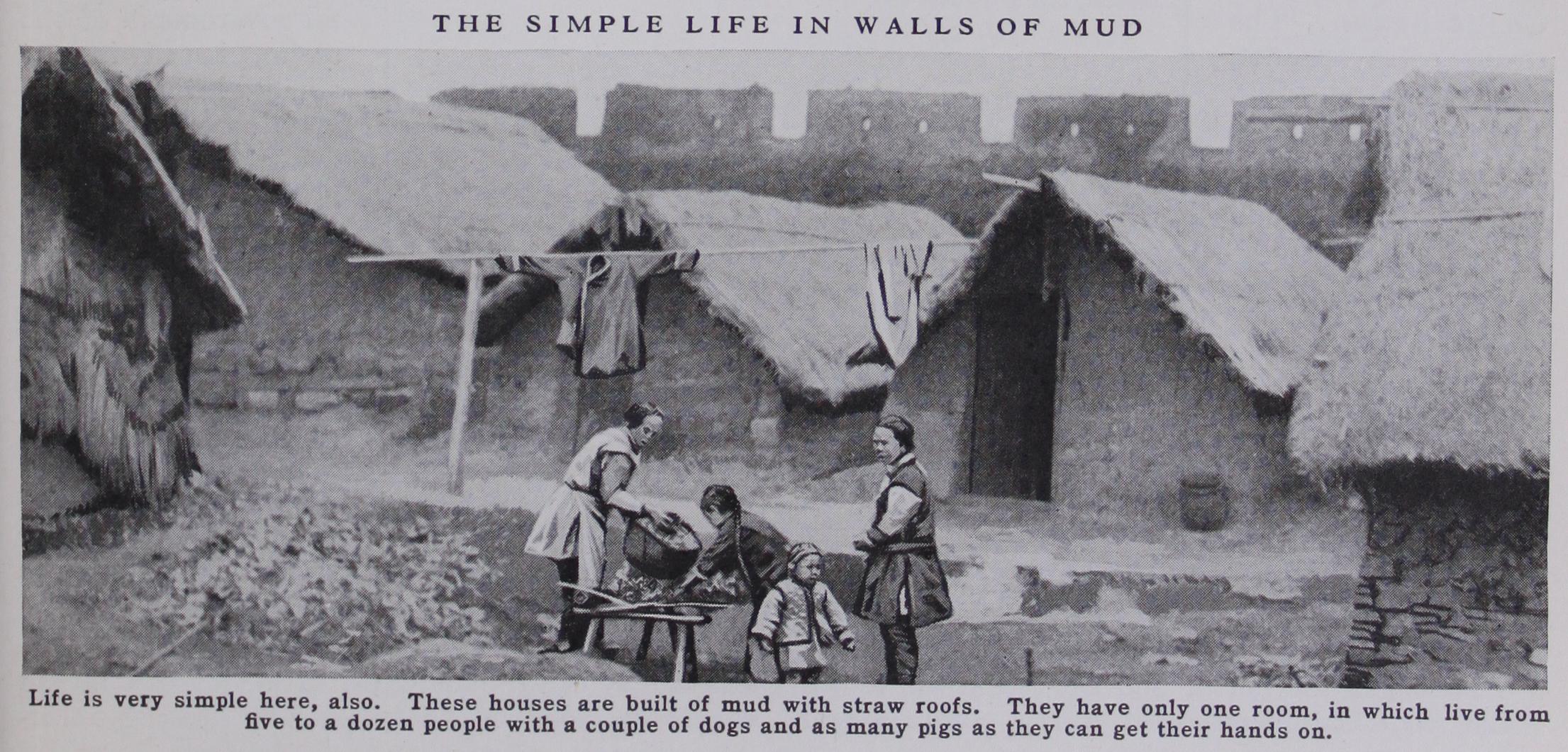
Feeding 360,000,000 Mouths China is primarily an agricultural country. Much of its soil is immensely fertile and it is worked with minute care. Even the mountain slopes are terraced and tilled, sometimes to the height of 8,000 feet.
Rafts covered with earth support flourishing gardens even on the rivers' surface. But the practice of "ancestor worship" withholds from cultivation many plots where lie the coffins of the Chinese dead.
Elaborate fertilization is practiced, as well as irriga tion, but the farmers follow slavishly the routine of their forefathers, and western methods and agri cultural machinery are little used. Generally the tools and implements are of the rudest description.
This is due in part to the very great veneration which the Chinese have for their past.
Rice, the chief food of the country, is the principal crop. Bamboo is grown as building material and the tender shoots are eaten as we eat asparagus.
Tea and silk are the most important exports.
Other products are cotton, wheat, barley, millet, maize, sugar, tobacco, poppies for opium, and fruit.
China has great min eral wealth, very largely undeveloped, including iron, coal, copper, tin, etc. Its coal fields are reckoned as among the most extensive in the world. The richest de posits, however, are sit uated in the interior and are inaccessible with the present defec tive means of commu nication. The principal manufactures are silks, porcelain, lacquered ware, etc., in all of which the artistic skill of the Chinese has been renowned for centuries.
The most famous sin gle structure in China is the Great Wall. This is a brick and masonry wall about 1,500 miles long, built across north ern China, over moun tains and through very difficult country. It is
one of the greatest of all engineering feats and one of the "seven wonders of the world." It is in most places from 20 to 30 feet high, from 15 to 25 feet thick, and has square forts every half-mile or so. It was begun in the 3d century before Christ, by the Emperor Shi-Hwang-ti, to keep out the Tatars.
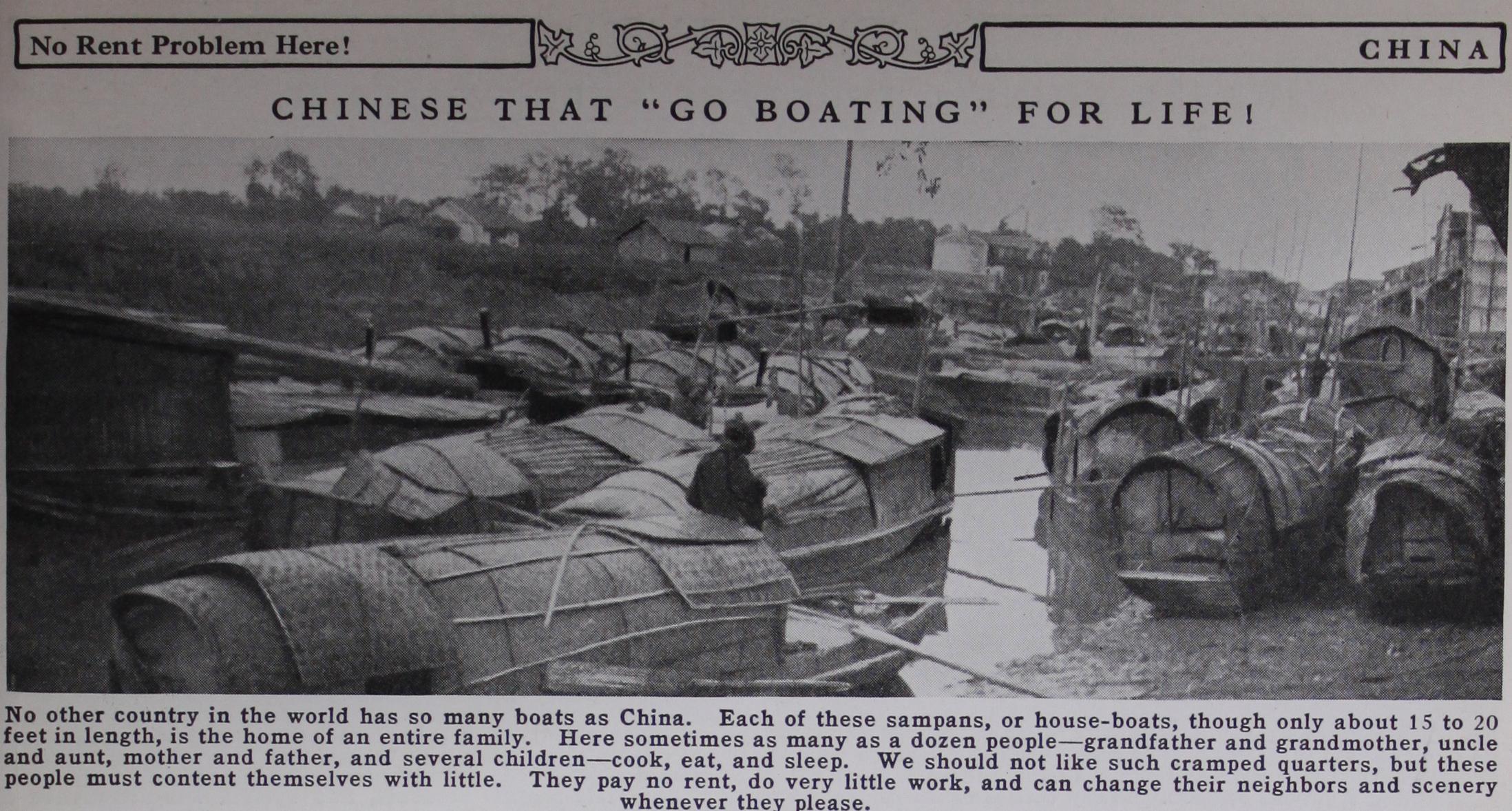
The Grand Canal, another great work begun early in the Christian era, runs north and south through middle China and is about 850 miles long.
The "Altar of Heaven" at Peking, the tombs of the Ming emperors at Nankow with their carved animals, and the temple of Confucius at Chu-fu, are other famous monuments of the lost grandeur of "Cathay," as China was called in the Middle Ages.
The China of the Past Long, long ago, many hundreds of years before Christ was born in the Holy Land—when the people of Britain were still savages who painted themselves blue, and northern Europe was inhabited only by barbarous tribes—Egypt, Babylonia, and China were the greatest nations in the world. Today China is known politically as a "second-class nation." Per haps now that Europe has grown great with science and industry and has come to awaken China out of her sleep, China may again be a very great nation.
The first that Europe really knew of " Cathay" was from a Venetian traveler named Marco Polo, who visited China in the 13th century (see Polo, Marco). When Columbus discovered America he was really looking for China and India. But the days of China's greatness had begun long before that. The Ts'in dynasty (249-210 B.c.), the Han dynasty, the Sung dynasty, and other famous periods were over before the age of discovery, so that China was really declining in power before Europe realized her greatness.
In the 12th and 13th centuries after Christ the Mongols invaded China, and first Genghis Khan and then Kublai Khan became emperors. This was another great epoch for China, even though the Mongol rule lasted for centuries. In the 17th century another foreign people, the Manchus, conquered China and ruled it till 1912. The great Empress Dowa ger, Tsz'e An, who died in 1908, was the last important Manchu.