Suggestions for Handicraft Fur Niture Work
inches, top, mirror, pieces, fig, table and shown
We next present some straight-line pieces of furniture especially suited to the cottage bedroom.
Of all the places in a house, the sleeping apartment—the place where, more than in any other part of the house, one's life is spent— should be simply but adequately equipped.
Every piece here described is well within the ability of any worker in wood. Though much time and drudgery would be saved were it possible for the worker to make use of the circular saw or band-saw, the planer or jointer, the sander, mortiser, etc., yet there is nothing in the construction of any of these pieces that cannot be prepared by means of the ordinary hand-tools found in every journeyman carpen ter's box.
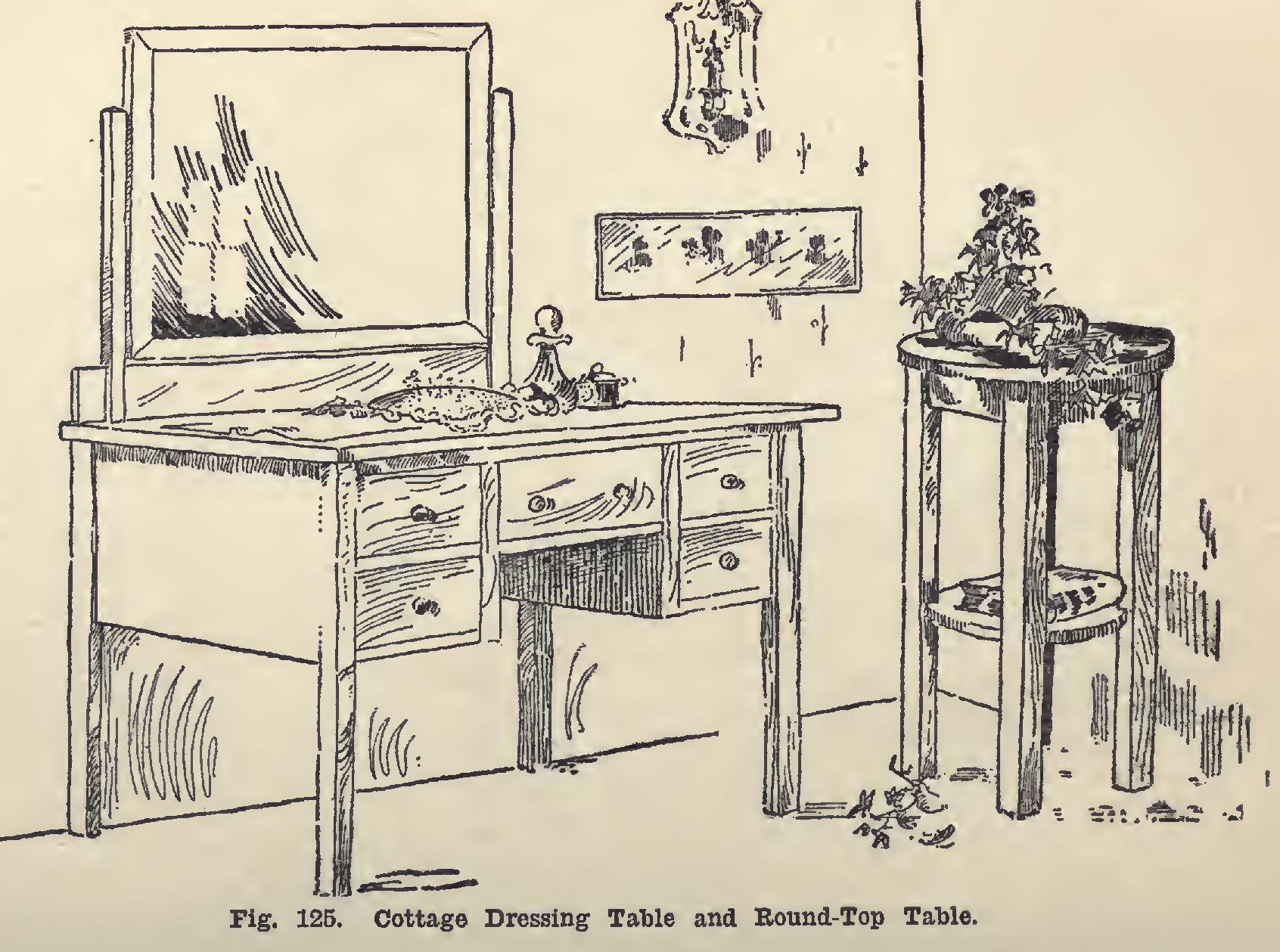
In Fig. 125 is shown a cottage dressing table. The size over all is: length, forty-four inches; depth, twenty-four inches; and height, sixty three inches. The mirror is twenty-four by thirty inches. This mirror may appropriately be of either plain or bevel-plate glass.
The upper part of the dresser should be made detachable so that the mirror may be properly wrapped and packed should it ever become nec essary to ship it. The importance of making such pieces in two parts is recognized by all fur niture manufacturers. Two cleats on the back, fastened by means of screws to the two parts, will suffice to hold the parts together.
Knobs for the five drawers may be pur chased at almost any hardware store; simple round brass ones will look well.
A rather heavy top should be used—an inch and an eighth is none too thick. The whole de sign can be made to assume lighter proportions than are shown in the sketch, by making the drawers shallower.
Special fasteners may be had for fastening the mirror to the supports so that it can swing freely. It may not be out of place to remind the inexperienced that these fasteners must be placed quite a little above the middle of the mirror, otherwise the top will swing forward. A very pretty effect is produced by using wooden pins with enlarged heads, instead of the metal fasteners. Holes are bored through the sup ports into the edges of the mirror frame, and the pins inserted.
In Fig. 125 is also shown a very pretty round-top table especially appropriate for hold ing flower vases, which, when filled with bright flowers, add so much to the cheerfulness of a rest room. It may also provide a convenient
place to lay the occasional book that one may happen to be reading.
The top of the table is eighteen inches in diameter. The lower shelf is round like the top. The frame is formed by mortising the four top rails into the four square legs. Gains are cut in the legs to receive the lower shelf, dowels and glue being used to fasten the parts.
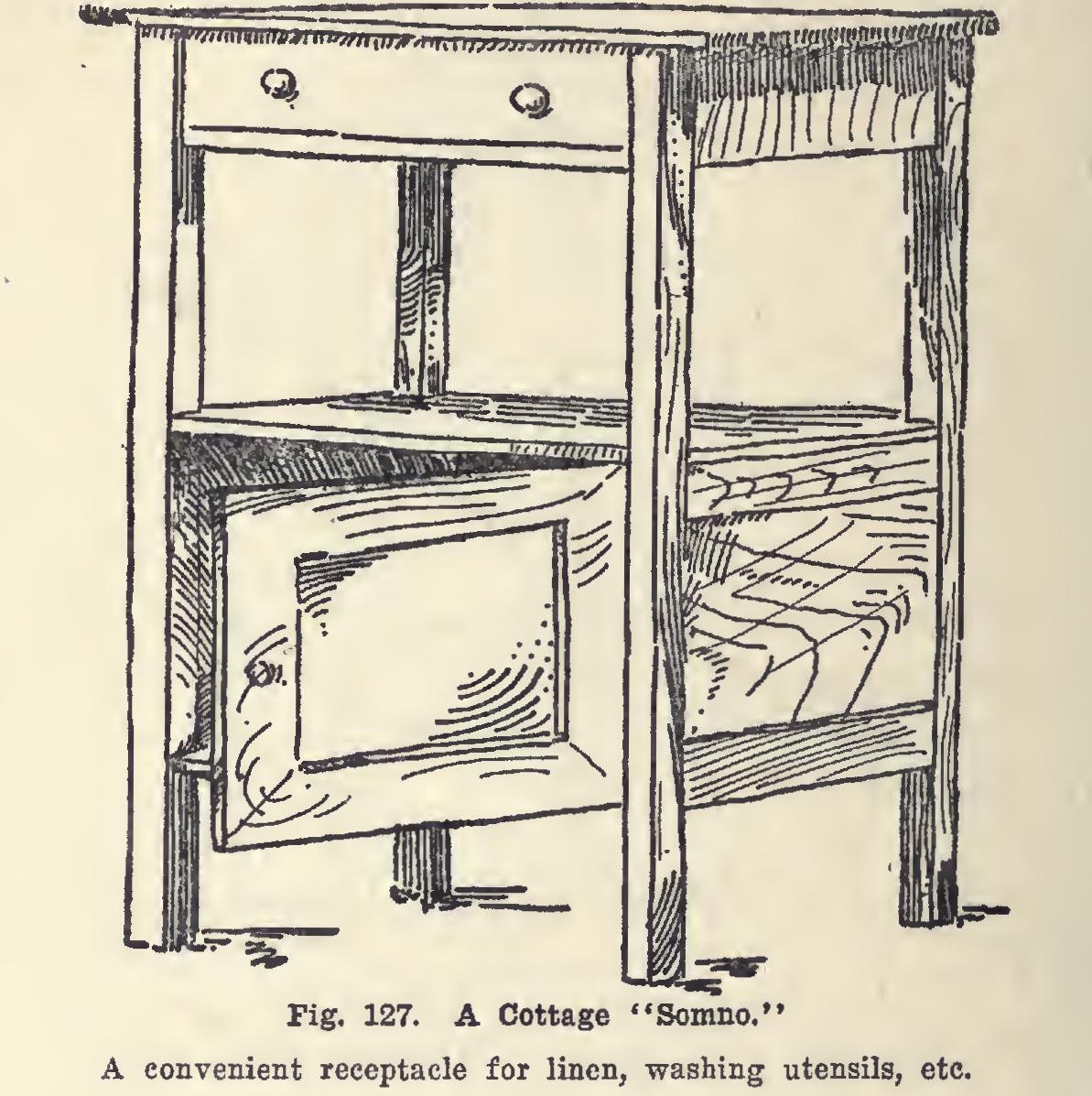
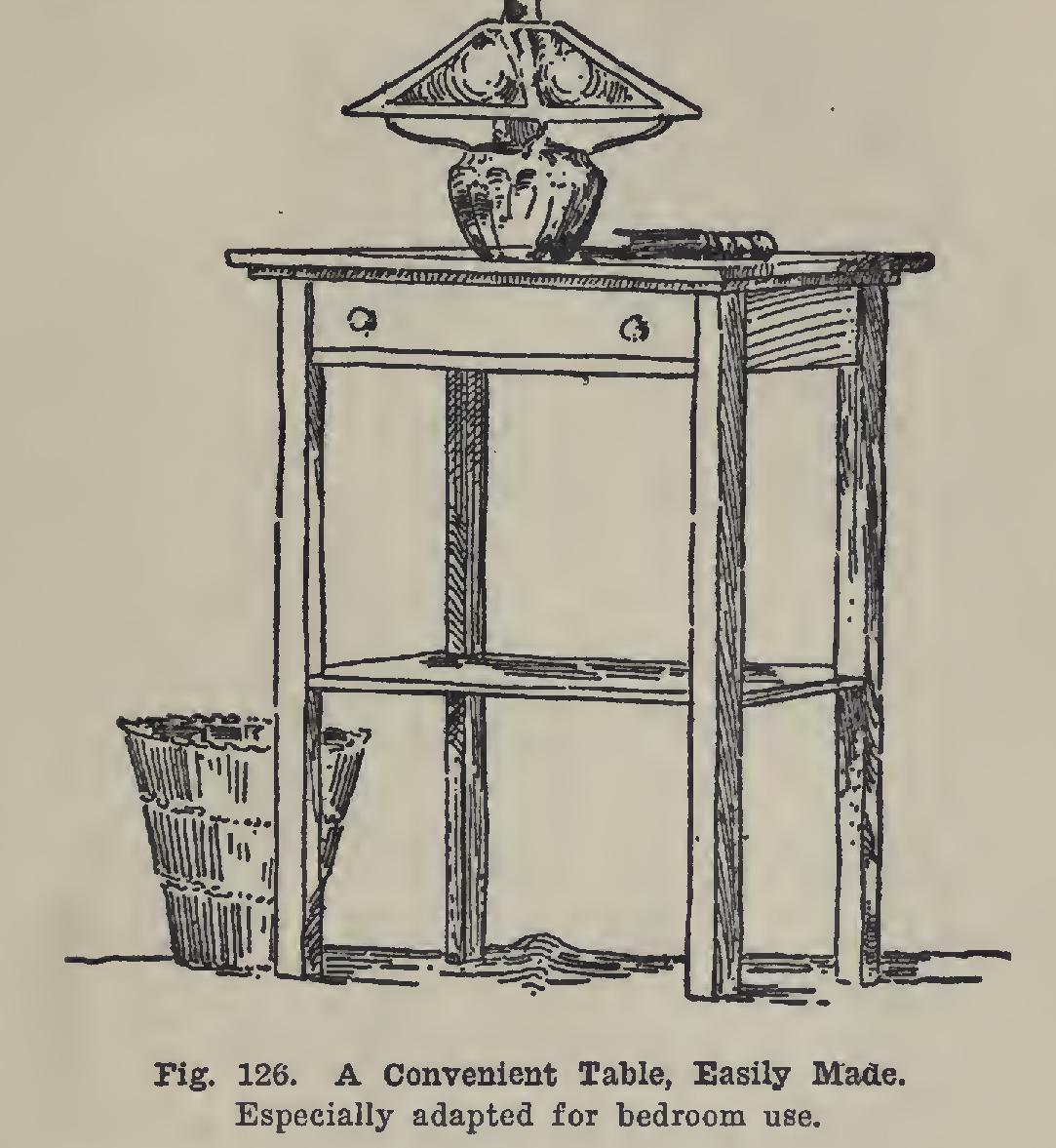
Fig. 126 is a sketch of a table that can be utilized to advantage in almost any part of the house, but which is especially fitted for the bed room. Good proportions would be: top, twenty inches wide by twenty-seven inches long. The height should be about thirty inches. The de sign calls for a double top. There is nothing unusual in the general construction.
In Fig. 127 is shown a cottage somno. In out-of-town places where it is not customary to have a bathroom and appurtenances connected with each bedroom, the somno is not only a con venience but a necessity. The accompanying design is an excellent counterpiece to the table of Fig. 126 and to the other pieces described herein.
The drawer of the somno provides a place for linen, and the top a place for washing utensils. The lower compartment is to be made so as to form a tight enclosure, the sides and back being paneled with rails securely mortised into the legs. Knobs for the paneled door and for the drawer should be got that will harmonize with those of the other pieces of the room—the round brass ones that were specified above would look well, or wrought-iron fixtures would be appropriate.
The size of the somno is: top, sixteen by twenty inches; height, thirty inches.
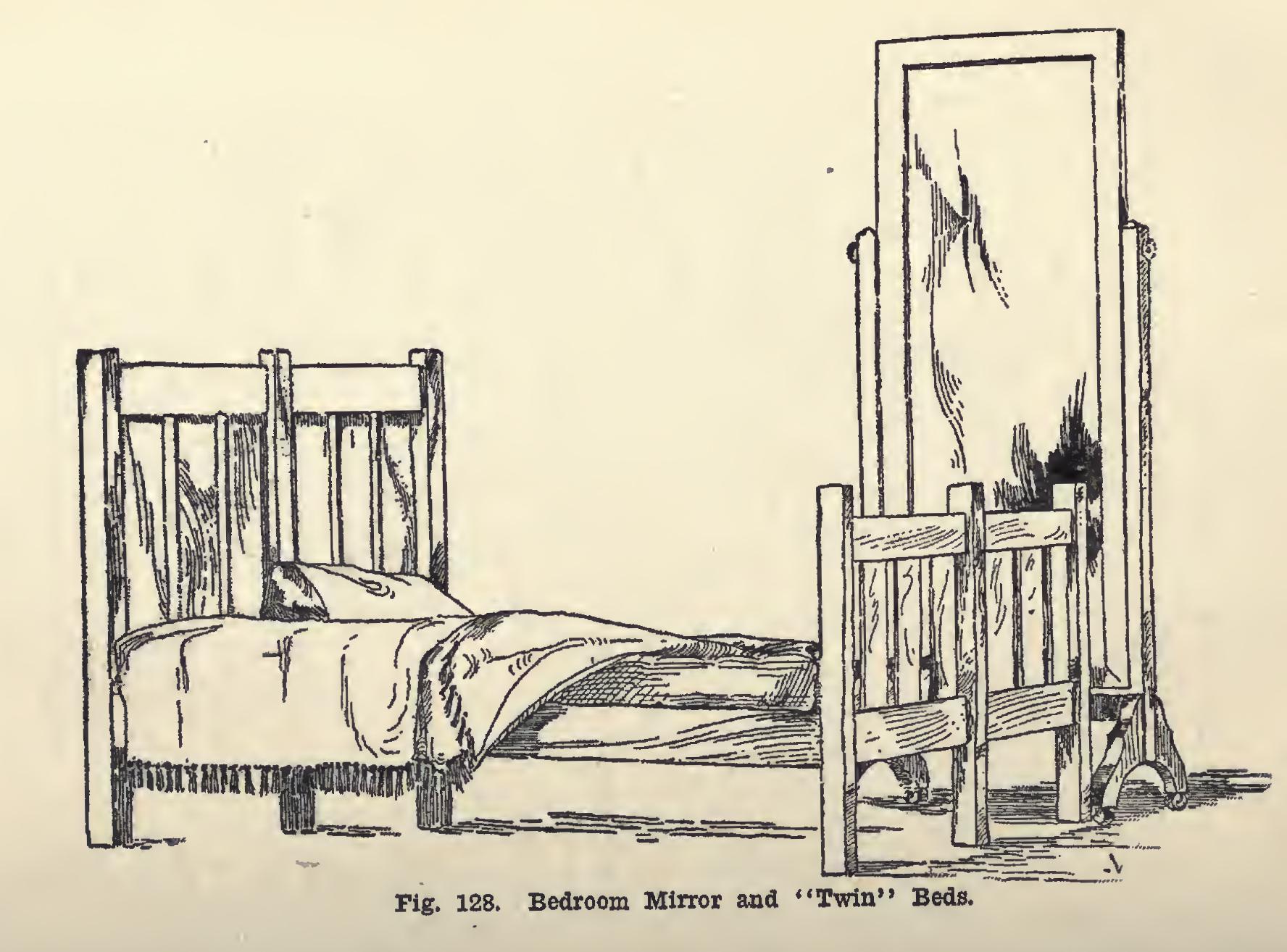
In Fig. 128 are two other essential pieces for the sleeping apartment—the bed and mirror. The bed design illustrated shows what are known as twin beds. Undoubtedly the most satisfac tory arrangement of beds where two people are to occupy the same room, is to have individual beds. In this case the beds need to be about three feet wide each. This permits of separate bedding, and thus obviates the disagreeable fea tures of the double bed with one-piece cover.