Suggestions for Handicraft Fur Niture Work
inches, top, fig, seat, fastened, placed, table and design
The back is framed out of one-quarter-inch stock and paneled, and fastened to the shelves and end pieces by means of screws. The top is made wide enough and long enough to "over hang" the front. It is fastened to back, front, and ends with finishing nails. All nail-holes are to be filled with putty, colored to match the finish to be put on.
The size of the case will depend upon what it is wanted for. For a case thirty inches long or less, but one door should be used. Fifty-four inches is a good height, with the depth as pre viously described. Forty, forty-eight, and fifty four inches are standard lengths.
The library table (Fig. 130) has nothing un usual in its construction. The legs may be made three inches square—or, if an unusually massive effect is desired—three and one-half inches, with a length of thirty inches. The top may be thirty-six by sixty, or thirty-six by seventy-two inches, with a thickness of one and one-quarter or one and one-half inches.
There is no shelf planned for below, in order that it may be possible to draw a chair close to the table, and do writing or other literary work upon it conveniently. There are two drawers of small size, designed to care for papers and writing materials.
Designs such as have been described may be finished appropriately in almost any of the pre vailing styles. They look especially well with soft-colored stains in dull waxed effects. If perfectly smooth surfaces are desired, colored fillers should be used, these to be followed with wax rubbed down to a dull glow finish.
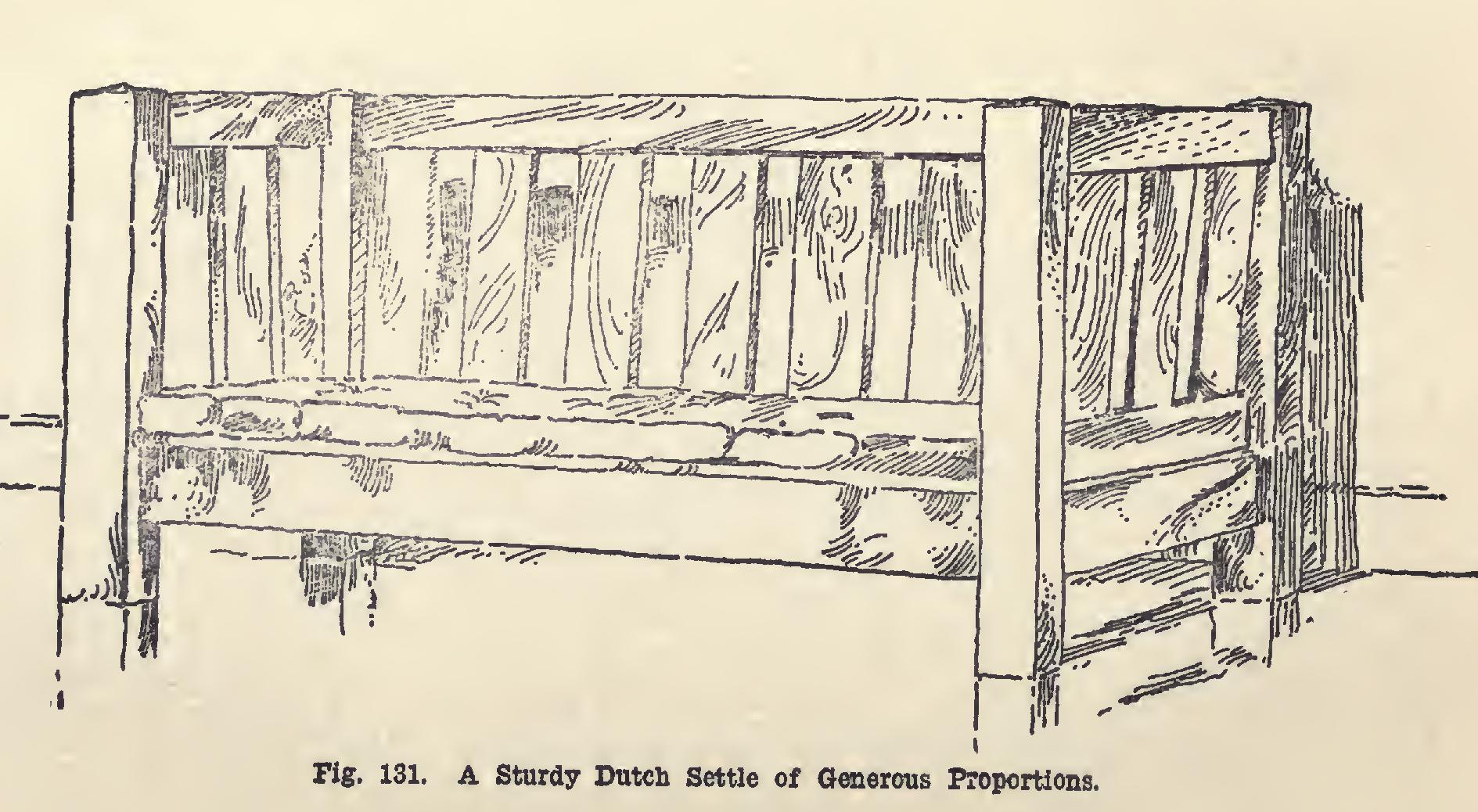
In Fig. 131 is shown a settle of generous pro portions in the sturdy style of the Dutch people. This piece should be made of plain-sawed oak, either white or red. All parts are to be thor oughly mortised-and-tenoned together, as the honest appearance of the design demands.
A touch of originality has been added by placing the top rails near the outer surfaces of the posts, while the rails into which the lower ends of the slats enter have been placed near the inside surfaces. This gives the slats a slight inclination from the vertical—an effect which, while extremely simple, is suggestive of com fort, and serves to break the monotony of so many vertical lines.
It is intended that the seat shall be made solid, extending over the rails, to which it is to be fastened. The nosing or projecting edge of the seat should be rounded. Upon this seat is
to be placed a well-filled cushion of denim, bur lap, or Spanish roan leather. This cushion may be filled with hair or cushion cotton.
The posts are four inches square, with a length of thirty-six and one-half inches. The seat is twenty-three inches deep. The length may be varied to suit the worker's desire, five or six feet being usual.
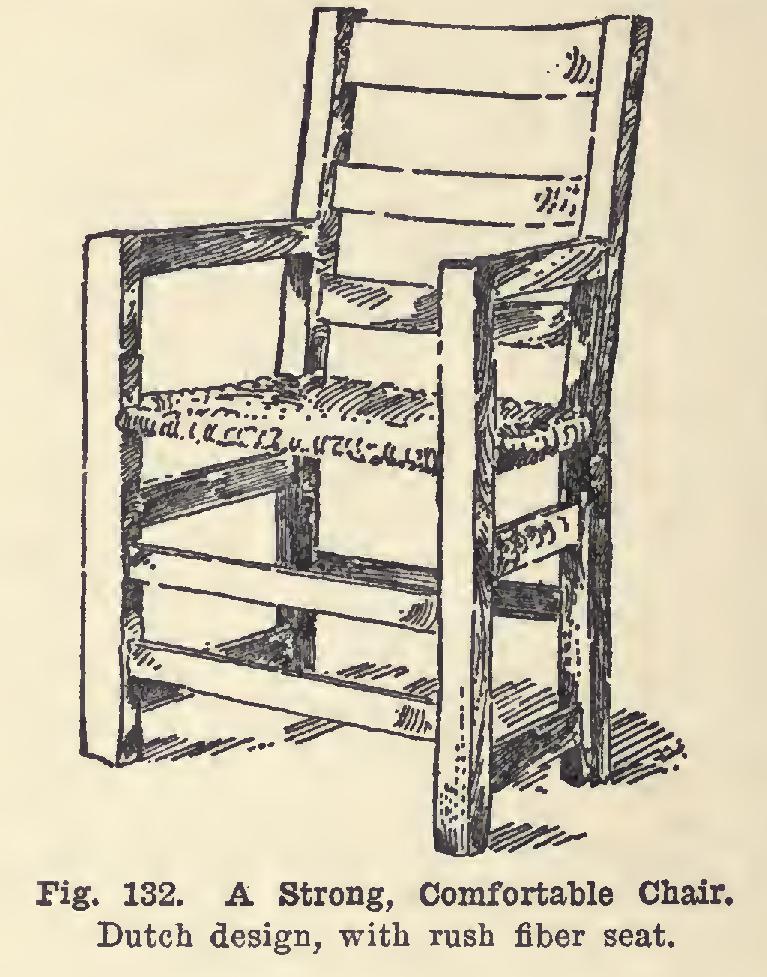
A chair, also of Dutch design and having a flag seating, is shown in Fig. 132. To one accus tomed to French creations of such light con struction that one hesitates to sit upon them for fear of being precipitated to the floor, these designs ought to appeal.
The sewing table (Fig. 133) will appeal to the ladies. What one has not desired just such a piece of furniture? It is pleasing in design, can be placed in any room in the house, and will be in accord with its surroundings. It has drawers in which to keep the one hundred and one little knick-knacks that go to make up a sewing outfit. The top, too, while but eighteen inches long and wide, has two leaves that can be raised when desired so as to make a working surface thirty-three by eighteen inches.
The height is twenty-nine and one-half inches over all. The construction is of the usual kind. The two drawers are to be carefully made and fitted, their sides being dovetailed to the fronts, blind. The knobs for the fronts can be purchased, as can the swing brackets that sup port the leaves. Two pairs of plain butt hinges will be needed; these are to be fastened to the under side of top and leaf.
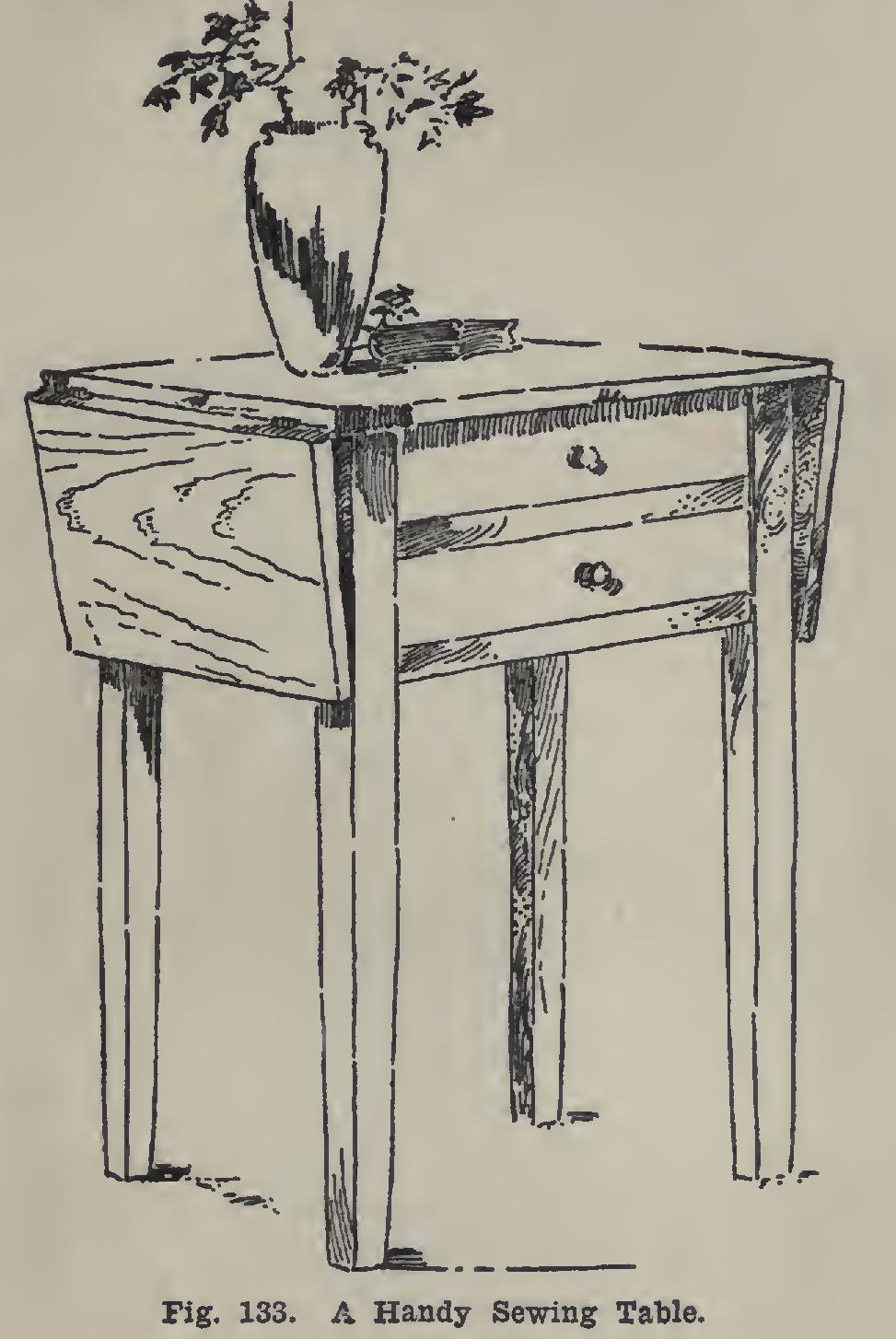
The finish for this table should be selected with reference to that of the other pieces in the room in which it is to be placed.
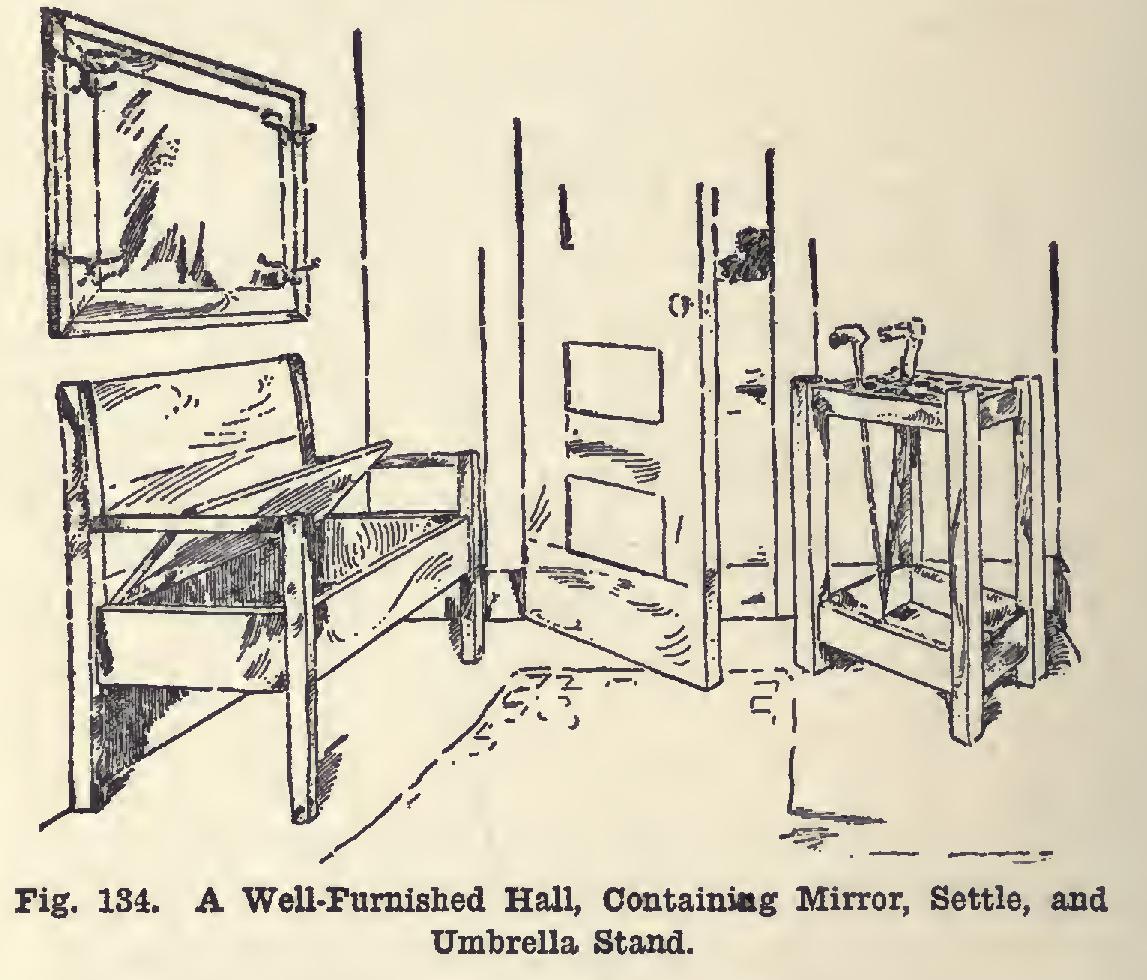
A well-furnished hall is shown in Fig. 134. These suggestions are somewhat out of the ordi nary, but are according to dictates of late fur niture design. These pieces may be made of plain or quartered white oak. The mirror should be furnished with beveled-plate glass thirty-two by eighteen inches. The frame for this should measure forty-two by twenty-eight inches, and can be made in two parts for con venience in working it, though a one-piece frame is better construction. The corners are mitered, splined, and glued after each part has been rab beted for the glass. Hooks of appropriate de sign and material can be purchased at the hard ware stores. Their location is clearly indicated in the drawing.