Right Jack Fig21
rafter, common, hip, blade, run, fig, cut, tongue, square and rise
Proceed in like manner for the octagon hip, the variation, however, is five-twelfths or prac tically one-half of the above results for the square cornered building.
In Fig. 32 is shown the plan of a hip and common rafter in place, also an elevation of same with the hip swung parallel to the common rafter, A C and A B being their respective lengths. This figure also illustrates the relative pitch of one to the other but when set in their res pective places on the building are of the same plane.
Fig. 33 illustrates side cut of the jack, 12 on the tongue, and 15 (length of the common rafter) on the blade.
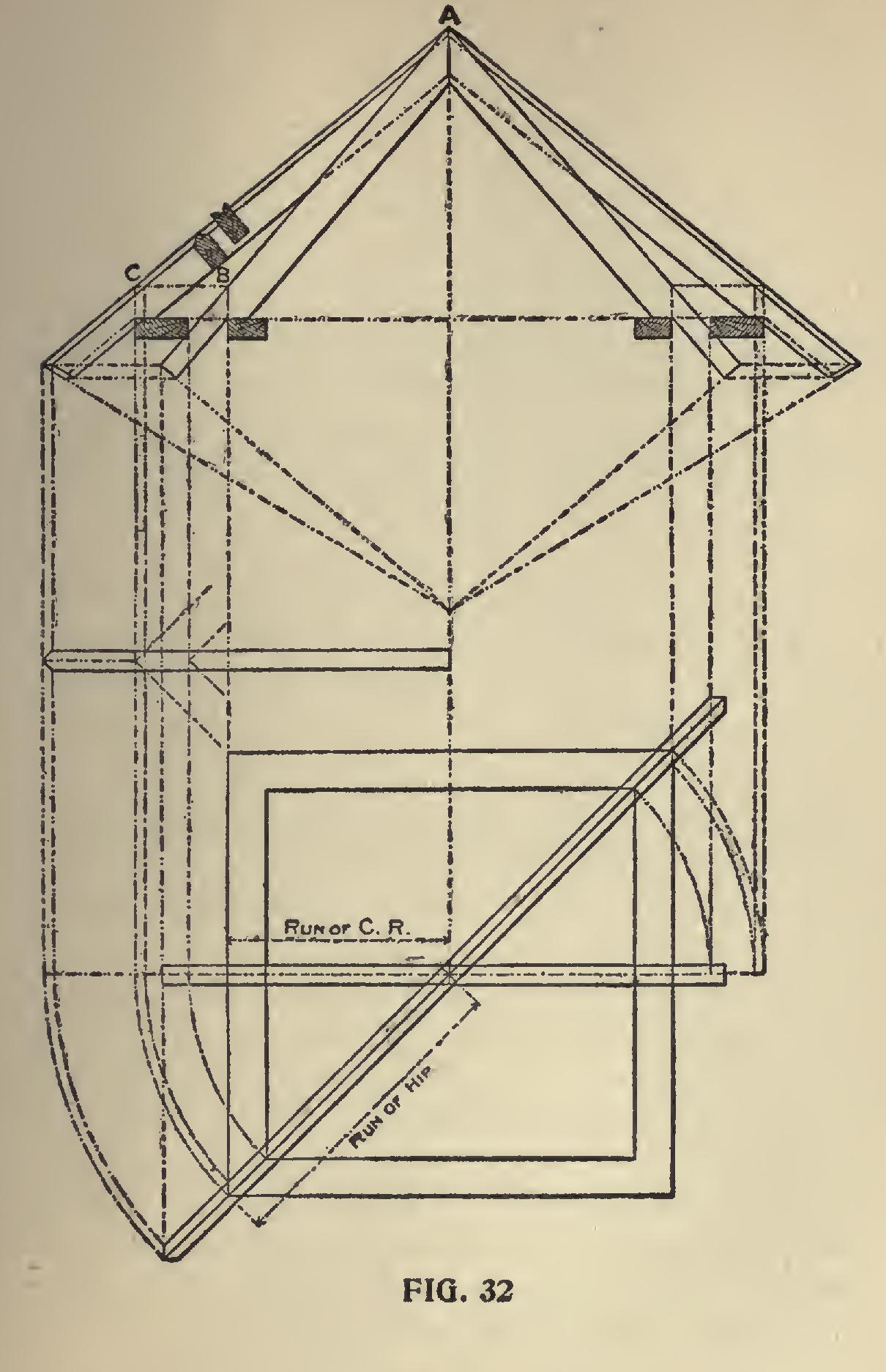
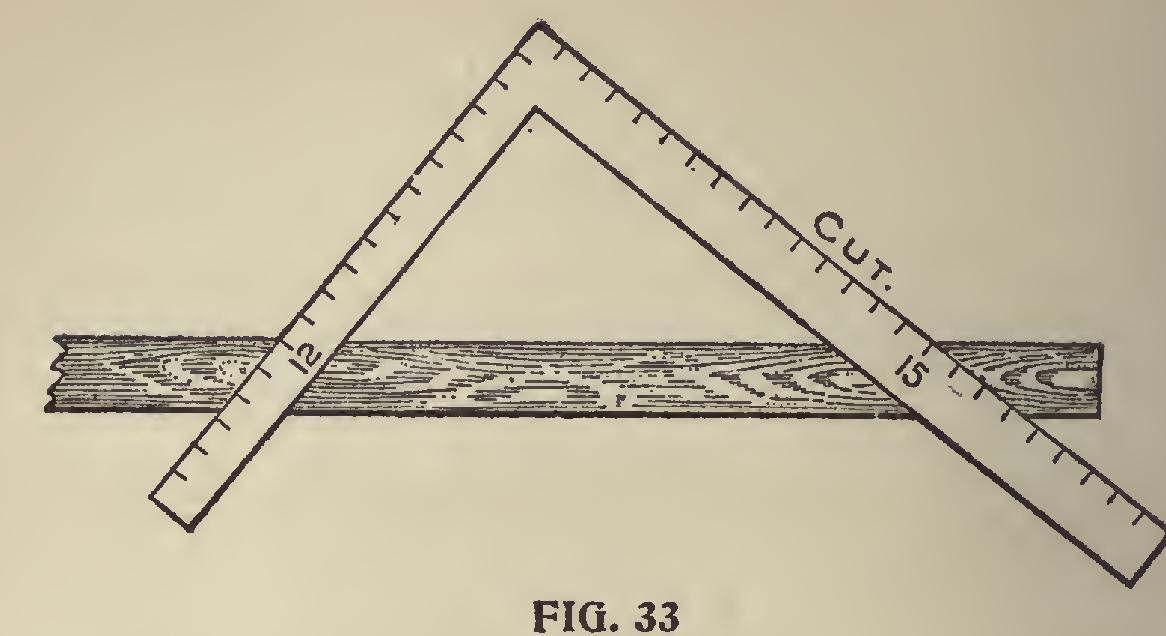
Fig. 34 illustrates side cut of the octagon jack, 5 on the tongue and 15 on the blade.
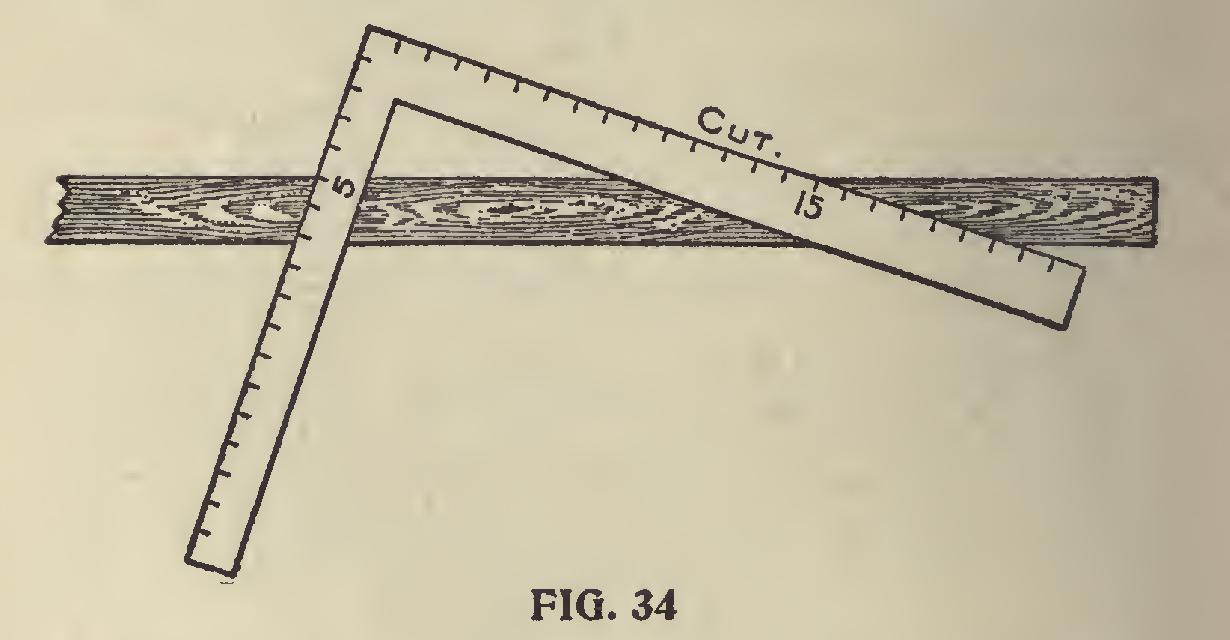
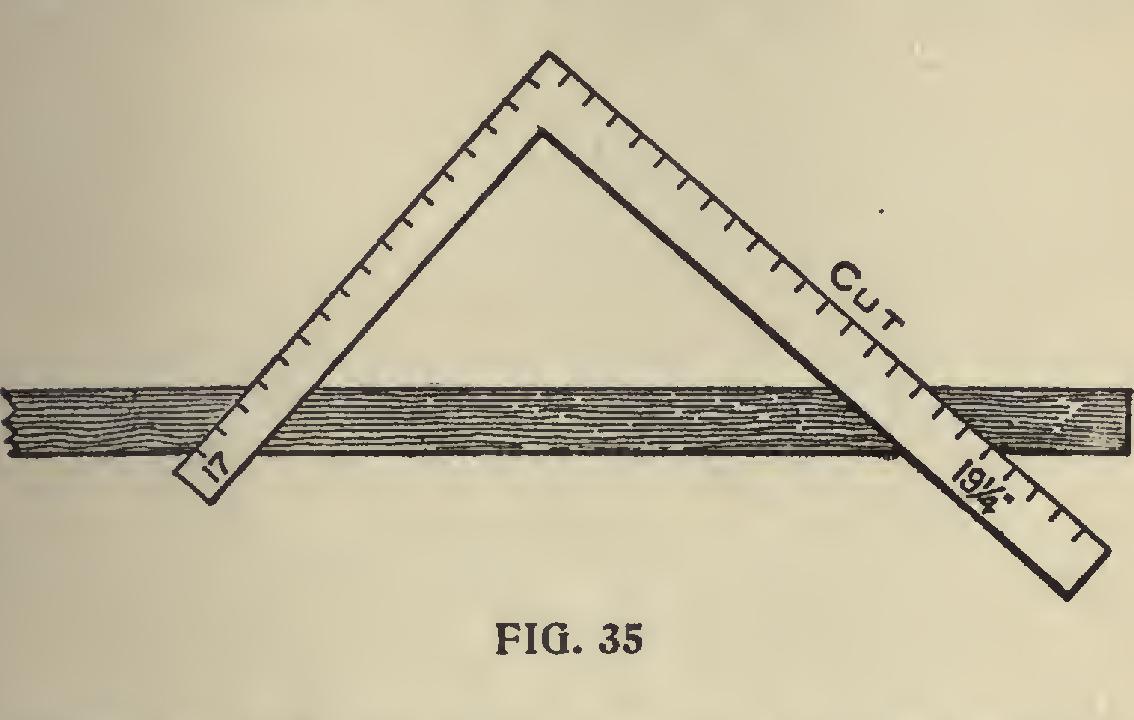
Fig. 35 illustrates the side cut of the hip or valley, 17 on tongue, 19/ (length of the hip) on the blade. The blade giving the cut in each case.
The latter, however, is for the unbacked rafter. If it has been previously backed, then apply the square with the above figures on the lower edge at bottom of the plumb cut, or apply the square as for the jack, Fig. 33, to the backing line, which will give the same result as 17 and 19i.
It is quite clear that when a workman cuts a common rafter he is also cutting a timber that would answer for a hip for a building of less span having the same rise, only taking some adjustment of the top bevel to fit against the ridge. This is quite plain, and if we refer to Fig. 36 we find that the common rafter for a 1-foot run becomes a hip for an 8i inch run, and that a hip for a 1-foot run of the building becomes a common rafter for a 17-inch run. Therefore, the rule that applies to the common rafter also applies to the hip rafter, i. e., the run and rise taken on the square will give the seat and plumb cuts. The run and length of the rafter taken on the square will give the side cuts, or taking the scale for a 1-foot run, Fig. 36, it is 12 on the tongue and the rise on the blade for the common rafter, and 17 on the tongue and rise on the blade for the hip. The tongue giving the seat cut and the blade the plumb cut. For the side cuts we take 12 on the tongue and 15 and five-eighths inches on the blade, and the blade will give the side cut of the jack. Take 17 on the tongue and the length of the hip, 19i inches on the blade, and the blade will give the side cut of the hip. It would also be the side cut of the cor responding jack if it be a common rafter. Seven teen is used for a foot run of the hip rafter because the diagonal of a 12-inch square is -practically 17 inches.
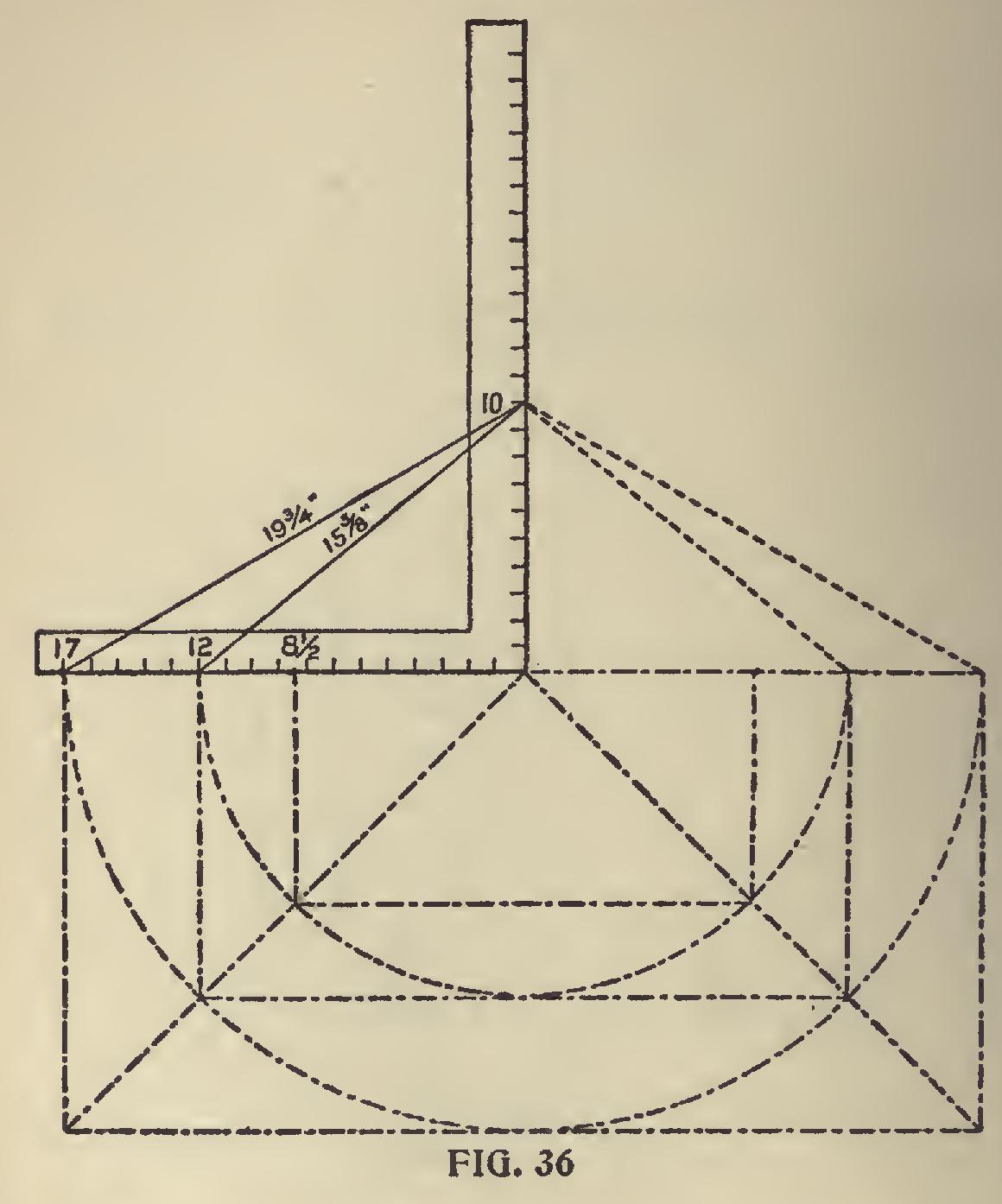
If we were to use 12 on the tongue for a foot run of the hip the rise to the foot would necessarily be less than 10 inches. In Fig.
37 we show what the difference is in the rise to the foot.
From 12 to 12 is the length of the run of the hip, and this, taken on a continued line of the run of the common rafter, and an equal rise of the common rafter, set off as at A, and a line from this to 12 on the tongue passes at 7 and one seventeenth inches on the blade, because the common rafter having a rise of 10 inches to one foot, for one inch it would have ten-twelfths of an inch, while the hip would only have ten seventeenths of an inch to one inch and for 12 inches it would be 12 times ten-seventeenths, equals 120 seventeenths, or 7 and one-seventeenth inches. Therefore the figures given in the second part of illustration would give the same cuts as those in the first, but the latter necessitates a calculation that ends in fractions—fractions not given on the square—and for that reason 17 is generally used for a foot run for the hips and valleys.
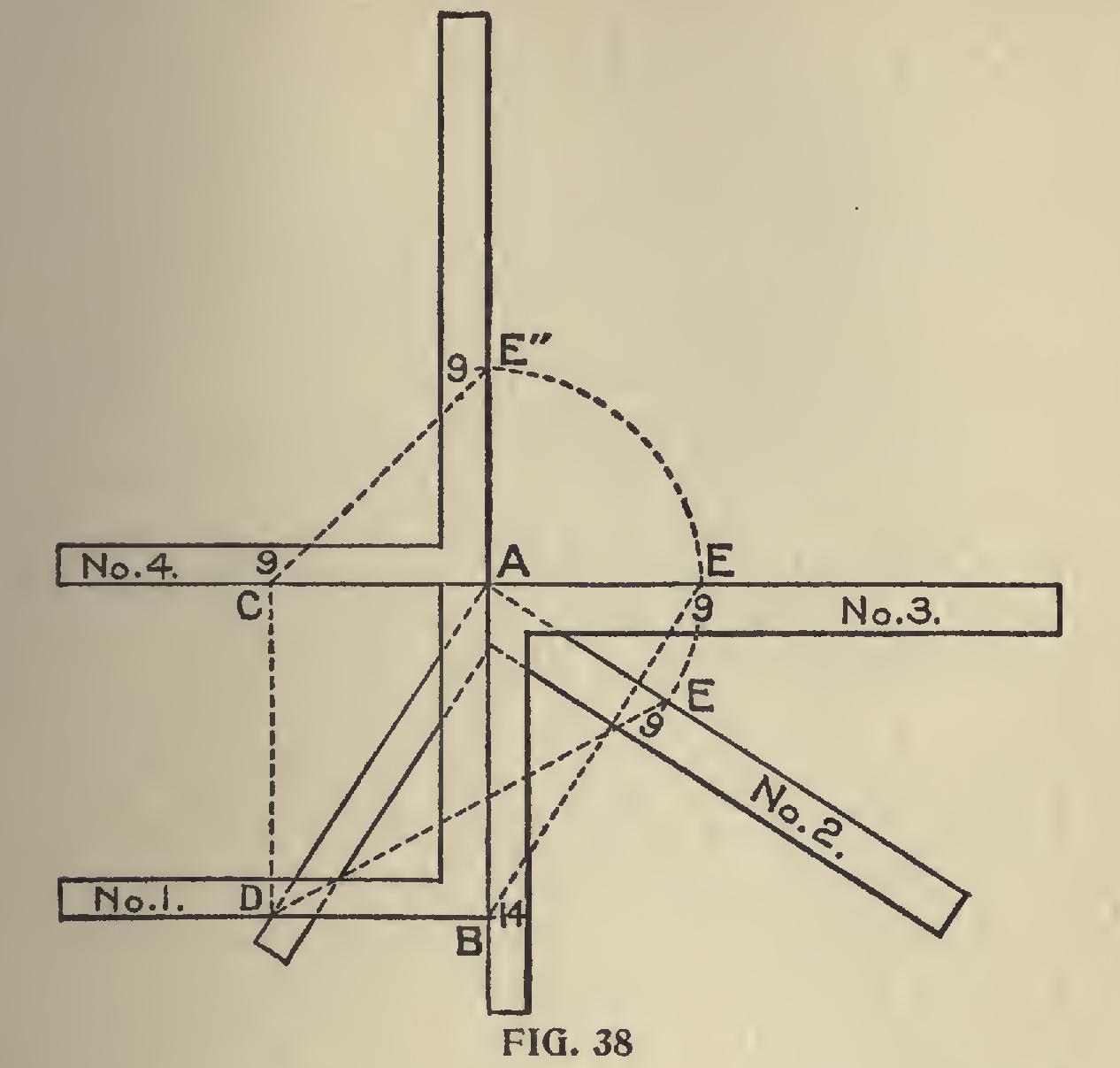
An Unequal Pitch.—In the matter of roofing over unequal pitches when there is no ridge and when all hips meet, the building being longer than it is wide, the backing of hips and their lengths and bevels would be a very easy matter if a drawing of the whole thing were made, but, to obtain these by the use of the square alone, is somewhat more difficult. Let us assume the building to be 18 feet wide and 28 feet long, and having a rise of 9 feet, then, by referring to Fig. 38, we show to one-inch scale the length, run, rise, seat, and plumb cuts for the hip and common rafters as follows : The run of the long way of the building is 14, and 9 for the narrow way, which we take on the blade and tongue respec tively, as shown on square No. 1, and to this apply square No. 2, as shown. A D equals the run of the hip. A E equals the rise and E D equals the length of the hip. The reader will notice that the letters A, B, C, D, form a parallel ogram, with side and ends equal to the runs of the common rafters. Therefore, by taking the runs on the tongue, as shown by the squares Nos. 3 and 4, will give their lengths, seat and plumb cuts.
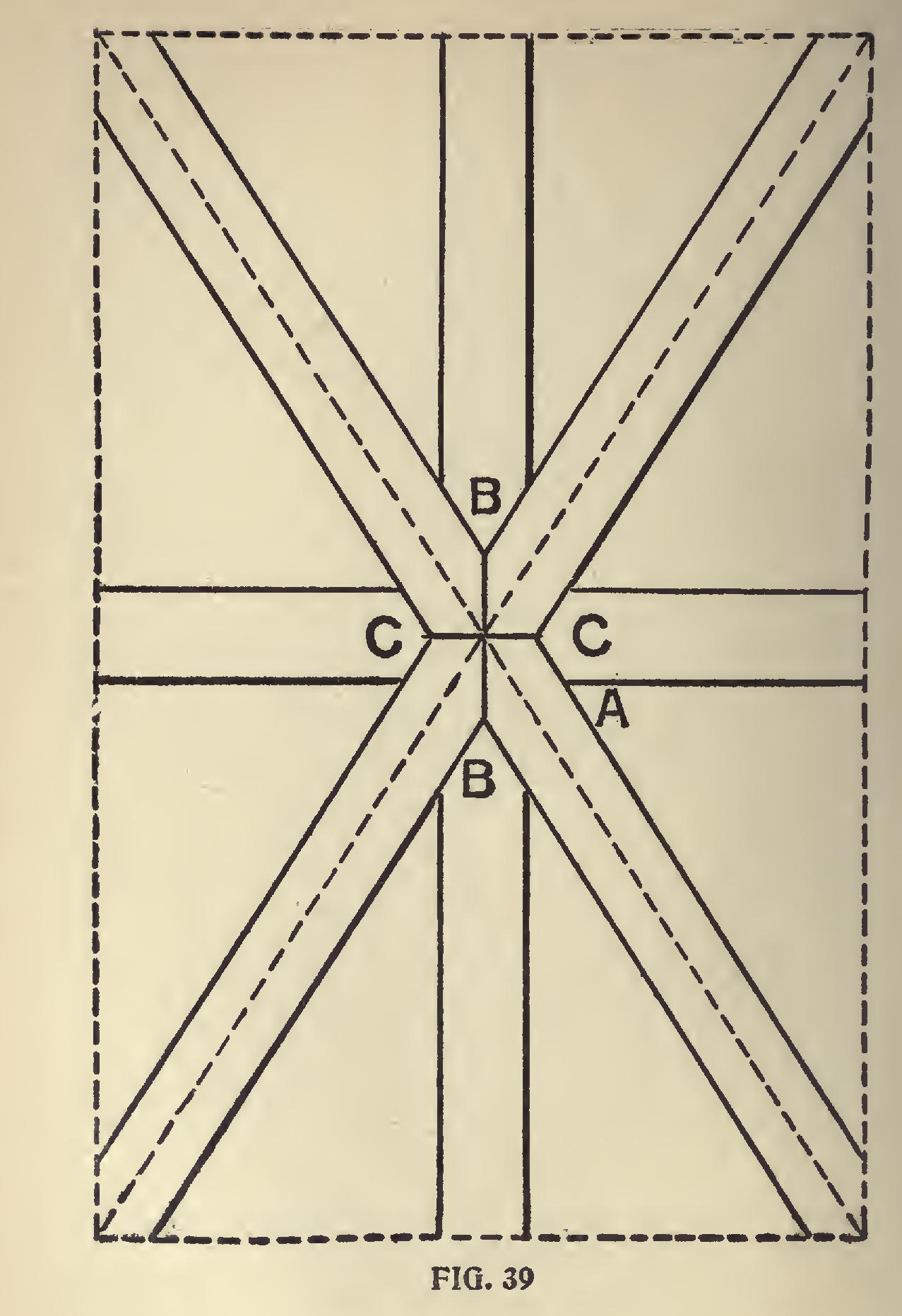
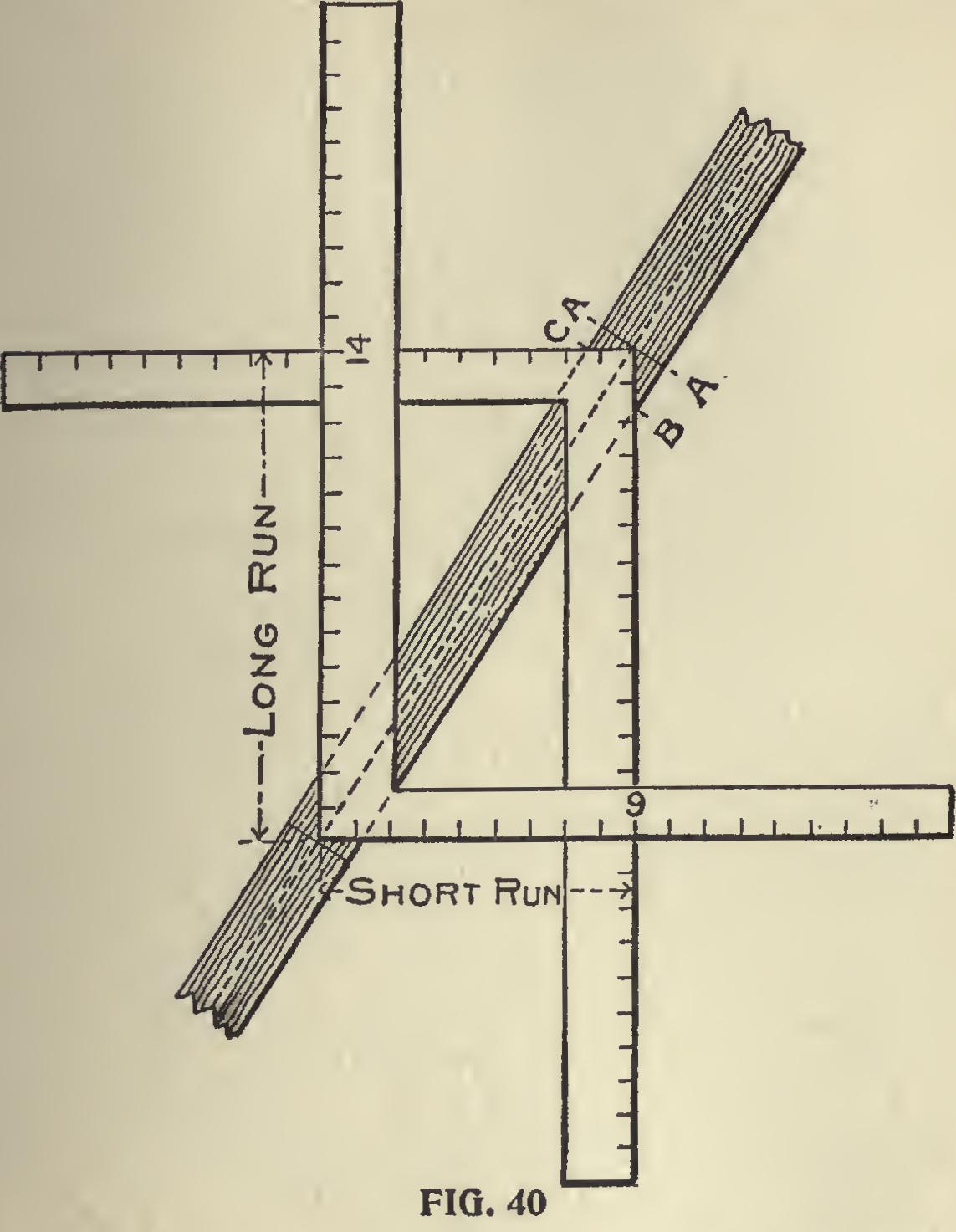
In Fig. 39 is shown the intersection of the rafters at the peak and as the lengths of all rafters are scaled to run to a common center it is neces sary that the common rafters must cut back so as to fit in the angle formed by the hips. The proper deduction for this is shown in Fig. 40 by placing two squares on the back of the rafter, with the heel or corner of the squares resting on the center line. The distance from the corner of the square to B measured square back (at right angles) from the plumb bevel, as shown in Fig. 38, will locate the point of the long common rafter at B in Fig. 39. Proceed in like manner for the short common rafter, taking the distance from the corner to C, and for the side cuts, take 14 on the tongue and the length of the short common rafter C E on the blade—the blade will give the cut at A C in Fig. 39. The reader will observe that this angle is the same as that for the side of the jack. Proceed in like manner for the long common rafter side, using 9 on the tongue and B E on the blade. These same figures will give the side cuts of the hip, provided hip has been previously backed. Taking the last for example, the reader will observe that 9 on the tongue and B E on the blade, the square would lay on the plane of the backing and the blade giving the cut along the line BB in Fig. 39, or these cuts may be found by measuring square back from a plumb bevel at points A and A, Fig. 40, the distance A C and A B, which will give the proper plumb cut at the sides and intersecting the line A A at the center. These same distances, A C and A B, but transferred to opposite sides, set off on the seat cut or a parallel with it, will give the gauge points on the side of the hip for the backing.
To Find the Length of the Jacks.—The lengths of the jacks may be found by dividing the length of the common rafter by the number of the spacings for the jacks; the quotient will be the common difference.