Plumbing in Office Buildings
fittings, air, drainage, plant, fig, ejectors and discharge
The receiver forms a complete severance of the house drains from the street sewers, thereby creating an absolute bar to any back action from the sewer.

The ejector can be operated by steam, com pressed air, or water; and its use renders it possible to have a perfectly dry and sanitary basement at any depth, without regard to the depth of the street sewer.
The receiving tank is so constructed that it is thoroughly emptied at each discharge. It has no working parts whatever, and is arranged to discharge from 100 to 2,000 gallons per minute.
Fig. 64 shows a type of ejector which is operated by steam.
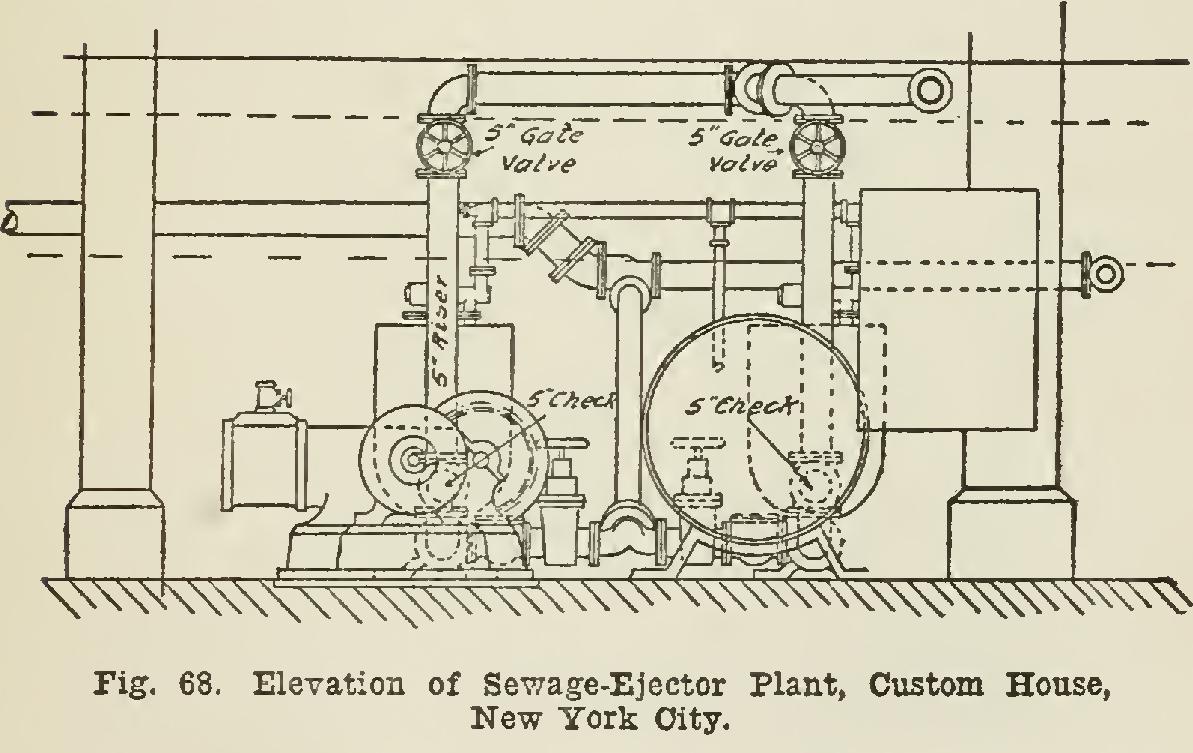
Fig. 65 shows an automatic hydraulic air compressor which is operated by the water pres sure from the street. It requires no attention when once started, and can be placed in any position. It is especially adapted to installa tions where only a limited supply of compressed air is required.
Fig. 66 shows a system for towns or cities where proper gravitation cannot be obtained, and is very effective.
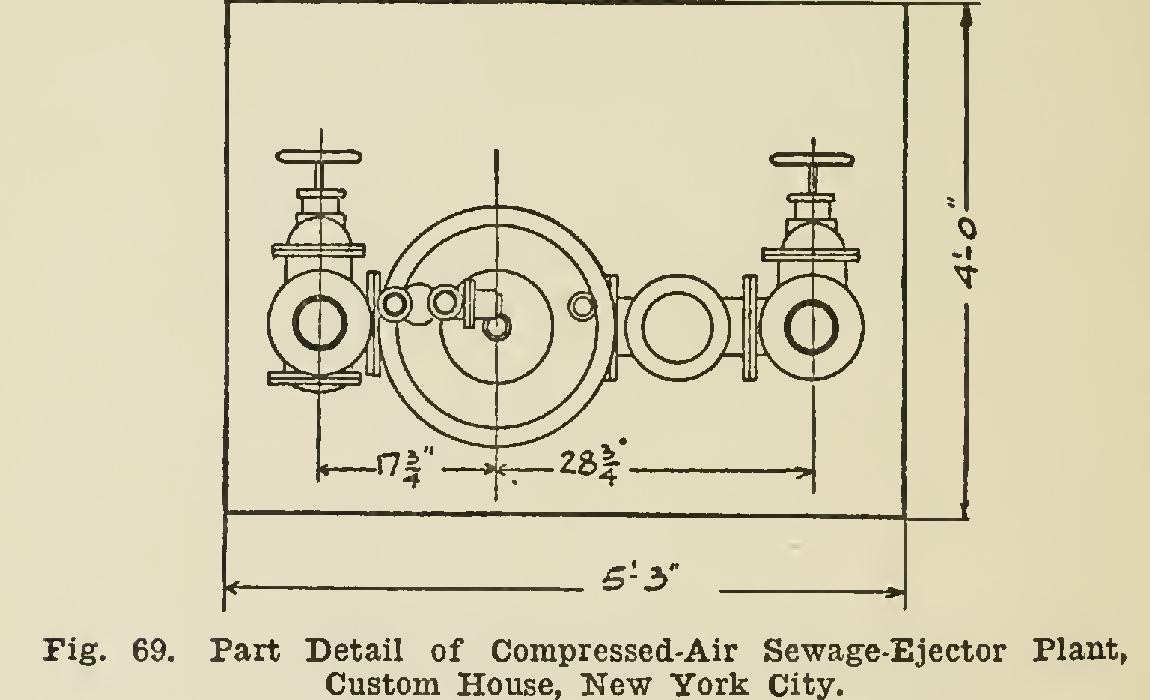
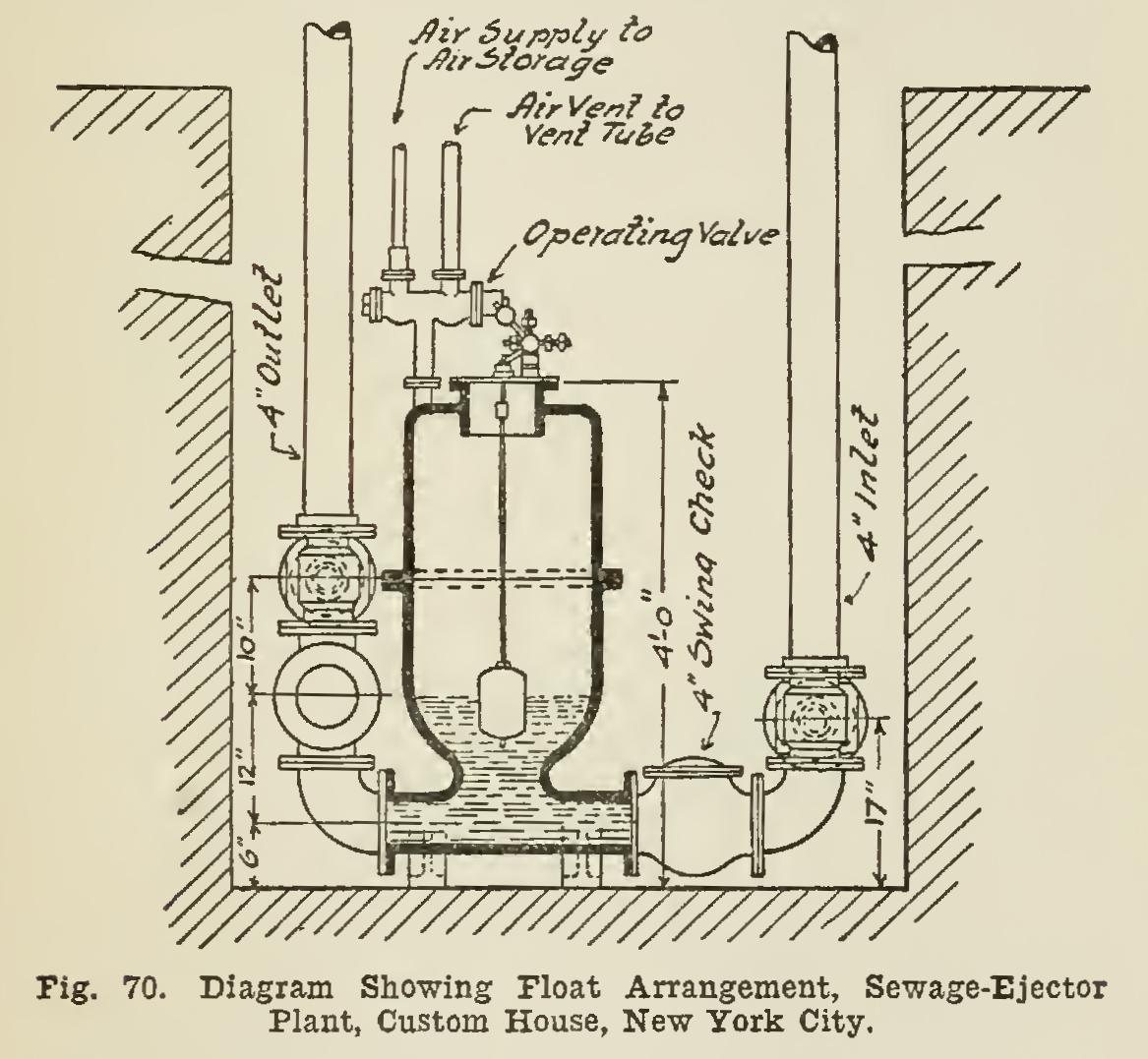
Figs. 67, 68, 69, and 70, show plans and ele vations of a duplicate plant for handling the sewage in the new Custom House, New York City, where there is being installed a duplicate plant of 100-gallon automatic ejectors. These ejectors will take the place of the centrifugal pumping plant formerly installed. Compressed air is the motive power; and under normal condition tests, the ejectors discharged their contents in eight seconds, under a consumed pressure of 15 pounds.
As is shown in Fig. 70, the float arrangement operates on a central pole, and the inlet and out let flows are through 'cylinders equipped with the necessary flap and gate checks. The opera tion of the valves and air-plunger is simplified by the action of a two-way cock attached to the trip valve.
An important improvement incorporated in the latest types of ejectors is the plunger rod, which is packed at its seat hearing in a way that precludes the possibility of escape and loss of air. The new float arrangement insures a uni form operation in the air-control, and also prepares for a complete discharge of the ejector contents. The two compressors for this plant have a capacity of 52 cubic feet at 150 revolu tions per minute. The motors are horse
power, at 50 pounds pressure. The vertical lift is 46 feet; and the distance from the ejectors to the street sewer is 105 feet. The plant is de signed to take care of the drains from the south end of the building and all the flow that comes from the roofs and extensions.
The size of the flow and discharge pipes for any installation will depend, of course, on the amount of sewage to be handled; and this can be readily determined. Allow one pound of air pressure per foot of lift.
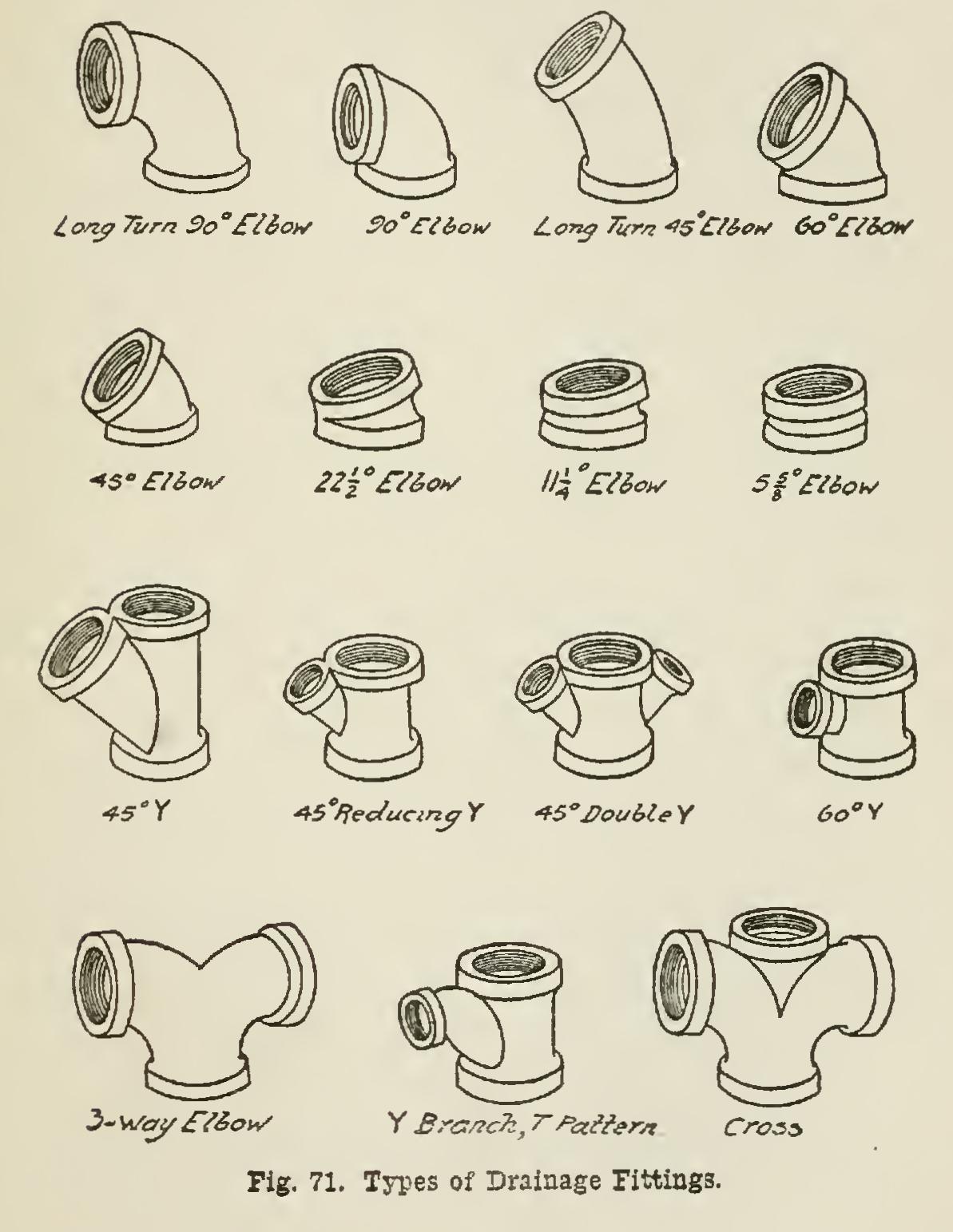
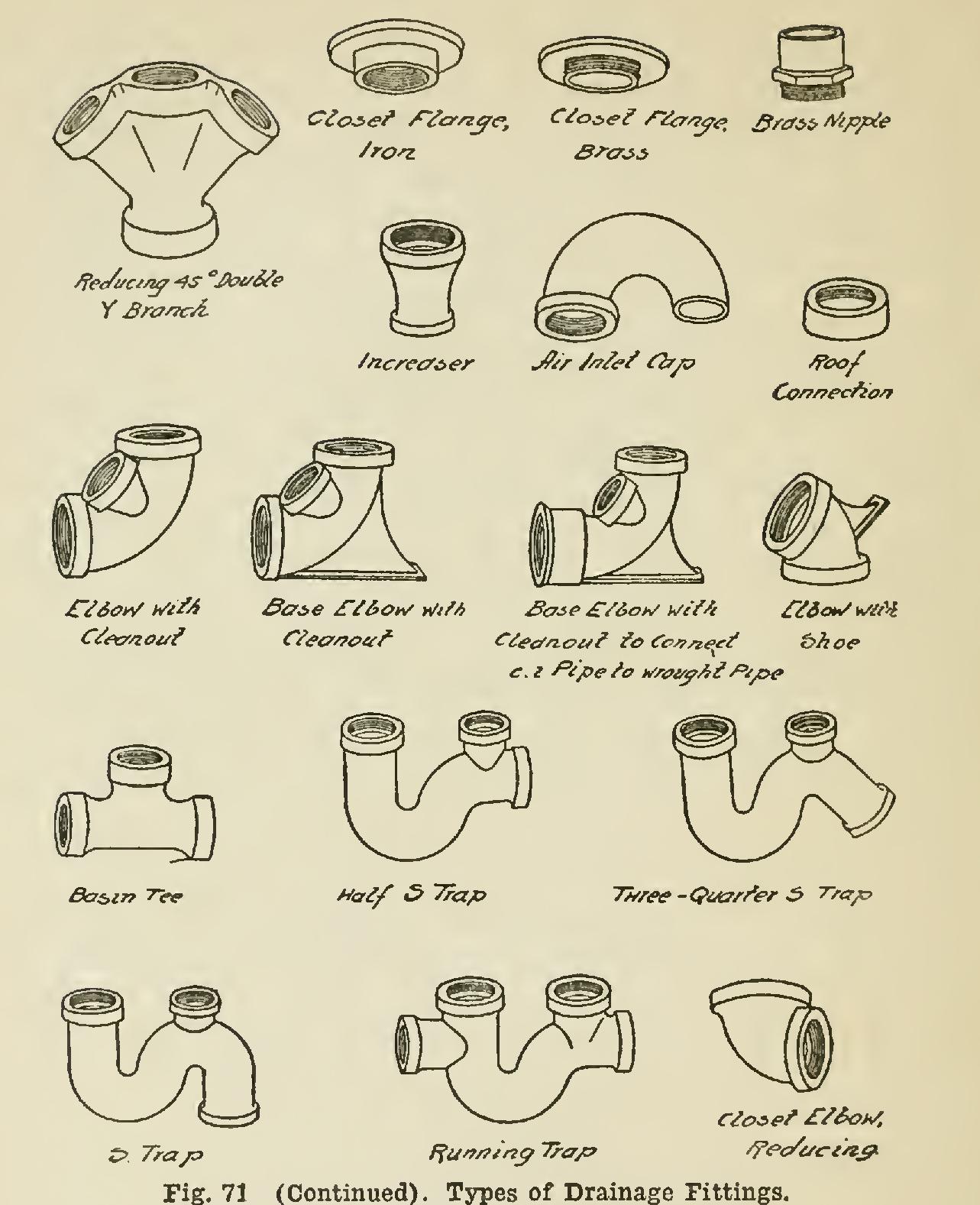
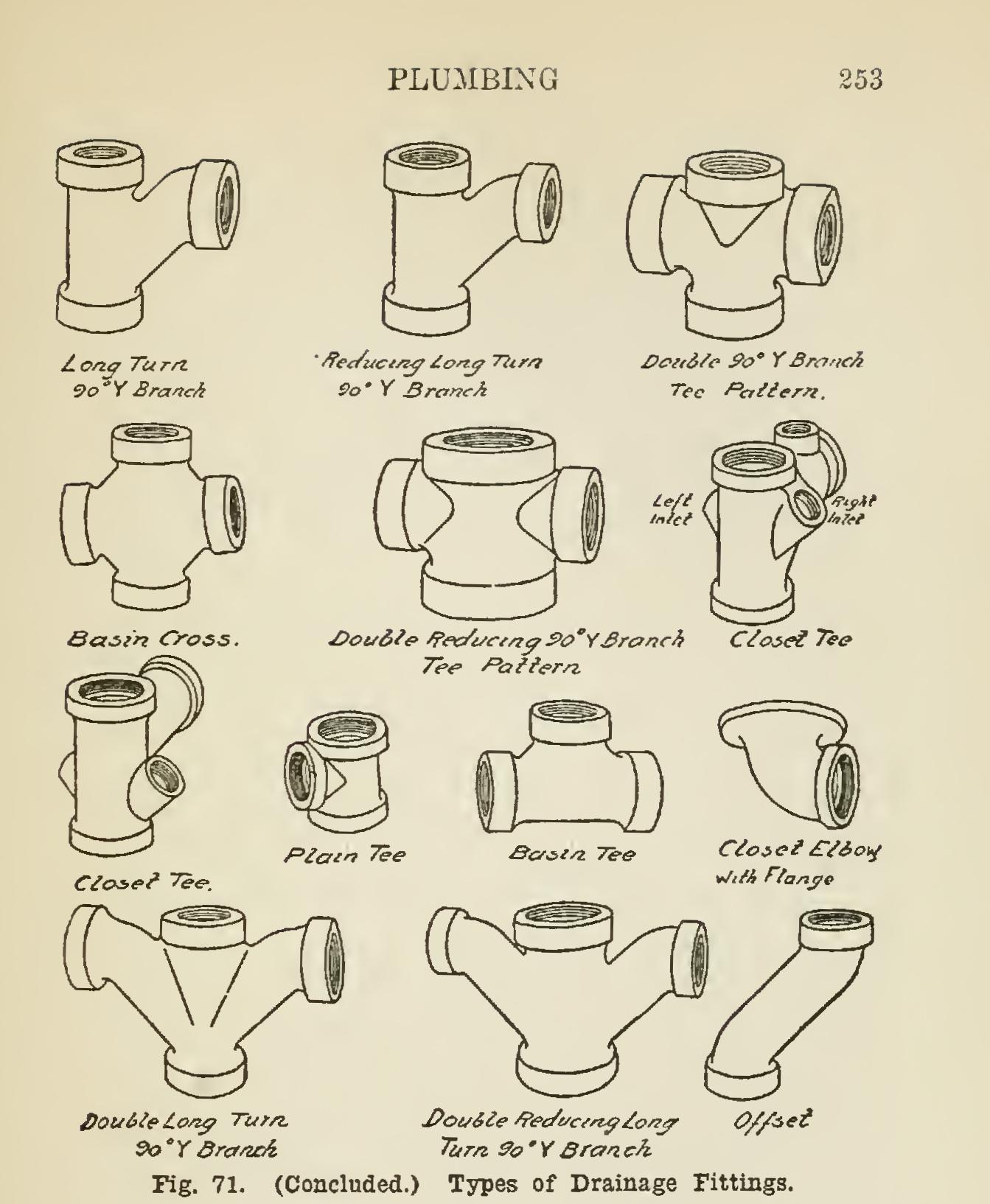
Drainage Fittings. In the roughing-in of the pipe work in office buildings, we may have to use either cast-iron, or wrought-iron, or steel screw-jointed pipe. The specifications for the job will cover this point. The principles in volved will be the same whatever material is used.
The fittings used on the screw-joint system, and called recessed drainage fittings, and are made of cast iron, like cast-iron steam fittings; but the recessed feature enables a smooth joint to be made where the pipe-end stops when screwed up tight, and thus reduces the chances for stoppages at these points.
Drainage fittings are made plain, coated with asphaltum, or galvanized. Drainage fittings should be used entirely on the drain, soil, and waste work; but the ordinary cast-iron or malleable fittings (plain, asphalted, or galvan ized) may be used on the vent piping.
Fig. 71 illustrates a full line of drainage fittings.
It is customary, in many buildings of this class, to bunch the fixtures on one or two floors, where they will be the most convenient for the greatest number of tenants; and the elevator service renders this possible. This does away with a toilet-room on each floor, and allows of more sanitary work being installed, as regards the fixtures, manner of installing, and the finish of the toilet-room itself. Frequently, toilet rooms on each floor of buildings of this class, do not get the service necessary to keep them in a sanitary condition; but the one or two toilet rooms, with a large number of fixtures, demand that they be kept in clean and orderly condition, and are nearly always found in that condition.