Plumbing in Office Buildings
water, fixtures, fig and flushing
Hot water can be supplied to the fixtures by one of the methods already described.
Fig. 81 shows a type of water-closet that is being used in many of the better grades of plumbing installations. The raised rear vent is connected to a heated flue, and this creates a rapid circulation of air from the room, thor oughly removing any odors.
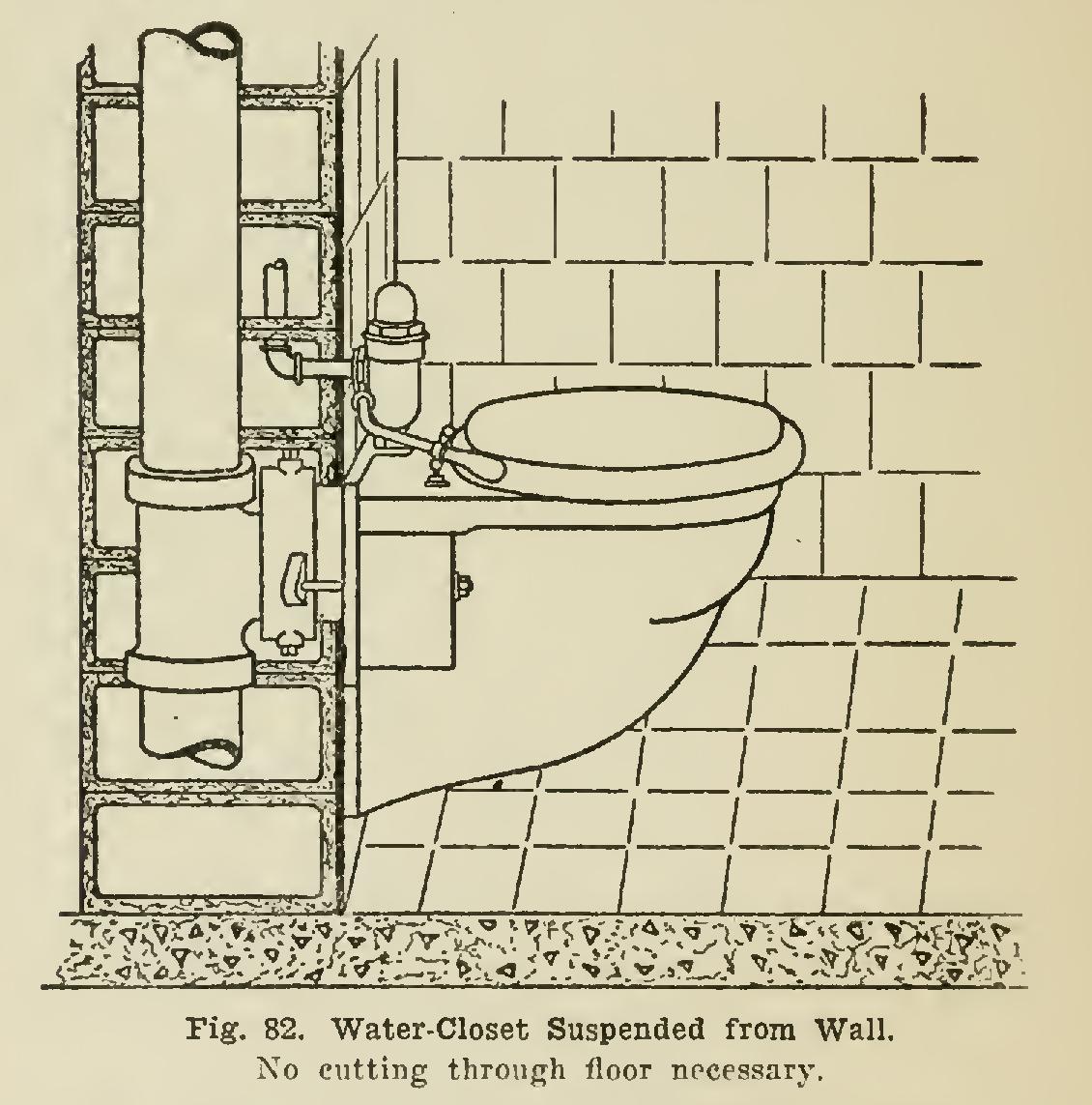
Fig. 82 shows a type of closet that is SUS pended from the wall. This does away with the necessity of cutting holes through the floors, and is especially adapted to buildings of steel or re inforced-concrete construction. This makes a very neat and sanitary fixture.
Flush-Valves.
Fig. 83 shows a valve for flushing water-closets that does away with the tank. These valves are used very extensively where there are a large number of fixtures, and where it is desired to give any one fixture a given amount of water during the flushing process. The figure shows the manner of con necting up the valve when there is a very heavy pressure, say 80 pounds or more; it is as simple as making a connection for a sink Bibb.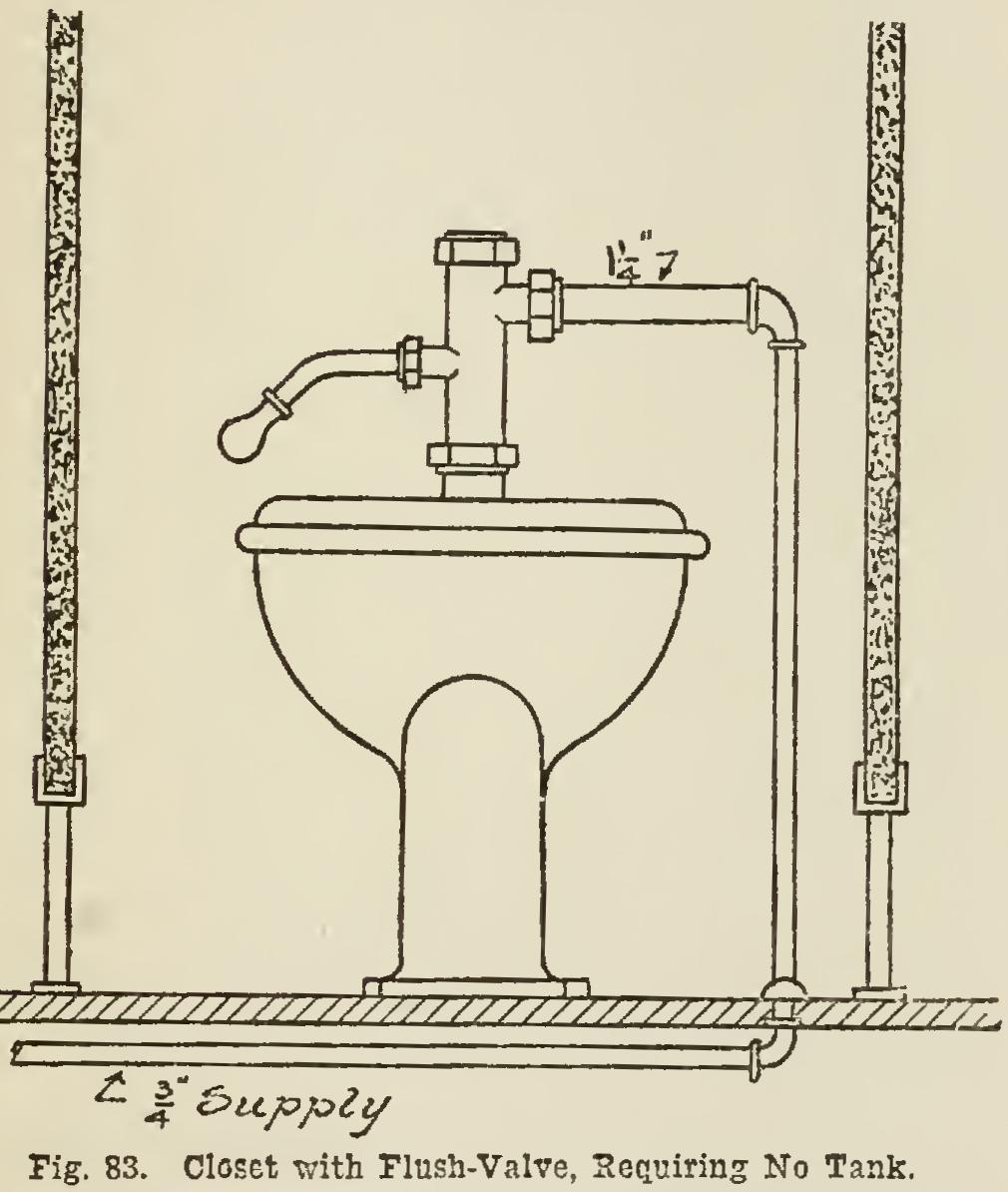
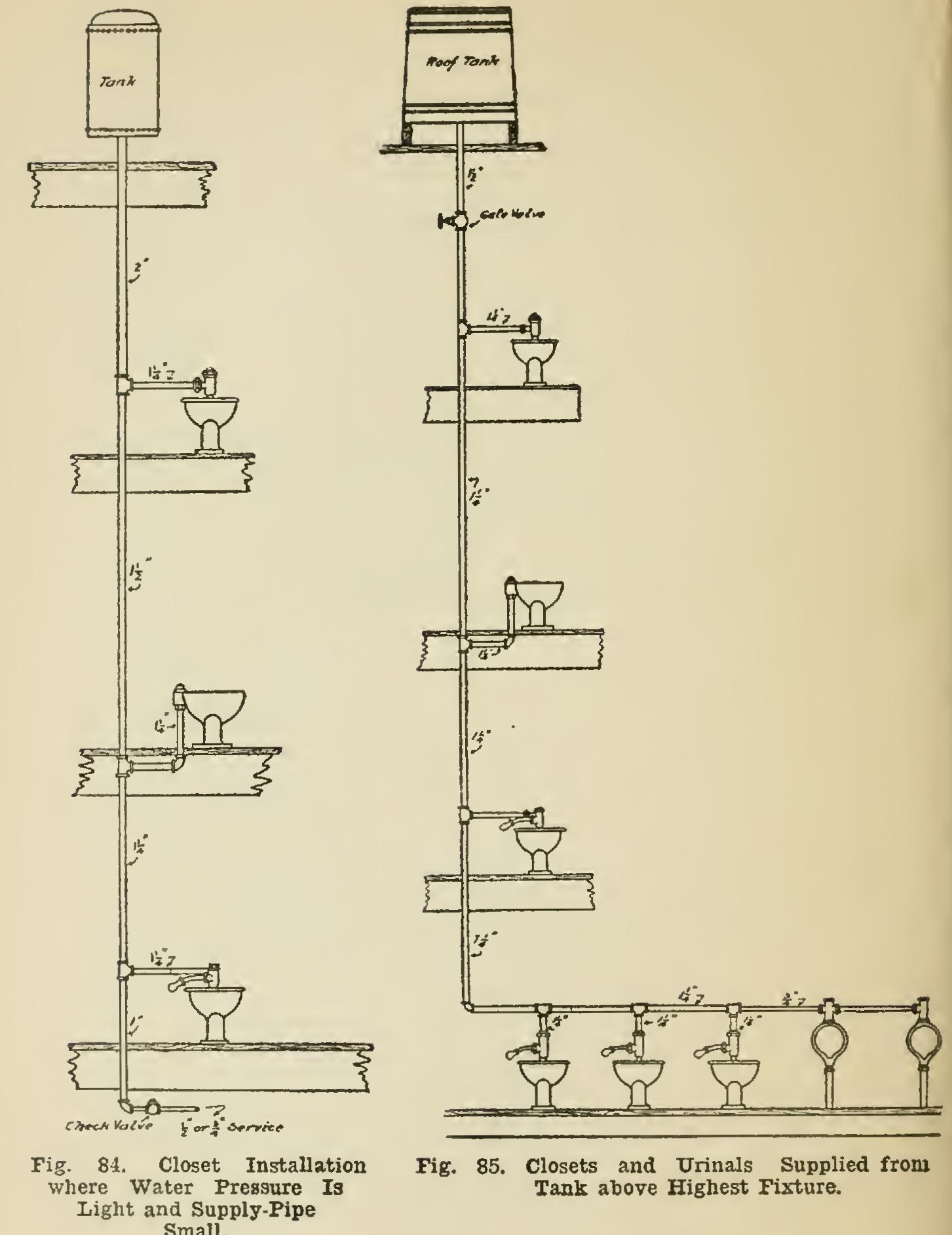
Fig. 84 shows a method of installation where the water-supply pressure is light, and the sup ply-pipe is small. A small, closed tank, or a chamber made of pipe, is placed above the high est fixture, at any convenient point; and this will give ample pressure and volume of water to operate the valves successfully. The successful working of valves of this type depends entirely upon two factors—namely, sufficient pressure and sufficient volume of water. They may be
regulated to discharge nearly any amount of water desired for thoroughly flushing a fixture, and are usually required to discharge from 6 to 10 gallons in from 10 to 15 seconds' time, after which they shut off the water until operated for the next flushing.
Fig. 85 shows a number of fixtures supplied from a tank placed above the highest fixtures, either in the attic or on the roof. This tank can be supplied with water through a ball-cock which will allow water to enter the roof tank when any is used for flushing the fixtures. Three different styles of valves are shown on the closets. The size of piping will be varied as fixtures are added or removed.
Fig. 86 shows a number of fixtures supplied with flush-valves where the pressure is ample to reach above the highest fixtures, and the stand-pipe will insure a sufficient volume of water to flush all fixtures thoroughly.
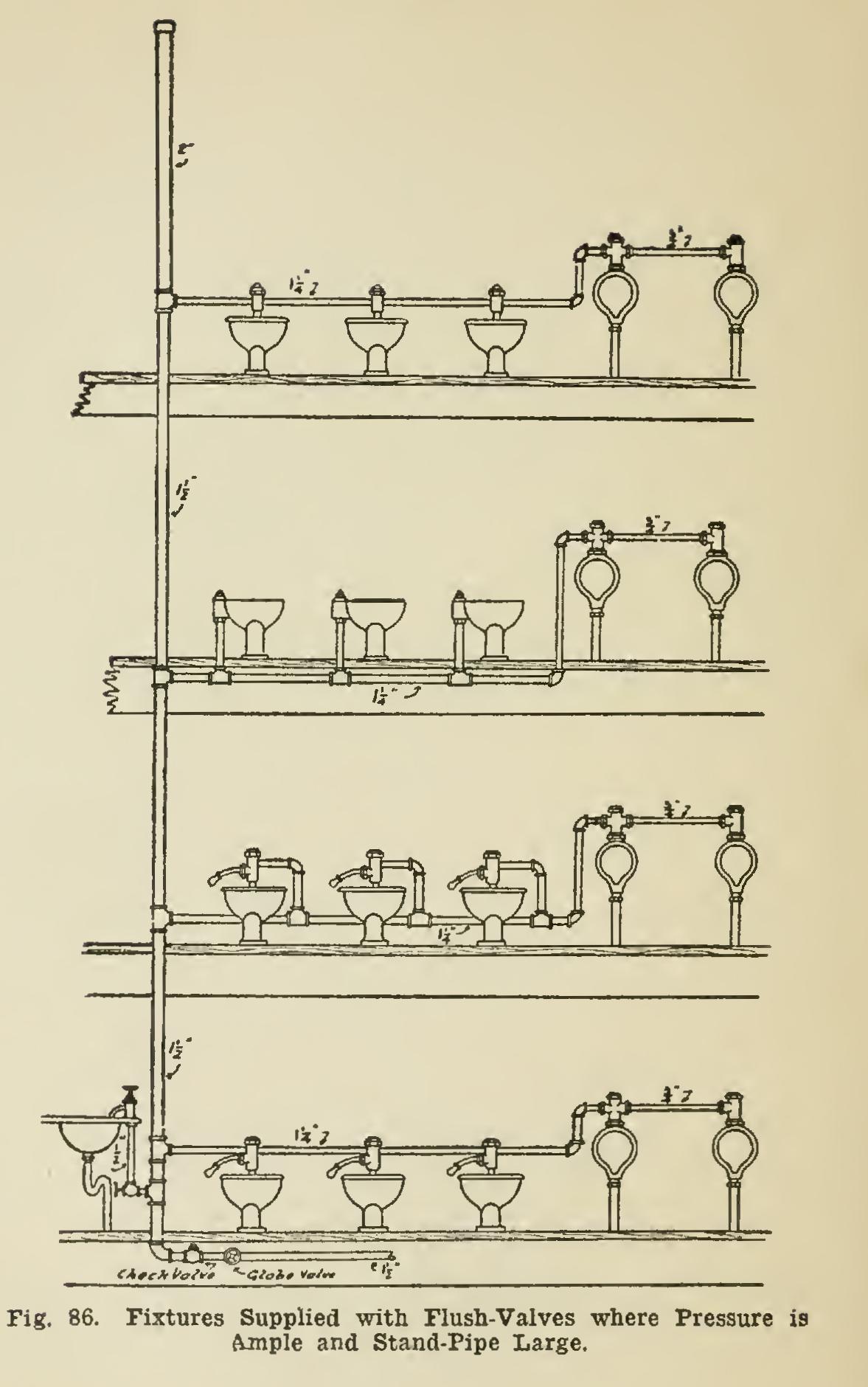
Fig. 87 shows a number of fixtures supplied with flush-valves where the water pressure is strong, but the service pipe from the street is small in size.
The stand-pipe will furnish a sufficient volume of water to insure the thorough flushing of all the fixtures.
Fig. 88 shows a measuring basin-cock that can be set to give a certain amount of water each time it is operated, closing off when this amount has passed through it.
Fig. 89 shows a urinal valve that can be set to give a certain amount of water each time it is operated.