Plumbing in Office Buildings
sewage, tank, ejector, sewer, air and pipe
PLUMBING IN OFFICE BUILDINGS The plumbing work in office buildings, while it may run up to a considerable sum of money, on the whole consists only of a number of small jobs bunched together in one large one.
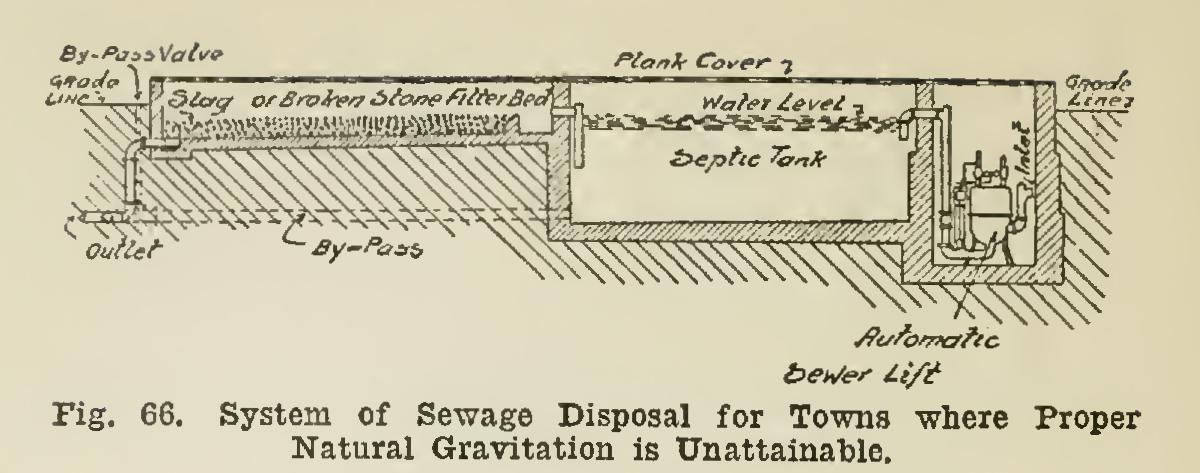
It often happens that the main sewer in the street is higher than where the main sewer from the building is required to leave the build ing. This requires the use of some mechanical means to deliver the sewage from the building into the main or street sewer.
Sewage Ejectors. Fig. 62 shows a type of sewage ejector or sewer lift, known as the "Ellis," which is used very extensively. By means of this apparatus, all the sewage of a building can be discharged in a simple, sanitary, and economical manner, without coming in con tact with the air of the building; and at the same time, the entry of sewage or sewer gas from the street sewers is an impossibility. The motive power in this ejector may be either compressed air, steam, electricity, or water. It is applied in the following manner: In a chamber built of brick or iron, either in the basement floor or outside the building, an air-tight iron vessel, called a "receiving tank," is placed at such a level that all the sewers and drains of the build ing can have a good fall into it. From the receiving tank, a discharge pipe is laid to the point of outfall, which is generally the street sewer. The action of the ejector is as follows: The sewage flows from the drains, through the inlet-pipe, into the receiving tank, and gradually rises therein until it reaches the under side of the float. The air inside the float being at atmospheric pressure, causes the float to rise with the sewage, thus opening an operat ing valve, whereupon the compressed air, thus automatically admitted into the receiving tank on the surface of the sewage, drives the entire contents before it, through the opening at the bottom and through the outlet pipe, into the iron sewage-discharge pipe. This is the only way sewage can escape from the receiver, as the instant the air-pressure is admitted upon the surface of the sewage, a check-valve in the inlet pipe closes, and prevents the liquid from escaping in that direction.
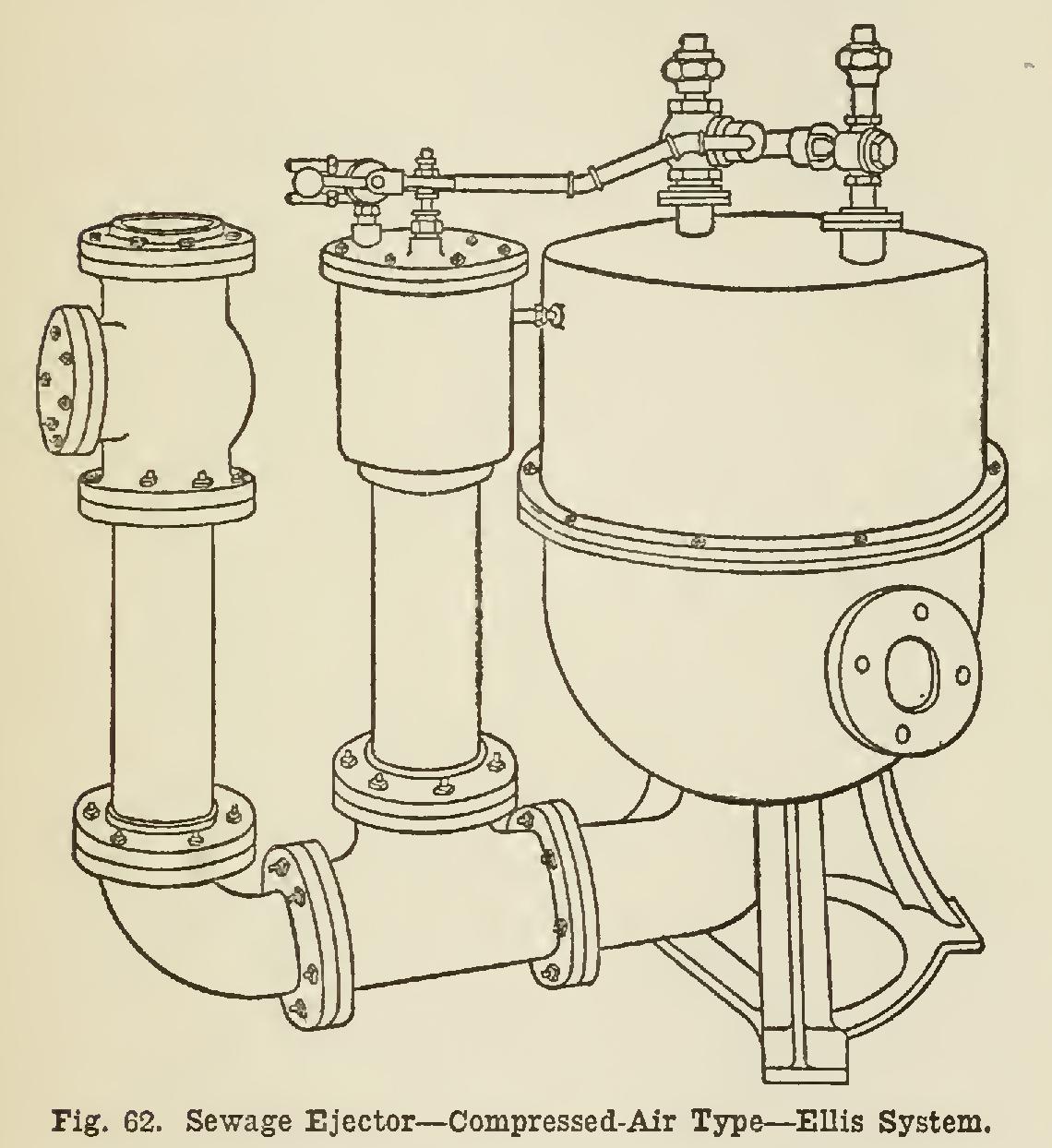
The sewage passes out of the receiver until its level falls to such a point that the tank is thoroughly empty, reversing the action of the operating valve which first cut off the supply of sewage to the ejector. The valve in the out let-pipe then falls on its seat, retaining the liquid in the sewage-discharge pipe; the sewage again flows through the inlet-pipe, and the tank begins to fill again, and this action continues as long as there is any sewage flowing into the tank.
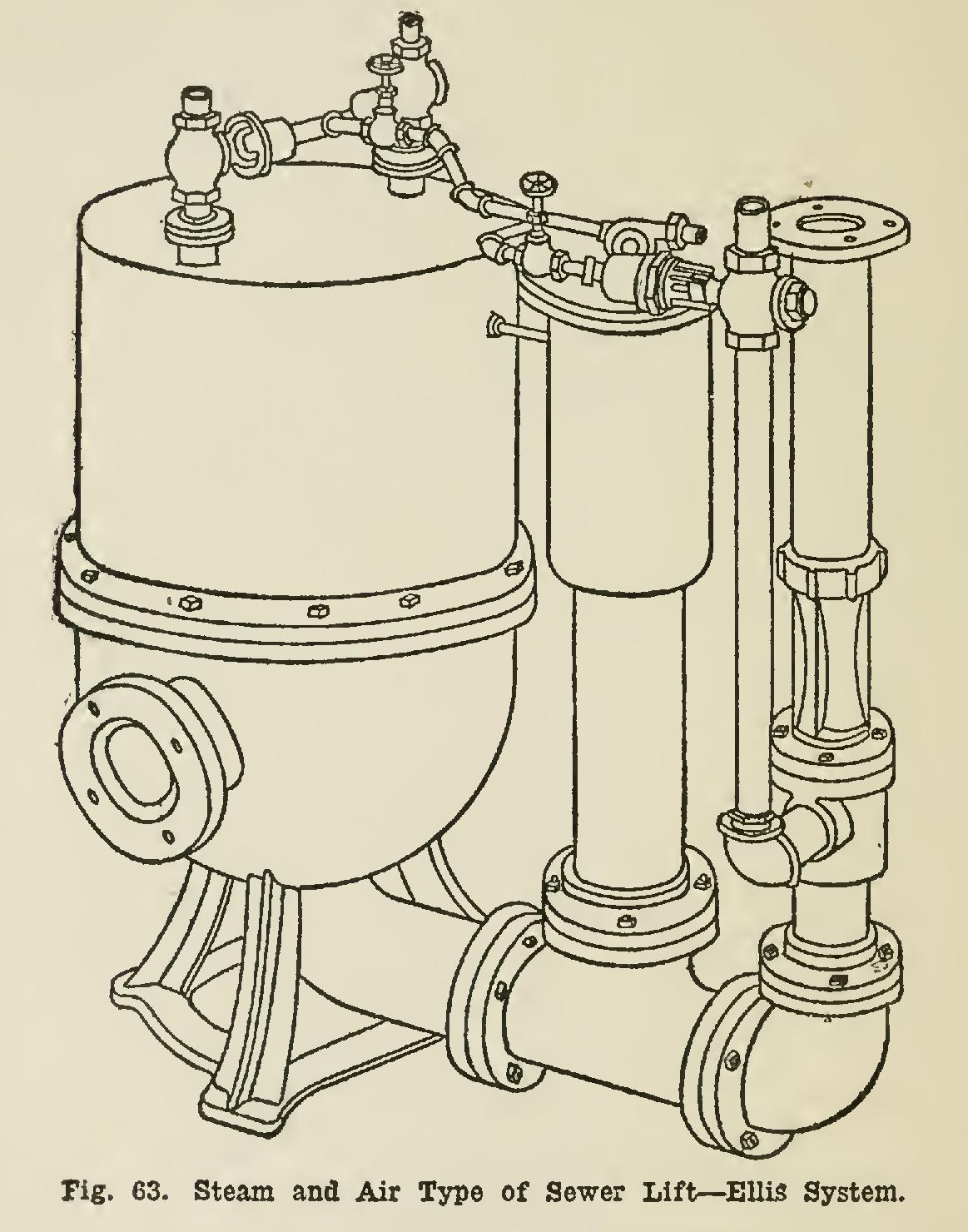
The system can be cross-connected with air, steam, or water, and arranged with by-pass valves operated by hand if desired. Fig. 63 shows an ejector of the steam and air type.
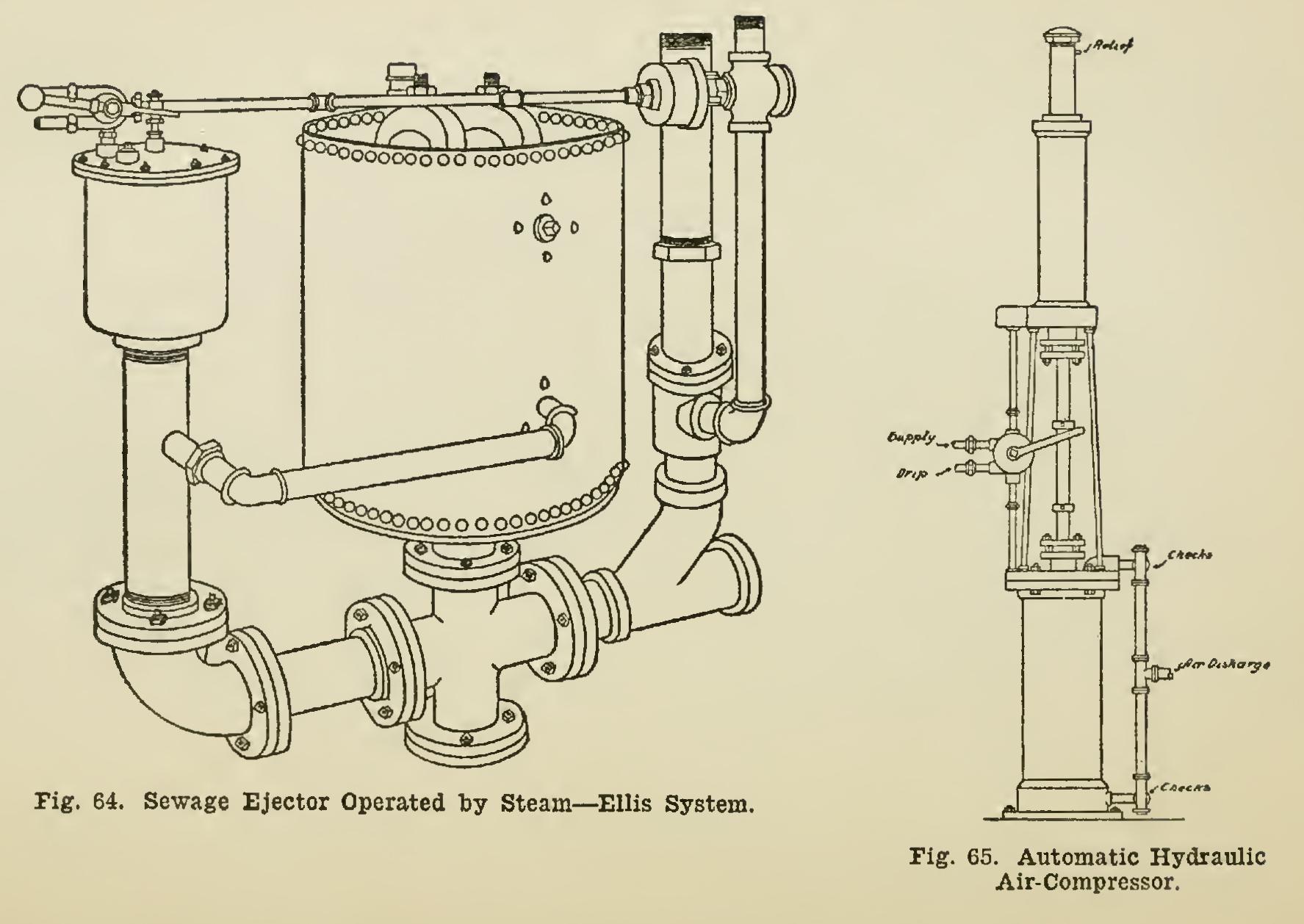
There are a number of good points about this type of sewage ejector, which can be summed up as follows: It works entirely automatically.
The working parts are reduced to a mini mum, and are of a kind that are not apt to get out of order.
The receiving tank into which the sewage enters, contains no finished surface, such as is unavoidable in pumps and is rapidly destroyed by the action of sewage, sludge, and grit. In the ejector, there is nothing to prevent the free flow and it is made of a composition upon which the sewage can produce no detrimental effect. Neither stuffing-boxes nor sliding device come through the tank.
The friction of a pump piston or other work ing part is avoided. The pressure itself, acting directly upon the fluid without the intervention of any machinery, forms a practically friction less and perfect piston, past which there can be no slip or leak whatever.
The only finished parts are the inlet, dis charge valve, and the automatic, which are accessible, and these only make one move at each discharge of the ejector. The float, being filled with air, will always retain its buoyancy. The sewage inlet and outlet valves are designed to give a passageway the full area of a pipe, allowing a full outlet to all the solids that the sewer can carry.