California
san, gold, mexico, land, little, spain, oil, american and white
Most of the power comes, however, from the state's boundless deposits of petro leum. Thousands of oil wells, gation has made possible wide acres of fruit groves, olive groves, berry ranches, nut groves, and other endlessly varied crops. Former deserts, like the Imperial Valley, are amazingly fertile under irrigation. Here also are a number of large ostrich farms, and many apiaries where the bees, buzzing over the orchard blossoms, accumulate tons upon tons of honey. The world's leading center of the motion picture industry is at Los Angeles, brought thither by the perfect weather conditions, and the fact that scenery of every type is within easy reach of the scores of studios. Whether the scene of the play be tropical Africa or India, arctic Alaska or Switzerland, mountainous South America, or the barren deserts of many of them put down from piers into the bed of the ocean, produce the heavy oil fuel which is burned in nearly all the California locomotives and in the greater proportion of the factories. California owes its recent rise to a position among the ten leading manufacturing states to the discovery of these petro leum resources and to the harnessing of the streams, for it has little coal.
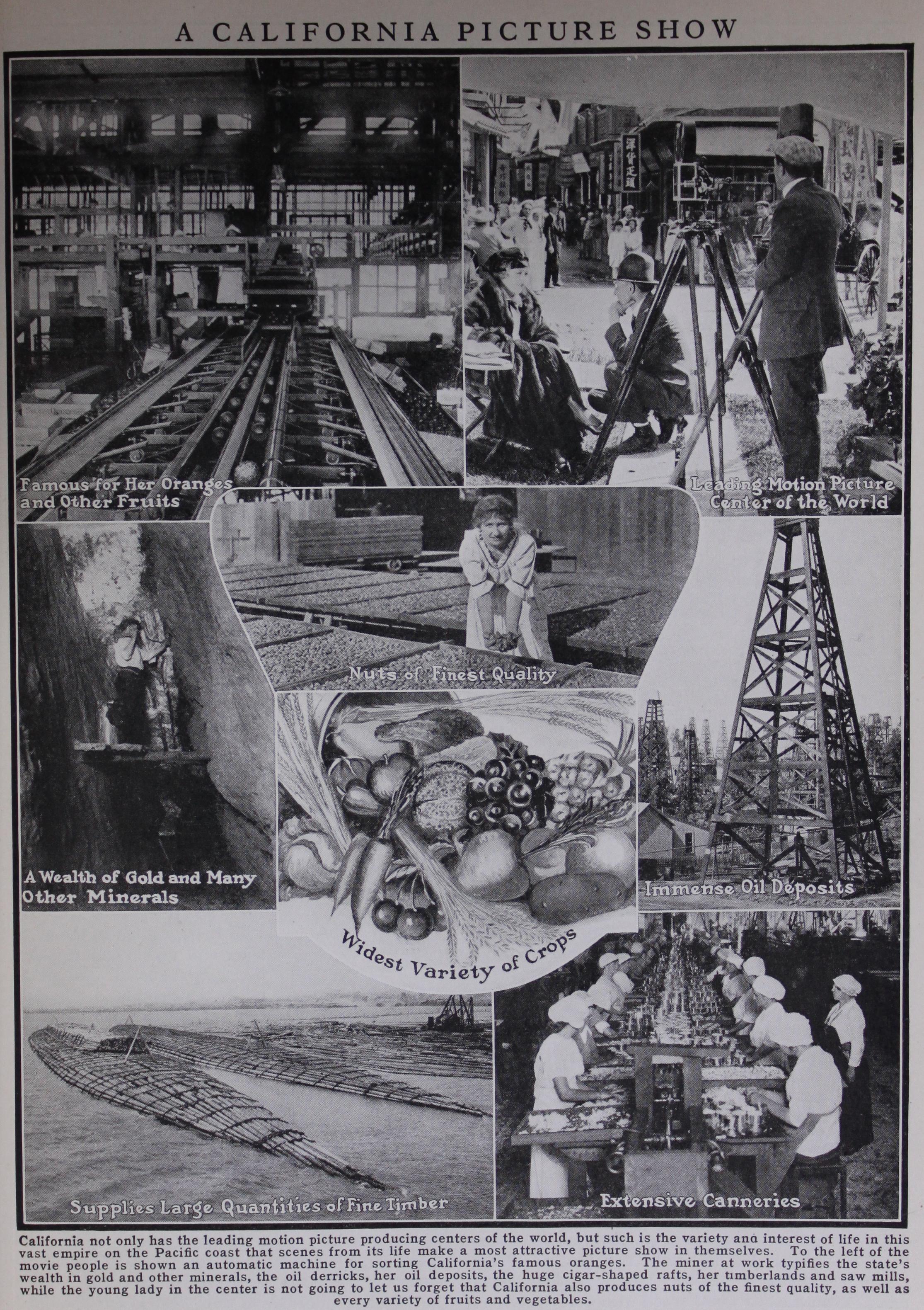
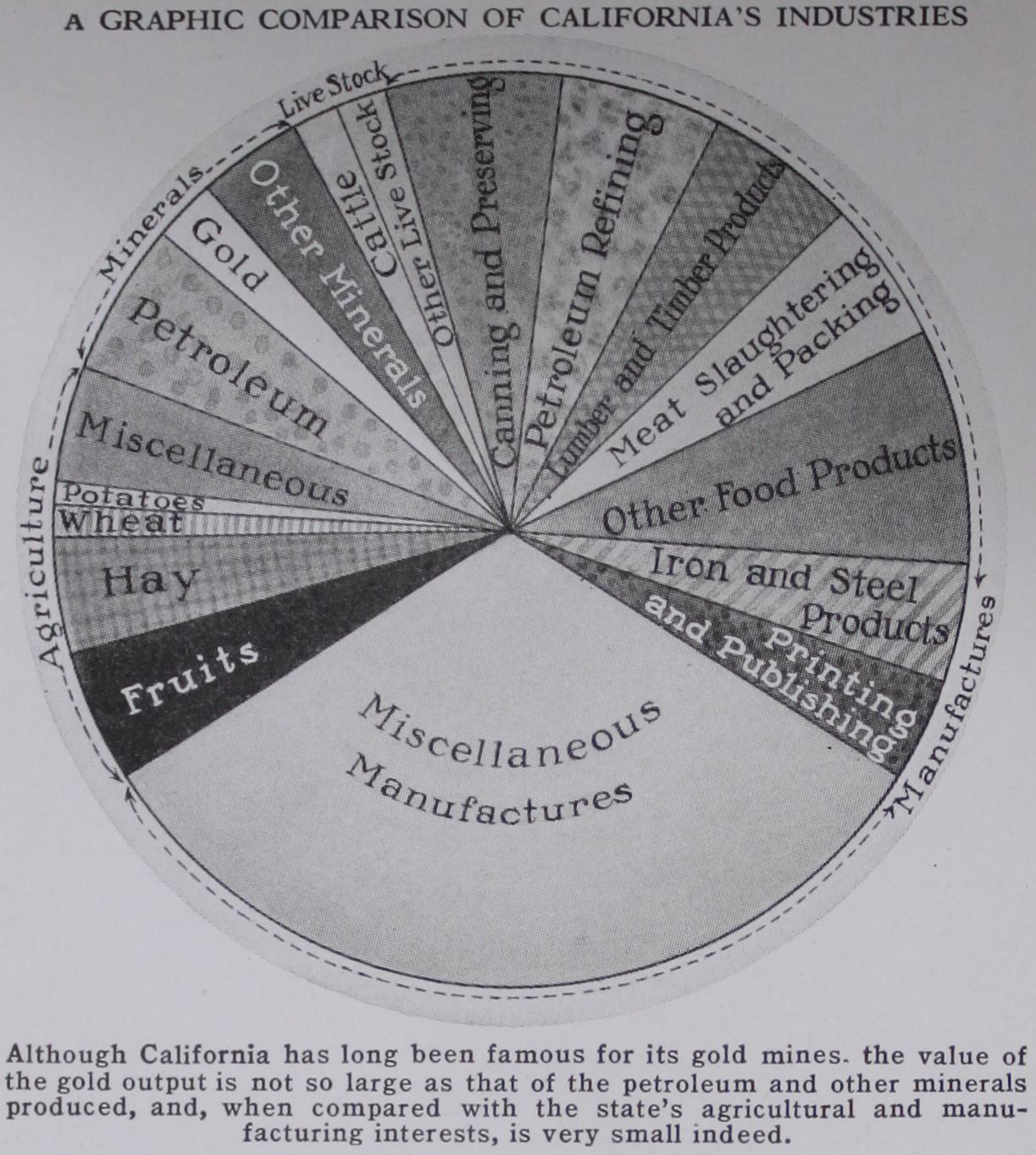
The industries include sugar and oil refineries, fruit and vegetable canneries, dairies, flour and lumber mills, meat packing establishments, shipyards, ma chine shops, and tanneries; and these products, to gether with the raw materials of the state, have drawn to her great harbors of San Francisco and San Diego the ships of all the world. Five transcontinental rail ways also seek her out from the east.
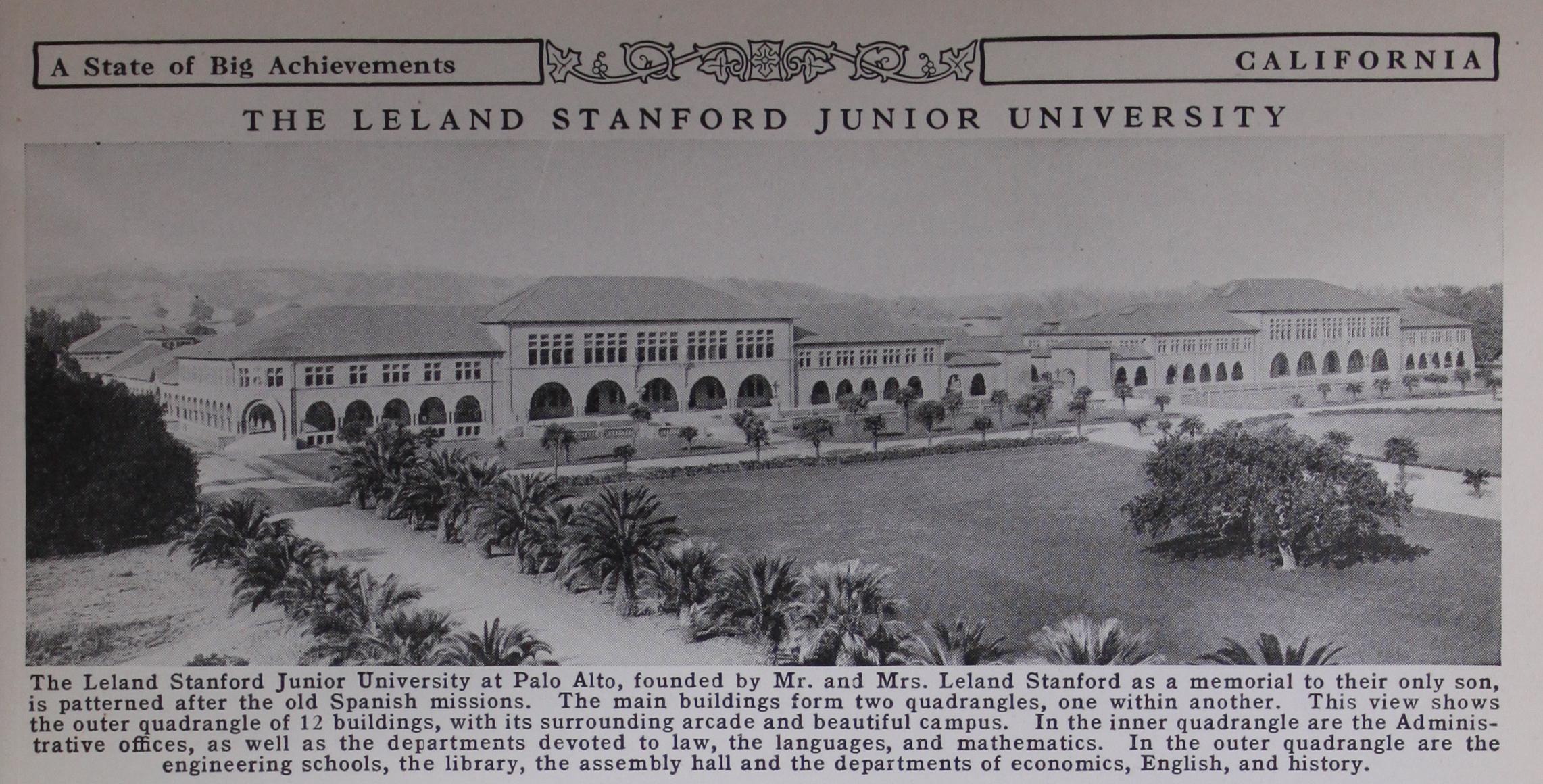
The diversified pop ulation which the state has attracted from all quarters of the United States, and other countries as well, is conspicuous for its interest in education. No state has a larger propor tionate enrollment of college students. Be sides some ten smaller institutions, there are two world-famous universities in the state, the State Uni versity at Berkeley and Leland Stanford Jr. University at Palo Alto.
The history of this fortunate region is as strange and poetic as the land itself. Centuries before gold was discovered there or the agricultural riches developed, old Spanish romancers told of a mythical California, an island where abundance of gold and precious stones was to be found, and in Mexico, the New Spain" of the early 16th century, tremendous tales circled around concerning the riches of the unknc wn lands to the north.
The thrilling fictions excited the Spaniards and sent them searching for the land of gold.
In 1542 Juan Rodriguez Cab rillo sailed a ship under the flag of Spain into the bay of San Diego. The next white man to leave a footprint on Cali fornia shores was the English man Sir Francis Drake, in 1579.
Other venturesome seafarers also brushed this coast of wonder, but not until two centuries later was a permanent settlement made, by Franciscan monks from Mexico who burned with zeal to convert the Indians. The first mission was at San Diego, with the heroic Father Junipero Serra as the guiding light. Famine, sickness, and hostile Indians all but drove him from his mission. But as he begged his companions for "one more day" and knelt praying on Presidio hill for a relief ship from New Spain—behold ! a white sail did appear, relief came, the little colony stayed. Thus was early Californian history made by a "miracle," as the devout called it, and more than one seem ing miracle has car ried out her destiny.
Until early in the 19th century the brown-robed Francis cans continued their missions, stretching a chain of them for 700 miles along El Camino Real, "The King's Highway." Mean while Spain had established a govern ment in California, and Monterey was made the first capital.
The California of that day is pictured to us as an ideal land, unhurried, hospitable, poetic; a land of lovely women and proud cavaliers, of splendor and beauty, of pirates and adventurers, but still of peace and plenty. When Mexico threw off the yoke of Spain, California passed under Mexican rule, in 1821, yet with little change in the char acter and idyllic charm of her life. For another 25 years, until American domination came, California continued in her "splendid, happy idleness," with " much joy, little hate, and a contentment that was as vast as the sun and moon and stars that shone upon the white peaks of the Sierras." But the grip of Mexico on this lotus-land was weakening.
British ships nosed about its harbors, and France was also believed to look upon it with greedy eyes. The American inhabitants took matters into their own hands and raised the flag of the United States. After the 26 days' interlude of the "Bear Flag Republic," in 1846, American soldiers in a few sharp fights with the Mexicans took California for the United States, the names of Captain Fremont and Kit Carson standing boldly out in the affair. This conquest was confirmed by the treaty which ended the Mexican War in 1848.
In 1848 also came Cali fornia's second miracle— the discovery of gold; and with it such an inrush of gold-seekers, feverish of eye and brawling in man ner, that she bustled into the Union as a state in wild lawless state, very different from the dreamy California of the Spaniards. Since then she has known other miracles —the building of the Cen tral Pacific railroad across the Sierra Nevadas, the reclaiming of the des erts by irrigation, and the rebuilding of San Fran cisco in three years from the ashes of the earthquake and its fires in 1906.