California
gold, sand, mountains, journey, miles, overland and city
California, as you know, lies 3,000 miles overland from New York City. Seventy years ago half of that area was unhabited by white people. A thou sand miles of the way lay across trackless plains and over high mountains—a terrible journey. Still men's imaginations were fired with a de sire for adventure and riches, and many risked the dangers from hard ships and hostile Indians.
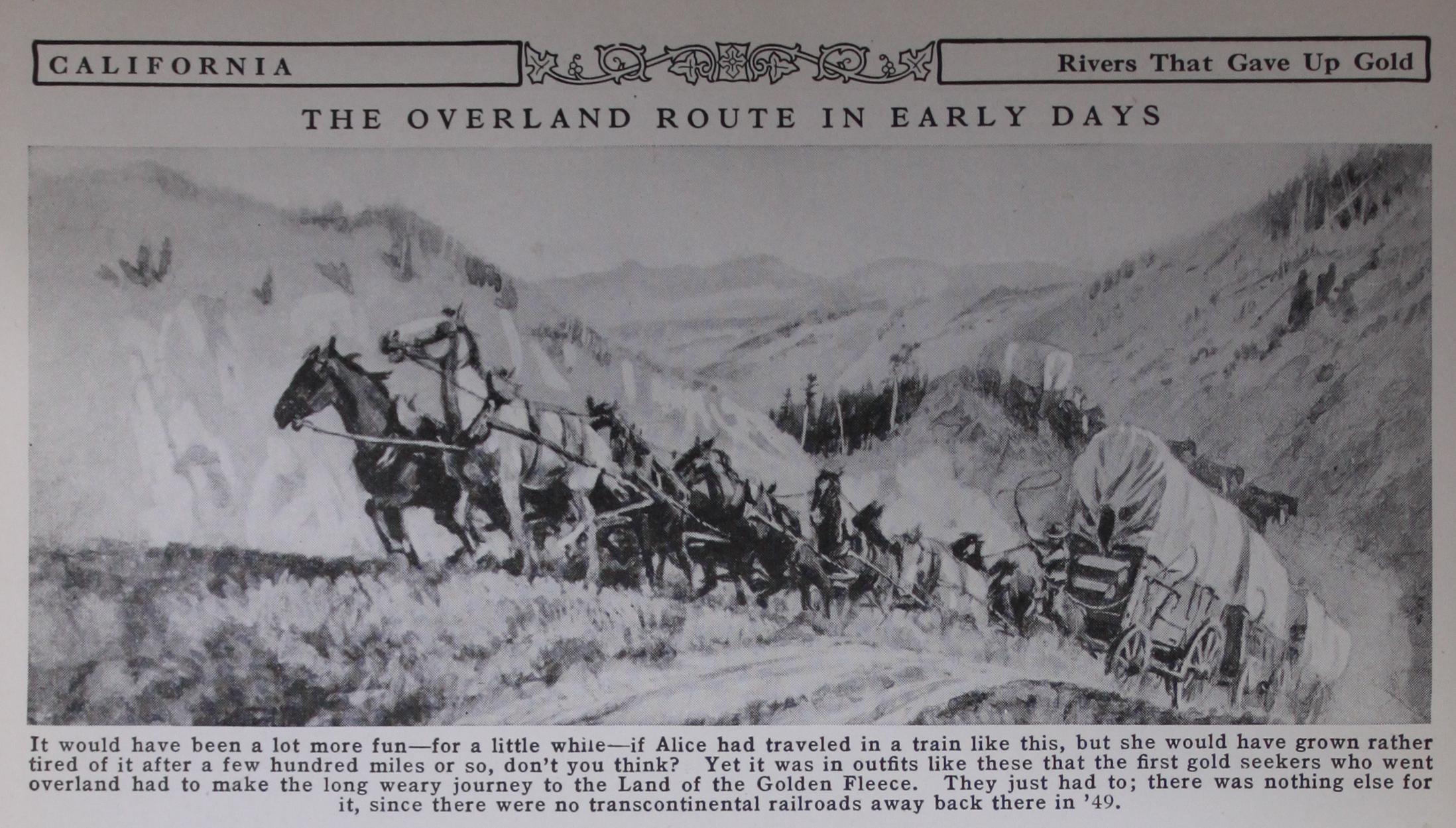
The Mad Rush for the Gold Fields Fields were left half plowed, houses half built. Farms and shops were sold. In the East many hurried to New York to catch ships for the long sea route around Cape Horn, while others made up parties for the perilous overland voyage. Eighty thou sand men, some women, and a few children really went to California by the overland route in the first summer after gold was found.
There were no trains across the mountains in 1849, and the journey over the Alleghenies was made by stage-coach. Upon reaching the Ohio River the gold seekers went by boat to the mouth of that stream and thence up the Mississippi to St. Louis, the most western city. There they bought their supplies—flour, bacon, and beans; blankets and clothing; guns and tools and water barrels. The next stage of the journey was also by boat, up the Missouri River, with wilderness on either side and here and there a small landing stage where the few white settlers gathered to greet them, and perhaps an Indian or two stared curiously. Kansas City was merely a wharf, called Westport Landing. At St.
Joseph, then a little settlement, horses and mules were purchased and final preparations made for the trip across the country by wagon.
The Great Panorama the Children Saw Before the travelers, when they were started on their overland way, stretched a beautiful rolling prairie, with only a few scattered settlements and lonely cabins. Omaha was just a fort in the Indian country, and near it was a French fur-trading post.
The fierce Sioux, the Omaha, and the Pawnee Indians roamed over the plains. Great herds of buffalo, antelope, and other game fed on its grasses and fur nished meat for the gold-seekers. There were no trees except along the banks of the few wide rivers.
But, oh, the flowers! Millions of them— red, blue, yellow, and white — starred the green or brown waving grass. The land climbed slowly for 500 miles until at the foot of the Rockies the plain was 5,000 feet above sea-level. The air
was very pure and clear, and at a dis tance of 50 miles they could see the mountain peaks.
One morning the children climbed out of their beds in the covered wagons to see a wall of mountains, rising over a mile high above the plains.
Forests partly covered their sides, with snow at the tops. It took days to cross these mountains, through high winding passes where brown, black, and grizzly bears and bighorn sheep were to be seen. In the plateau beyond the mountains were elk and deer, coyotes, and villages of prairie dogs. After that came mountains again, and then a wide burning desert.
Here and there in the desert was bunch grass for the horses and oxen, but most of the time there was nothing growing except sage brush and thorny cactus. Little rivers trickled through deep gorges, but sometimes the water was bitter with soda, and some streams sank away in the sand. Coyotes howled at night and black buzzards circled the sky.
There were rattle snakes, too, and stinging scorpions.
Whenever water was found the bar rels were filled and every drop was care fully used. After the hardships of the desert came another mountain r ange the Sierra Nevada—from the top of which they looked down a steep slope, green with trees and bright with mountain brooks. At the bottom was a wide green valley and a river. Gold in the form of little grains and lumps or nuggets was mixed with the sand and gravel in the river beds.
Mining camps sprang up all along the California streams. Red-shirted miners stood in the water be neath blue skies and the warm California sun, and scooped up pans full of gravel and sand, to wash out the gold. A few found a great deal of gold and became rich, but many found very little. Few people went home again, for the journey was too difficult. Besides, California developed many other kinds of wealth, so that today we call it the Wonderland of America.
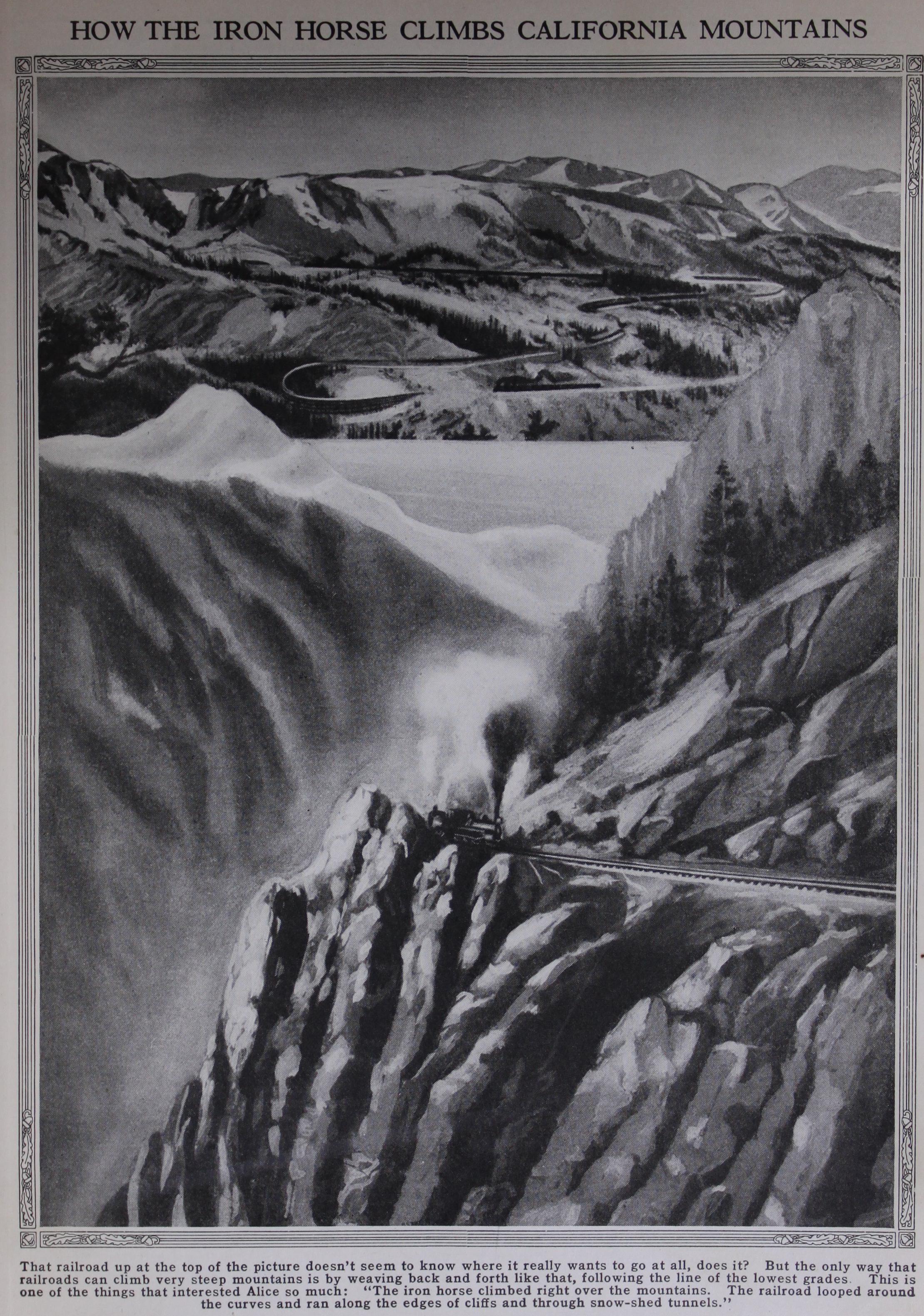
Alice never forgot the time she went to California with her grand father, who many years before had gone in an ox-wagon when he was ten years old. Now he was going back from New York City in a palace car. Grandfather was over 70 and Alice was 10. She was young enough to be foolish, and grandfather was old enough to forget that he had ever been wise. So they went to California together and they had a wonderful time.