Blinds Fittings for Doors
lock, locks, knob, type, mortise, rim and fig
These are again divided into three classes common-grade, medium-grade, and high-grade. The cheapest grade are the cast-iron rim latches and locks requiring no trimmings except knobs —which are either of iron, porcelain, jet, or min eral—and a small, round, japanned iron door plate called a rose. While these locks present a fair appearance, their mechanism is generally very poor.
The medium-grade may have cases made of cast iron or wrought steel; but the working parts should be of bronze, brass, or steel. In mortise types, cast-iron fronts should not be used, on account of liability to breakage.
Rim locks are used in obscure places; but for general work, mortise locks should be used. A good medium-grade lock is a mortise lock of the lever-tumbler type, with either two or three tumblers, depending upon the grade of security desired. Steel keys are usually furnished with this grade of lock.
The high-grade locks are those of the cylinder type, and are made in both rim and mortise form. This class is generally used for entrance doors. The heavier and better-made lever-tumbler locks may also be included under this heading, when made with solid brass or bronze plates and bolts. These are more commonly used for interior doors.
One of the largest and oldest lock-manufac turing concerns recommends the following locks for various parts of the house: For main floor swinging doors, 4 or two-bolt knob locks.
For sliding doors, locks, containing dead-bolt, and a pull to withdraw door.
For bedroom doors, a 5-inch, three-bolt knob lock, the third bolt being a thumb-bolt operated from the inside; or, for cheaper construction, a 4-inch two-bolt knob lock, with separate thumb-bolt if wanted.
In case of communicating rooms, a thumb-bolt oper ated from the opposite side of the door may take the place of the dead-bolt in the three-bolt knob lock.
Closet doors may have a 4-inch two-bolt knob lock, with trim on both sides or only on the outside, as depth of closet will permit.
Basement and attic doors may have or 4-inch mor tise locks of a cheaper grade than used in other parts of house.
Bathroom doors may have any form of good knob lock, but should be fitted with a thumb-bolt either as a part of or separate from the lock.
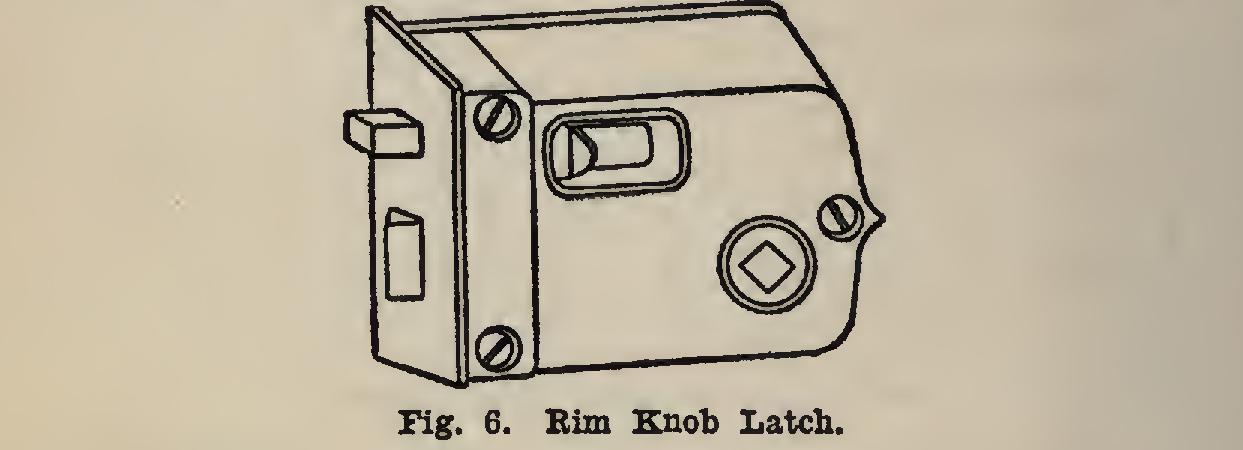
An ordinary type of cast-iron rim knob latch is illustrated in Fig. 6. This shows the thumb piece and slide-bolt for locking from inside.
This particular lock has a reversible bolt so that it may be used on either right- or left-hand doors. Many claim that non-reversible locks are generally stronger than the reversible type.
Fig. 7 shows a type of cylinder rim night latch, which can be operated from the outside only by use of a key.
There is a type of dead-locking rim night latch which acts normally as a spring latch, but, if attacked with tools through the crack of the door, a safety device dead-locks the bolt and pre vents its retraction except by the knob or key. This lock is especially intended for entrance and office doors liable to attack by thieves.
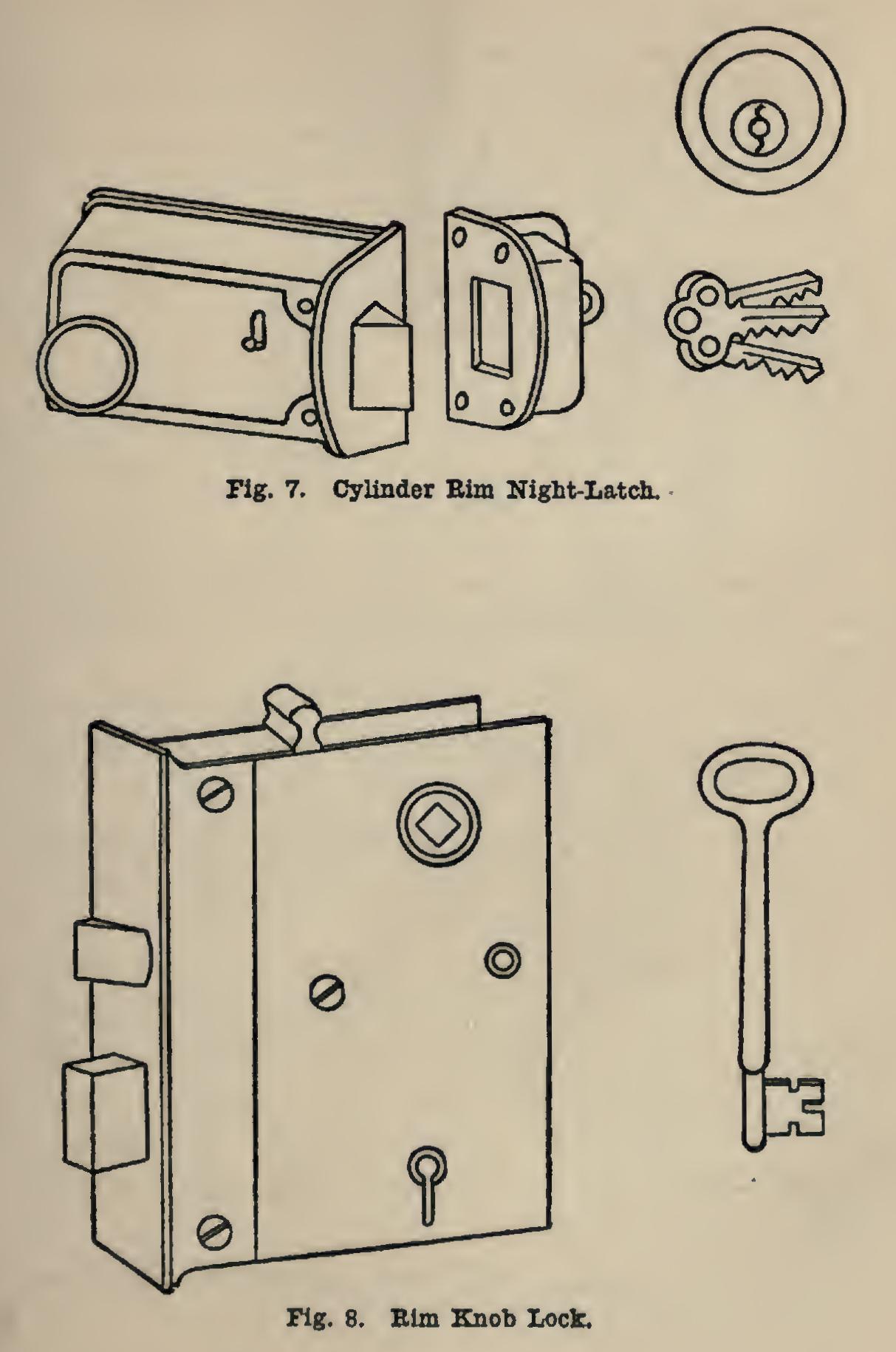
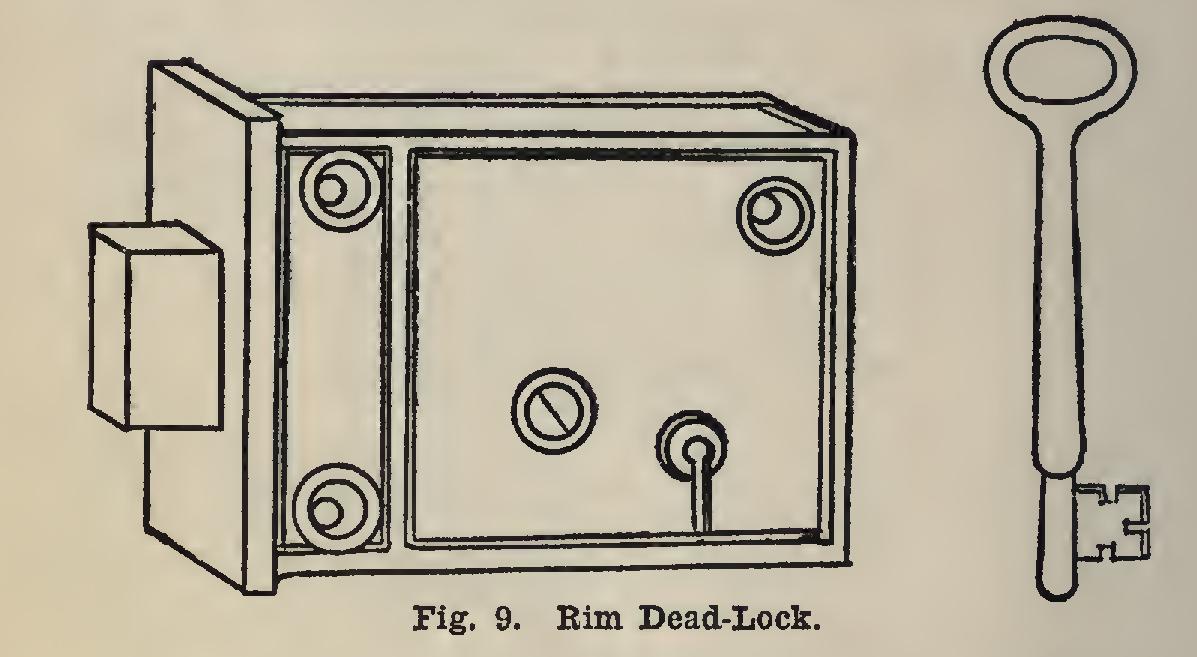
Fig. 8 shows a form of upright rim knob lock with one tumbler and stop on latch. This is a low-priced lock. The same form of lock is made up in a horizontal form for use on doors with wider stiles.
Fig. 9 shows a form of rim dead-lock. These vary in price from $2.25 per dozen (list price) up to $97.50 per dozen, thus showing the vari ation existing in this class of hardware.
In comparison with the previous figures of rim latches and locks, we now have the mortise type. Fig. 10 shows a good type of mortise knob latch, the mode of applying same having been already explained.
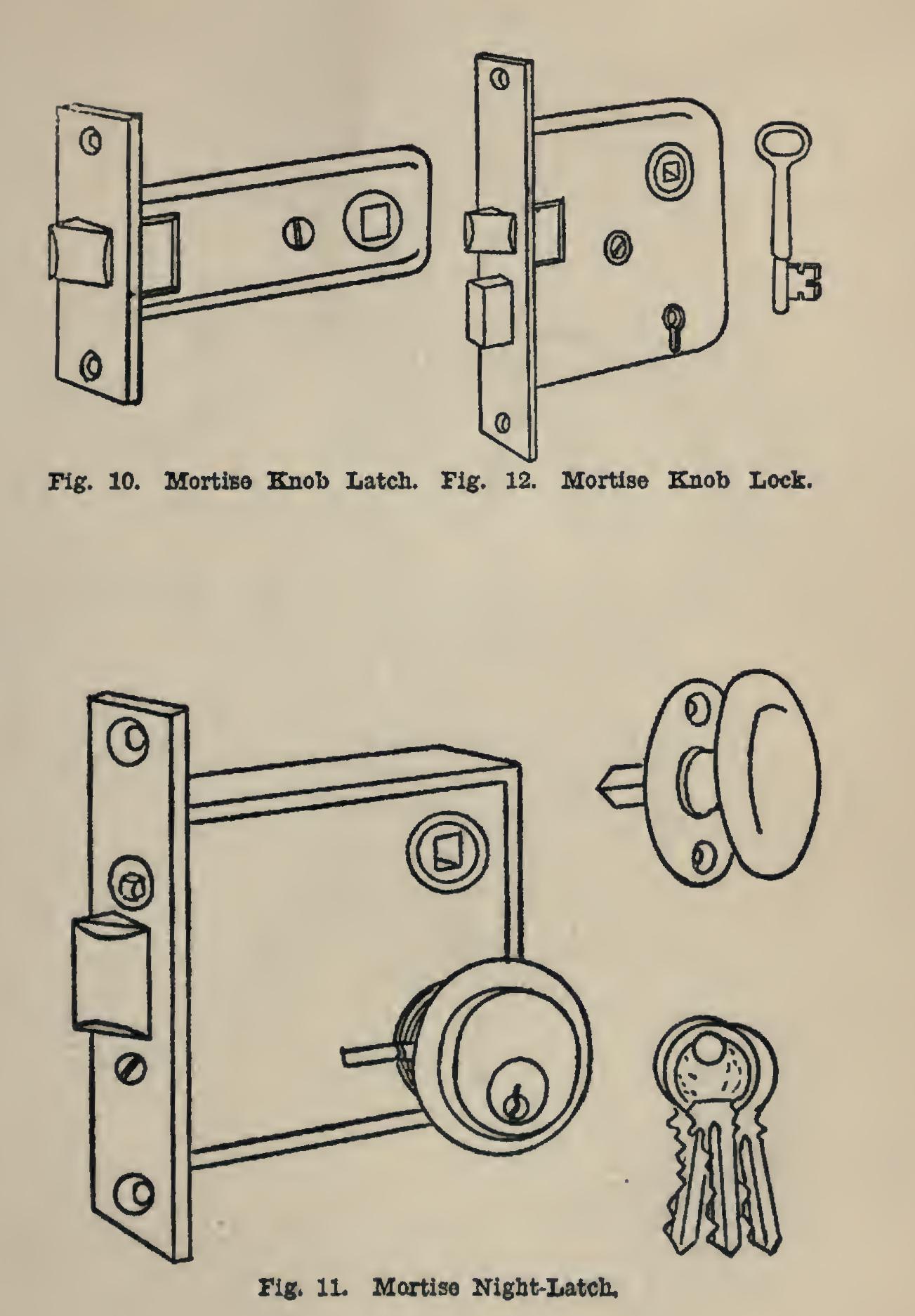
Fig. 11 shows a type of high-grade mortise night-latch which is operated by key from the outside and knob from the inside; while Fig. 12 shows a three-tumbler iron case mortise knob lock of medium grade. This lock has cast bronze front and bolts, and wrought bronze strike.
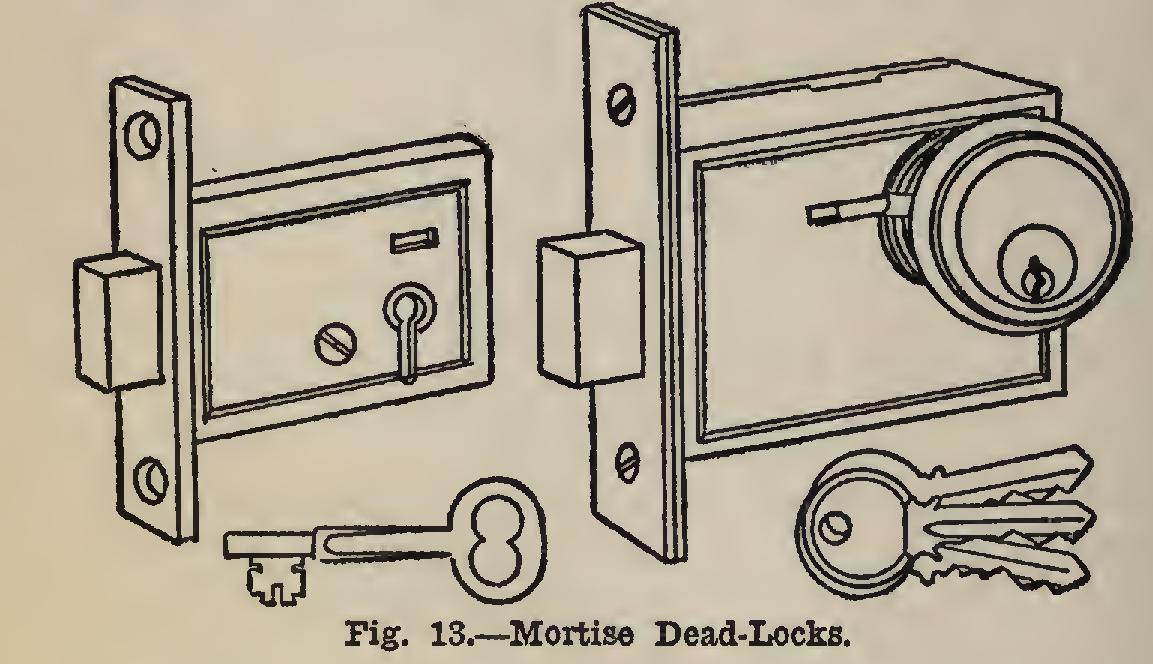
Fig. 13 shows two examples of mortise dead locks—one of the lever-tumbler type, and one of the cylinder type.
In choosing locks for doors, it is good policy to buy a good, substantial product. Simplicity in action, combined with strength and small size, is the chief requisite. Large, ornamental locks and fittings on small doors are just as much out of place as small, cheap locks on massive doors. Although the cylinder type of lock presents a rather difficult task to the lock picker, the manu facturers themselves agree that any lock with a keyhole can be opened by skillful persons. Locks may have a good moral effect on the populace at large; but a burglar's "jimmy" knows no morals. Therefore a good, plain, heavy, compact lock answers every practical purpose as well as one of more intricate design.