Architectural Drawings
sketches, time, ready, client, preliminary, arrangement and scale
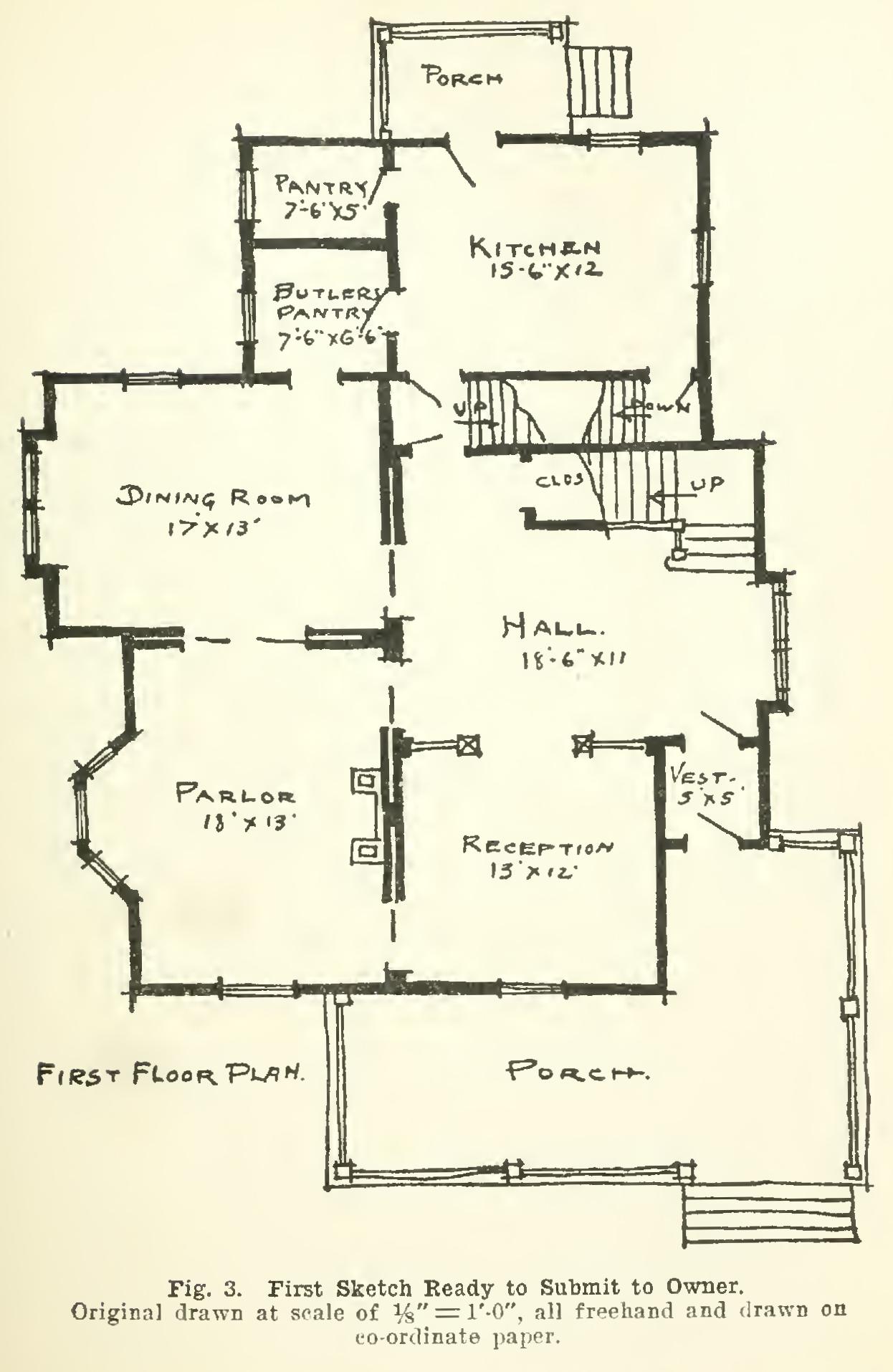
When these first preliminary sketches are ready, notify your client, unless you have had a previous time of meeting set. If this be the case, then be sure to have your work ready for him at the appointed time. Remember, your client is a busy business man, a man who is always used to keeping his appointments, and expects everyone to keep theirs.
After these first sketches have been sub mitted, and carefully gone over, make an ap pointment for the next meeting, at which time you will have the final preliminary sketches ready. There will always be changes and addi tions on these sketches; and the fewer times the client has to be consulted, the better im pression you will make. Therefore, after this first meeting, understand thoroughly your client's objections and changes, ask questions to make sure you do understand, and go back to your office determined to make the revisions and that the next sketches submitted will be approved.
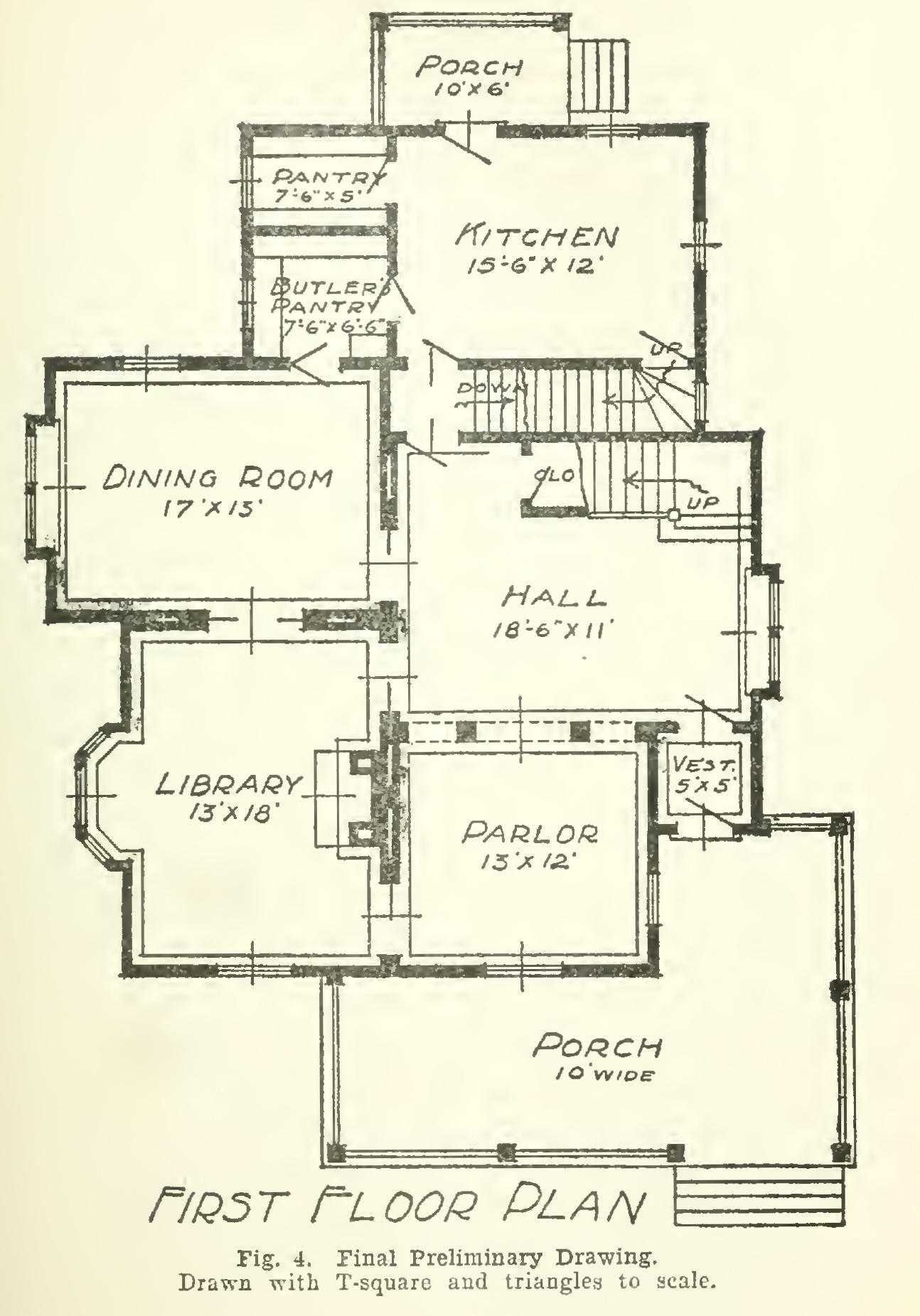
For the next sketches, it is very often more satisfactory to use the T-square and triangles, and a scale, and make small, sketchy drawings. Tack down your tracing paper, and lay out to a small scale the general arrangement (Fig. 4). Every little detail need not be attempted on these sketches; but make them straight-line drawings, using more care in the finishing of such drawings. Make all plans necessary, show ing the arrangement on all floors; also an eleva tion. Make them attractive, and letter com pletely.
The next meeting with your client should be the last one so far as the sketches are concerned. Have him look over all your sketches closely; go over them with him, pointing out the changes, telling him the advantages to be gained by this or that arrangement, and convince him that you know your business. He will finally see things your way, and he will tell you to go ahead with the work. If you see he is satisfied with the arrangement as shown him on the sketches, secure if possible his initials of approval (in ink) on each sheet. Don't ask him to "sign these sketches," as if you were an owner and he a lease-holder. If there is anything a busi ness man hesitates to do, it is to sign his name to a paper of any kind. Use a little tact, tell him that you want him to be perfectly satisfied; and in order for him to be sure he is going to get the arrangement that suited him, he can 0. K. the sketches that he approves, and thereby
have a check on the working drawings so that they will be sure to be what he wants. On the other hand, you are protecting yourself by this signature. Very often your client may forget that he ordered this or that change in your sketches; he might in some cases refuse to pay you your agreed commission, because you did not do this or that thing which he ordered. If you have his signature on the sketches, and you have followed these sketches exactly, you will not fear the outcome should the case go to law for settlement.
The same general method of procedure will apply if you are a draftsman getting out scale details. Get out freehand sketches on tracing paper, several of them; decide which is the best method before making the regular scale details. If you are a new man in an office, submit your best sketch for the construction to the head draftsman, and let him see that you are studying your work, endeavoring to get the best method. Learn to make your sketches clear and well executed. This comes only by practice in sketching.
Much time and money can be saved on the cost of getting out the drawings if only you learn to make these sketches well and complete, so that when you are ready to make the final drawings, you can start and know definitely just what they will include.
It will be found very convenient to use a soft pencil. Never use a hard pencil on your drawings, no matter whether they are the sketches or scale drawings.
It is very necessary for a draftsman to know how to make preliminary sketches. Very often a new draftsman's ability along architectural lines is tested by these preliminary sketches, their make-up, the method of getting them out, and the time taken to get them ready. If a firm finds out that you can make attractive and yet practical preliminary sketches, you will soon find out that you will not be required to serve your time at tracing drawings or details, as most draftsmen have to do upon entering a new office.