Architectural Drawings
details, floor, wall, method, scale, building and exactly
To sum up, make the elevations true pictures of the building when completed; indicate the ex tent of all materials; study the design, making it typical of the class of building in hand, and make it complete in every respect.
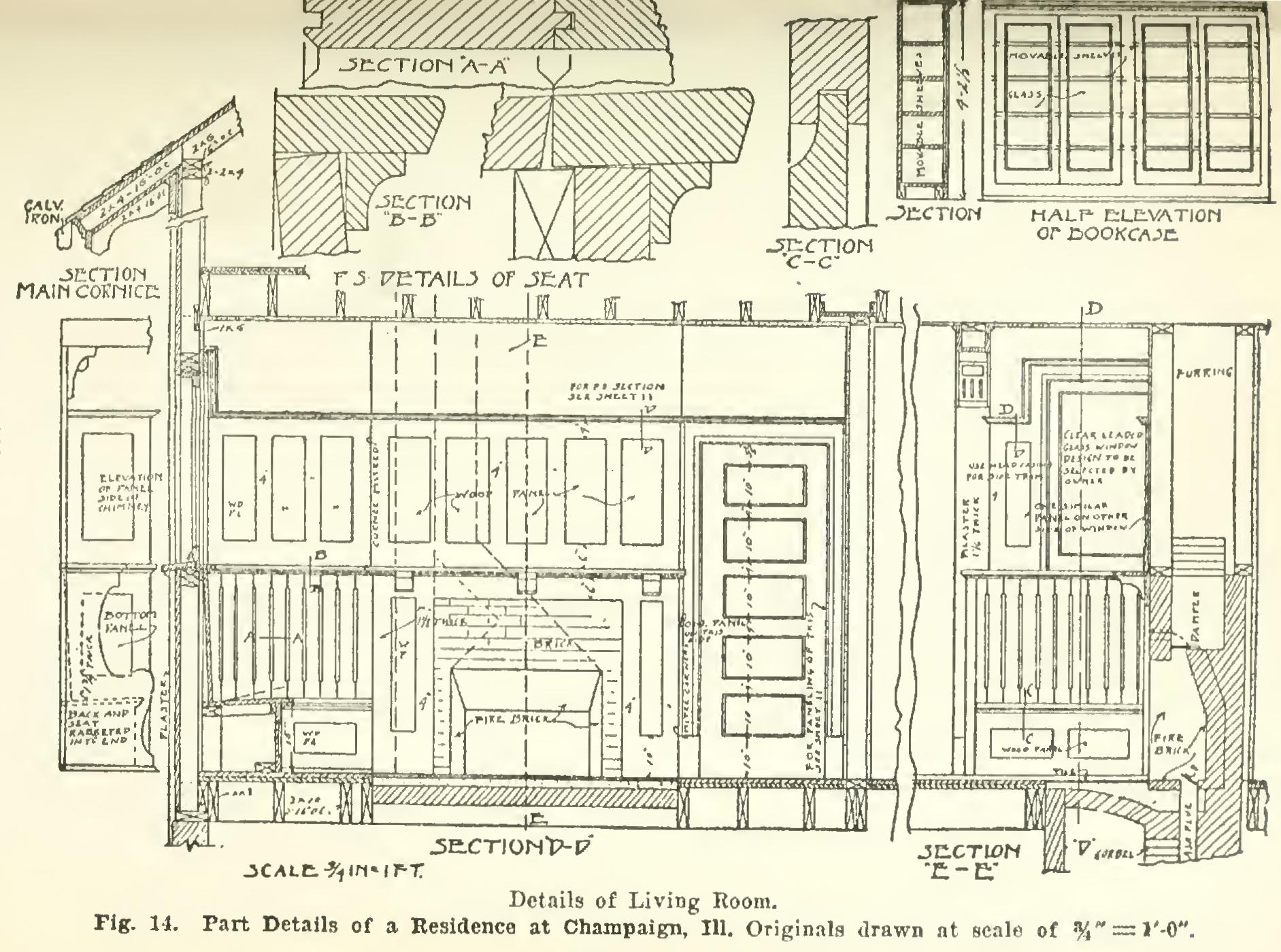
Scale Details The Section, Having completed the plans and elevations, it will be necessary to make large scale sections through different parts of the building. A section should be shown through every portion of the building that is of different construction from others. These sections are usually of a larger scale than the plans and ele vations.
In Fig. 13 we see the method Of drawing and finishing these details. A scale very convenient for use is three-quarters of an inch equals one foot (or, as it is often called, a "three-quarter inch" scale). The purpose of these sections is to show exactly how the building is to be put up— the method of supporting the cornice on the plate; the roof sheathing and covering; the con struction of the gutter, with all materials named; the ceiling joists and method of support on the outside wall; the lath and plaster; the wall sheathing and siding or shingles; the picture mould; the detail of the inside window trim; the base around the room; the second-floor construc tion, showing size of joists and method of sup port on the wall; the composition of the floor, whether double or single, or any paper between the floors; the lath and plaster of the ceiling be low; the details of the window construction, trim and stool or inside sill; the base around the room; the method of supporting the frame wall upon the basement wall; the water-table; the thick ness of the basement wall; the level of the ground on the outside; the basement floor inside; and the footing.


Use plenty of dimension lines and explana tory notes. In dimensioning story heights, al ways give from finished floor-line to finished floor-line, or from floor to ceiling; never dimen sion the thickness of the floor construction. In other words, referring to Fig. 13, we shall get into trouble by trying to specify exactly the thickness over all. This should be left without a dimension, by showing the plaster, noting the size of joists, and showing the floor, whether one or two thicknesses, let it come what it will. The
thickness of the plaster will vary slightly; a 2 inch by 10-inch joist is not 10 inches deep; neither is a floor of two thicknesses 2 inches thick. Thus we see it is rather an uncertain di mension.
A sheet is usually devoted to these details. Sometimes as many as half a dozen different sec tions are drawn for a residence, each showing differences in construction.
Be very careful to note on the plans just where each section is taken, and put correspond ing letters on the title for the section. The use of notes and plenty of them cannot be urged too strongly. The small working drawings are very unreliable as to details; and consequently the more details, the better the contractor will un derstand just exactly what he is to furnish, and will therefore be able to figure the more closely. These details, well executed, will prevent many disputes between contractor and architect, and between architect and owner, as well as save the bills from the contractor which are sure to arise from incomplete drawings.
Cross-hatch or cross-section all sections or materials that are cut in two, using some stand ard symbol, as elsewhere indicated, on the draw ings. This makes a much better looking draw ing, and makes it much easier to interpret.
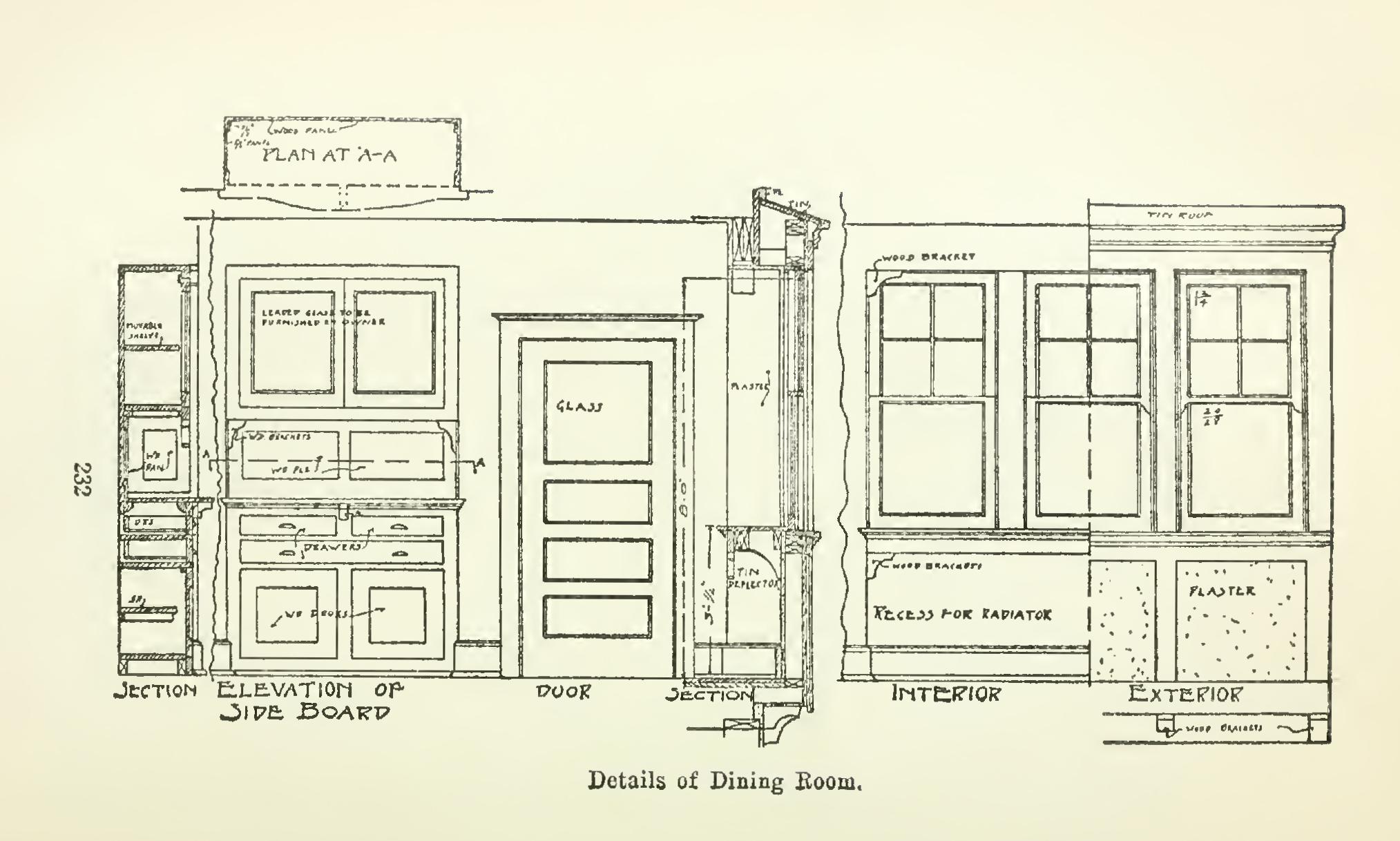
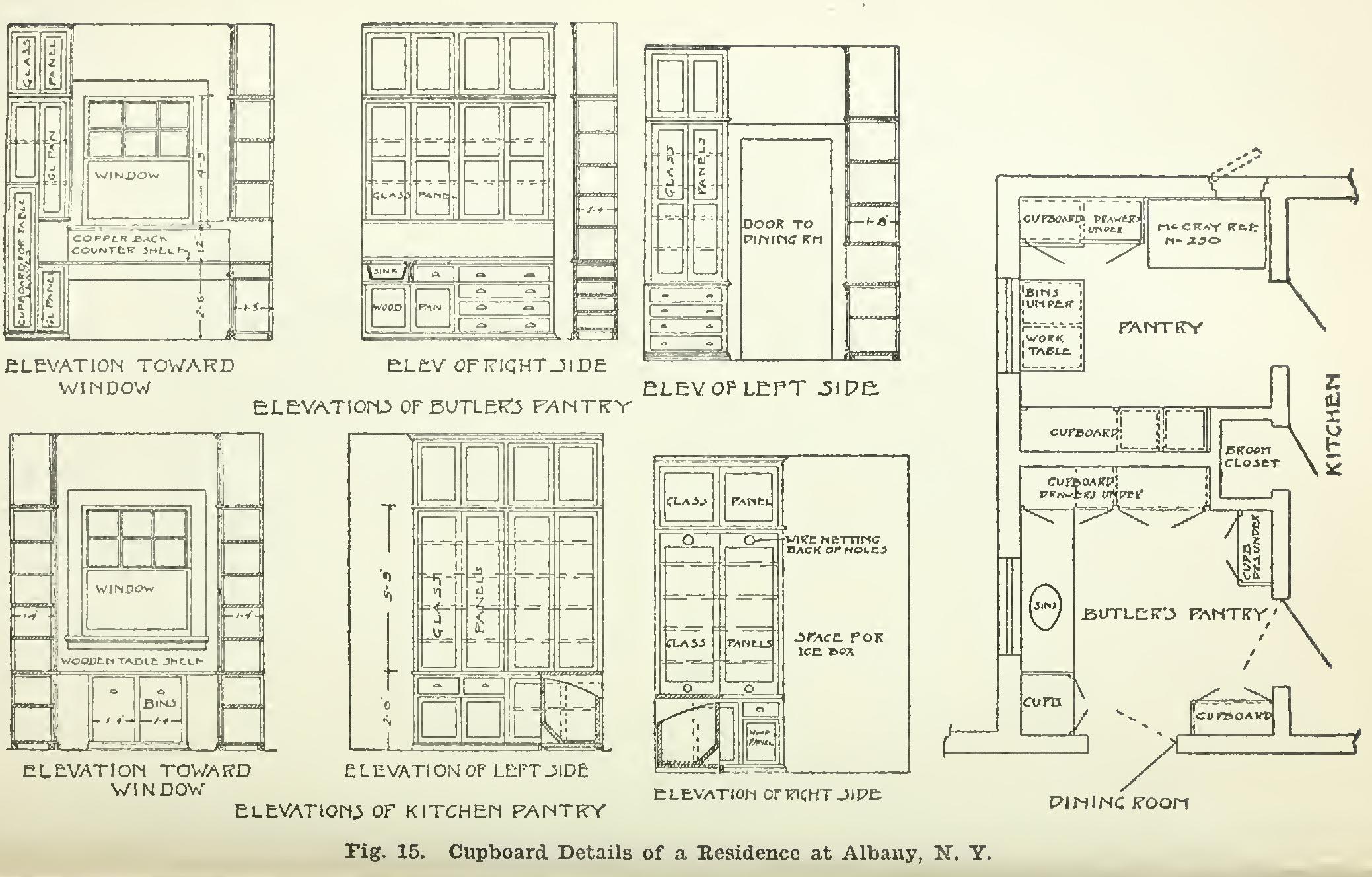
To indicate further the general treatment of the interior finish, the rooms having anything in the way of a paneled wainscot, beamed ceiling, or finish around a fireplace, also the sideboard, cupboards, and pantry fittings, should all be shown. The best and perhaps the most com mon method is to draw at one-quarter-inch scale the different elevations of the rooms, showing exactly the height, width, and any features of unusual arrangement. Should opposite sides of a room or any sides be similar, after putting the title on one drawing, note under it: "Oppo site, north, south, etc., sides similar." There is usually one sheet of just such drawings as this to accompany the regular set of drawings. Since plans are usually submitted to competitive contractors, there is not the chance of one pro posal or bid being lower than another because certain things were overlooked or purposely omitted.